Luoyang Anjing Intelligence Equipment are a global leader in high-temperature electric furnaces



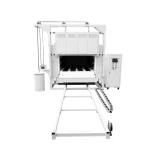
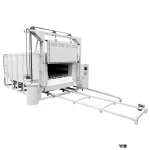
1200°C Top-Opening High-Temperature Bogie-Hearth Furnace
PRODUCT PARAMETERS
Description
1200°C Top-Opening High-Temperature Bogie-Hearth Furnace
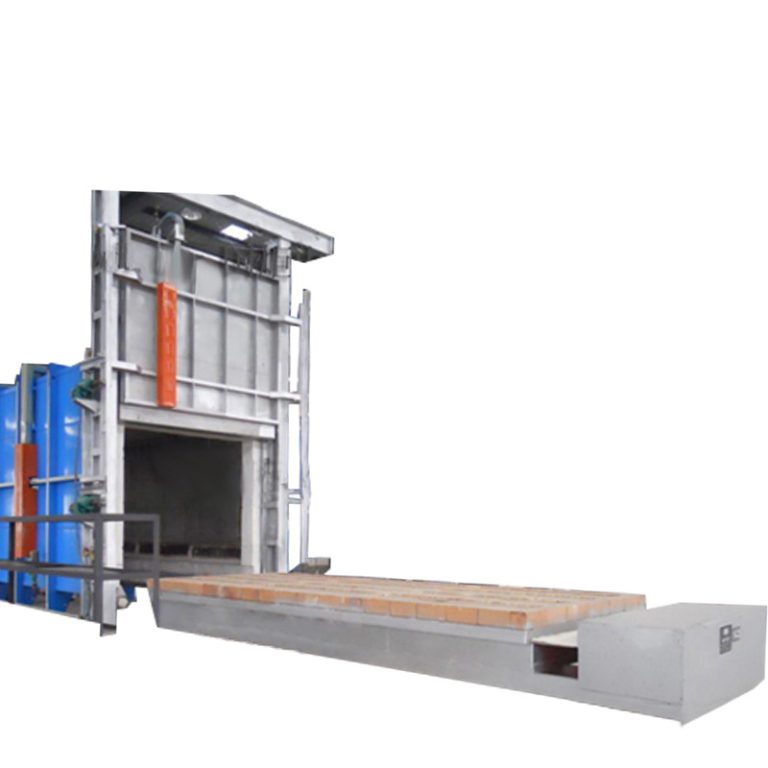
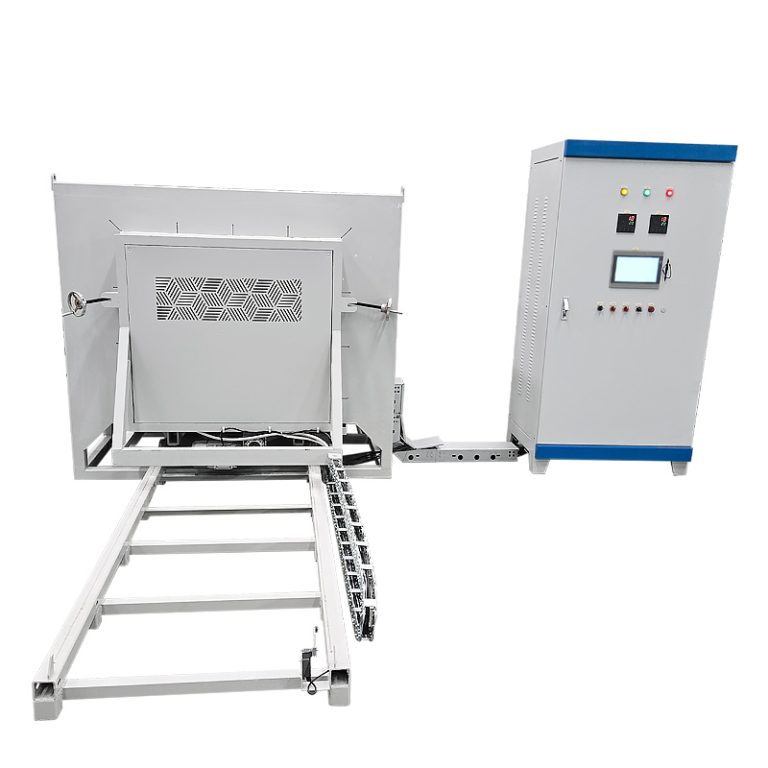
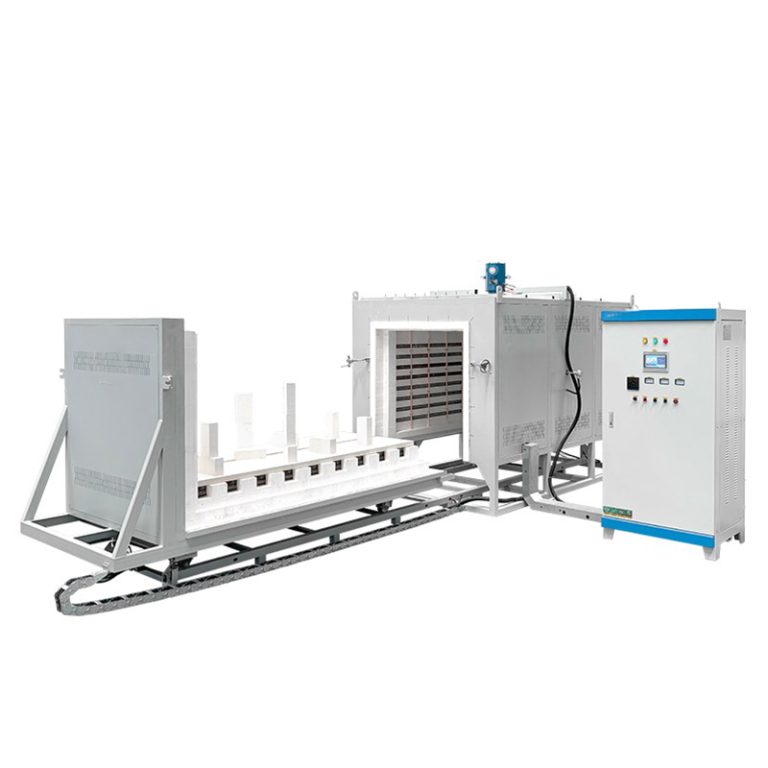
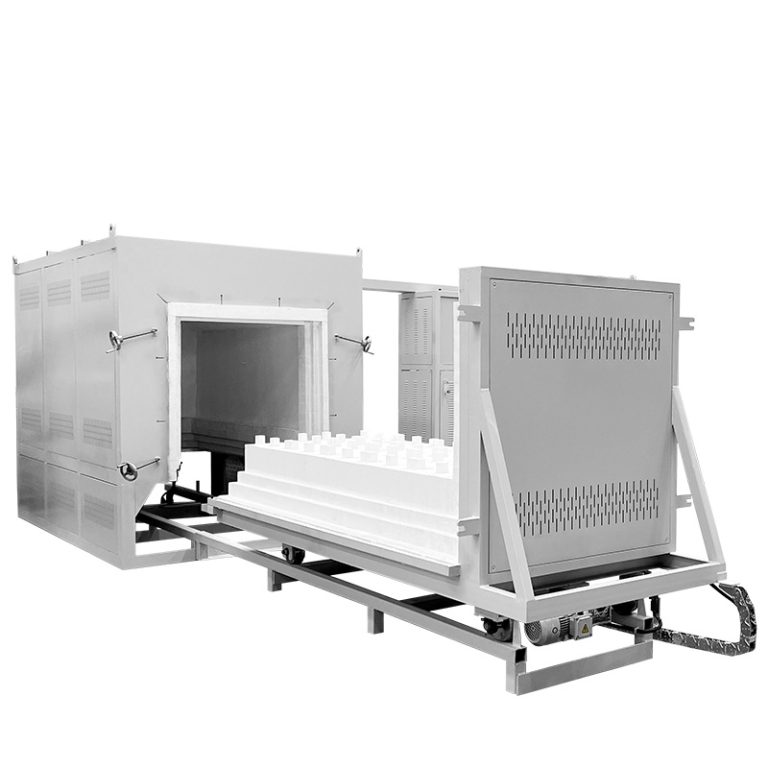
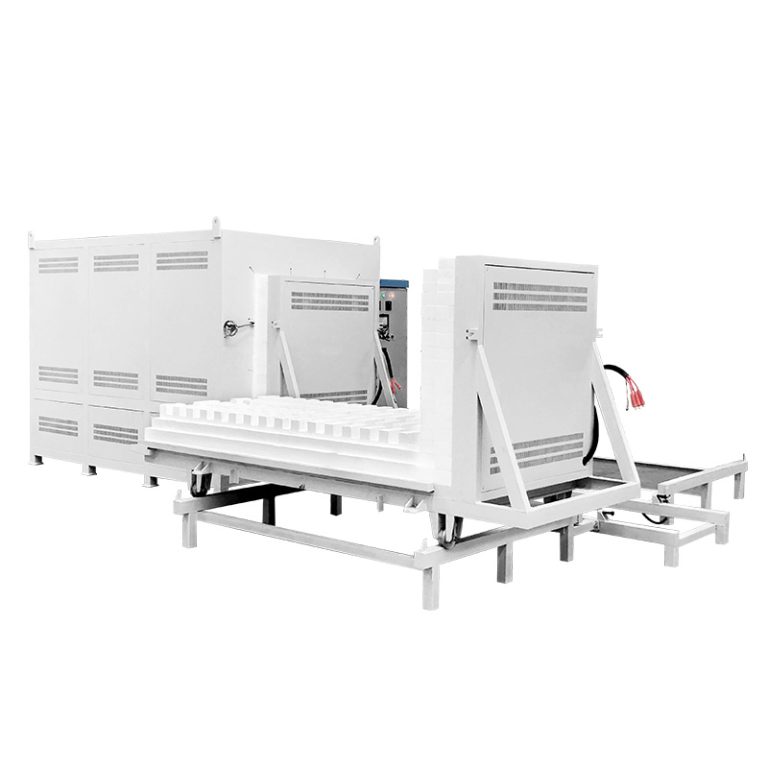
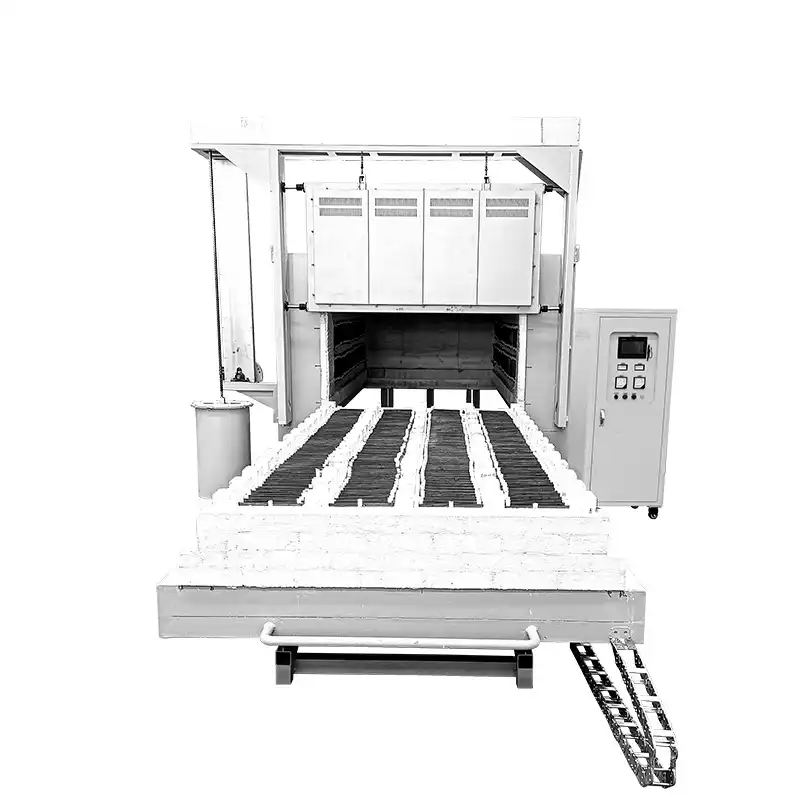
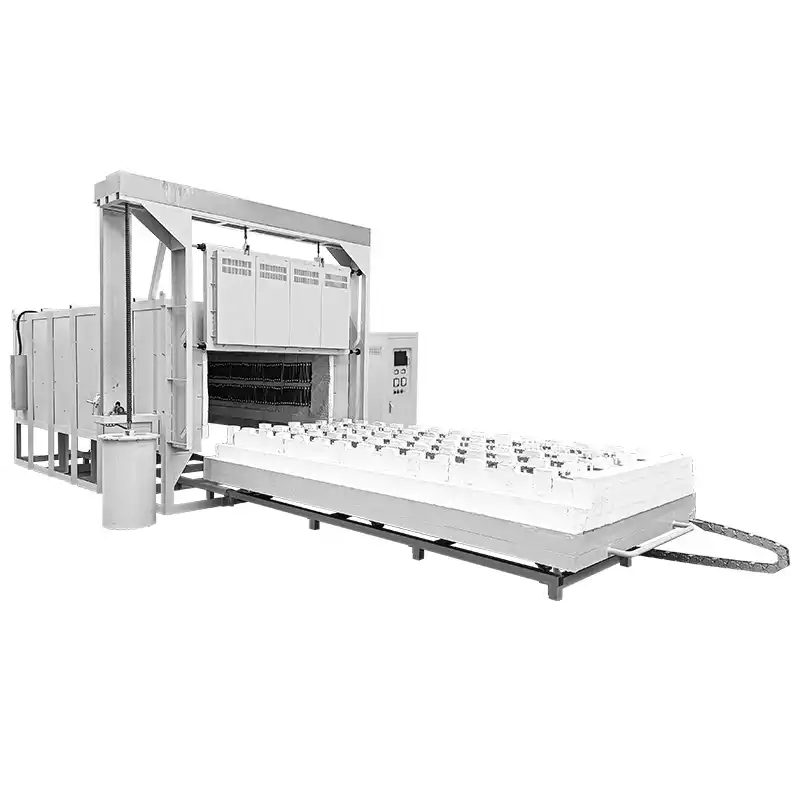
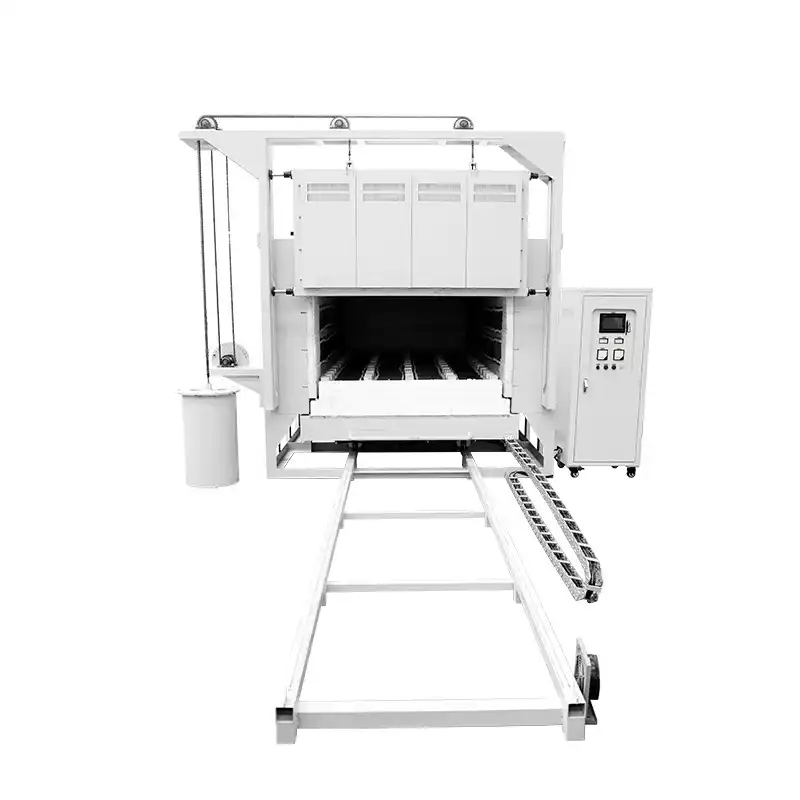
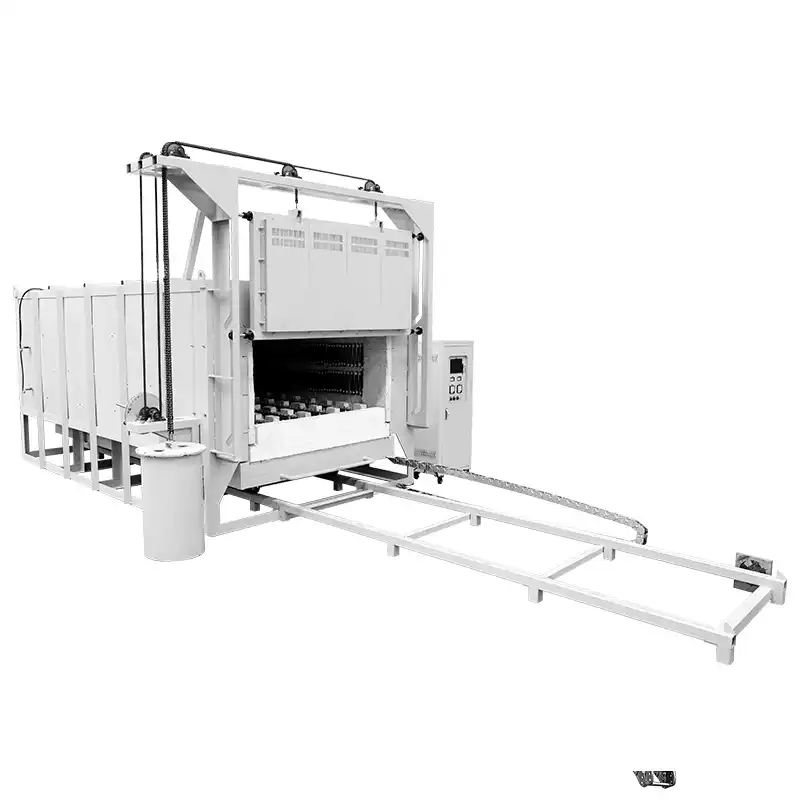
The 1200°C top-opening high-temperature bogie-hearth furnace features a top-opening design and a pull-out loading platform (bogie). It utilizes heating elements on three sides—both side walls and the bottom—and supports a maximum operating temperature of 1200°C. Equipped with a 7-inch touchscreen and a 30-segment programmable temperature controller, this furnace is designed for the high-temperature heat treatment of large, heavy workpieces and metallic materials.
Product Features
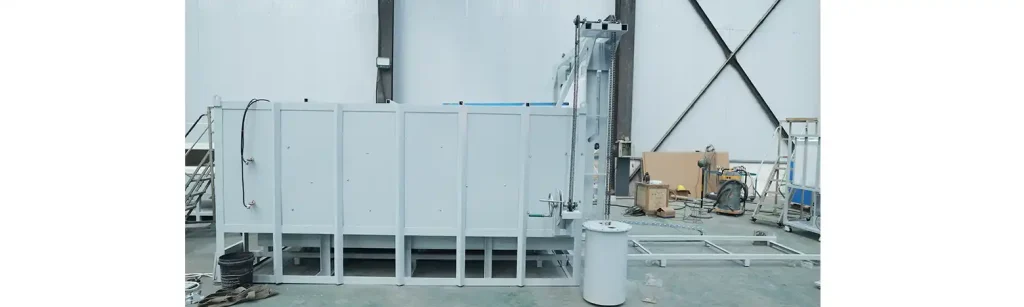
- Top-Opening Door and Pull-Out Loading Platform for Easy Handling of Large Workpieces
The furnace features a top-opening door, and the loading platform can be manually pulled out of the furnace body, facilitating the loading and unloading of large or heavy workpieces. The load-bearing steel plate of the platform is made of 310S cast steel, while the refractory lining consists of a combination of vacuum-formed high-purity alumina lightweight material and high-alumina bricks—ensuring both excellent thermal insulation and high load-bearing capacity. The heating elements at the bottom are protected by ceramic plates.
- Three-Sided Heating Configuration for Superior Temperature Uniformity
The heating elements consist of high-temperature alloy resistance strips, which are installed along the sides and bottom of the furnace chamber, providing three-dimensional heating.

- Furnace Chamber Lined with Zirconium-Containing Alumina Fiber Modules for Exceptional Thermal Insulation
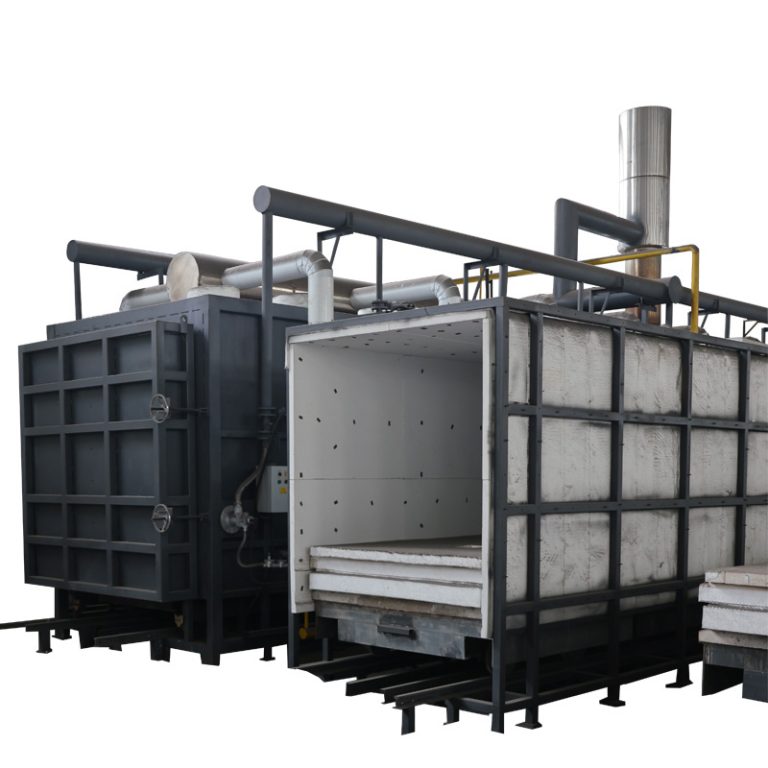
The furnace chamber is lined with zirconium-containing alumina fiber modules, which offer high-temperature resistance, low heat storage, and excellent thermal shock resistance (preventing cracking or shedding). These modules provide superior thermal insulation.
- 7-Inch Touchscreen with 30-Segment Programmed Temperature Control
Equipped with a 7-inch touchscreen, the system allows for the configuration of temperature profiles, with audible and visual alarms triggered upon the completion of a program. The intelligent temperature controller supports various control modes—including standard PID, AI-based APID, and MPT—and features self-tuning and self-learning capabilities. It supports 30-segment programmed control, allowing users to store multiple temperature profiles (e.g., one 30-segment profile, two 14-segment profiles, three 9-segment profiles, or five 5-segment profiles) that can be easily recalled for use.
| Maximum Operating Temperature | 1200°C |
| Control Range | 80 to 1200°C |
| Temperature Measuring Element | Thermocouple graduation K, measuring range 0–1320°C |
| Heating Element Installation Position | Both sides and bottom |
| Temperature Control Accuracy | ±1°C (integrated circuit control, no overshoot) |
| Temperature Control Points | Both sides and bottom |
| Heating Elements | High-temperature alloy resistance strip |
| Heating Rate | Heating rate freely adjustable; adjustment range: fastest heating rate 15°C per minute (15°C/min), slowest heating rate 1°C per hour (1°C/h) |
| Furnace Body | The furnace body is machined with CNC machine tools and manufactured through polishing, grinding, acid washing, phosphating, plastic powder spraying, high-temperature baking, etc. It has a novel and aesthetically pleasing appearance and advantages such as oxidation resistance, acid and alkali resistance, corrosion resistance, high temperature resistance, and easy cleaning |
| Furnace Body Structure | The electric furnace body adopts an internationally advanced air-cooled double-layer structure. An effective air-cooled guide baffle enables overall cold air circulation in the furnace shell, ultimately cooling the heating element conductive plates before discharging out of the furnace body, avoiding high-temperature oxidation of the heating element conductive plates; ensuring a good working environment |
| Loading Platform | The loading platform can be pulled out of the furnace body, manually |
| Loading Platform Refractory | The loading platform is made of a combination of vacuum-formed high-purity alumina lightweight material and high-alumina bricks, ensuring both insulation performance and load-bearing performance. The bottom heating is protected by a ceramic plate |
| Furnace Chamber Refractory Materials | Zirconia-containing alumina fiber folded blocks |
| Furnace Body Shell Temperature | For long-term continuous operation without shutdown, the shell temperature is less than room temperature +20°C |
| Furnace Liner | 310S material, designed by the supplier, manufactured and raw materials purchased by the buyer |
| Loading Platform Load-Bearing Steel Plate | 310S material (cast steel), designed by the supplier, manufactured and raw materials purchased by the buyer |
| Protection | An integrated modular control unit is adopted for accurate control precision, and dual-loop control and dual-loop protection are designed, featuring protection against overshoot, over-regulation, under-regulation, broken thermocouple, phase loss, overvoltage, overcurrent, overtemperature, current feedback, soft start, etc. |
| Control | Closed-loop technology is adopted for thyristor module trigger control, with phase-shift triggering control mode. Output voltage, current, or power can be continuously adjusted, featuring constant voltage, constant current, or constant power characteristics. The current loop is the inner loop, and the voltage loop is the outer loop. When a load is suddenly applied or the load current exceeds the current limiting value, the output current of the voltage regulator is limited within the rated current range to ensure normal operation of the output and the voltage regulator. At the same time, the voltage loop also participates in regulation, so that the output current of the voltage regulator is limited within the rated current range, maintaining constant output current and voltage under the premise of sufficient adjustment margin. This protects the heating elements from impact of excessive current and voltage, achieving safe and reliable control effects and control precision |
| Display Parameters | Temperature, temperature segment number, segment time, remaining time, output power percentage, voltage, current, etc. |
| Touch Screen | 7-inch, set temperature curve, audible and visual alarm after program completion |
| Temperature Curve Setting | Adopts an intelligent temperature controller, equipped with multiple adjustment modes such as standard PID, artificial intelligence adjustment APID, or MPT, with self-tuning and self-learning functions, and excellent control characteristics of no overshoot and no undershoot. It has a 30-segment program control function, can realize heating and cooling control at any slope, has programmable/operable commands such as jump (cycle), run, pause, and stop, and allows the program to be modified at any time during controlled operation; it adopts an artificial intelligence adjustment algorithm with curve fitting function, which can obtain smooth and flat curve control effects |
| Multiple Curve Input | 30-segment program control function, can be input and set as: one curve with 30 segments, two curves with 14 segments each, three curves with 9 segments each, five curves with 5 segments each; multiple curves can be input at the same time and can be called arbitrarily during use |
Application Areas
- Metal Heat Treatment: Suitable for the annealing, tempering, preheating, and high-temperature heat treatment of metal workpieces.
- Heating of Large Workpieces: The car-bottom (trolley-type) loading design facilitates the handling and heating of large-sized and heavy workpieces.
- Mechanical Component Processing: Used for the high-temperature heat treatment and process testing of components in the mechanical manufacturing industry.
- R&D of New Materials: Suitable for the research, development, and testing of metallic materials, refractory materials, and other high-temperature materials.
- Industrial and Scientific Research: Applicable for high-temperature heat treatment, pilot-scale testing, and production processes within enterprises, universities, and research institutions.
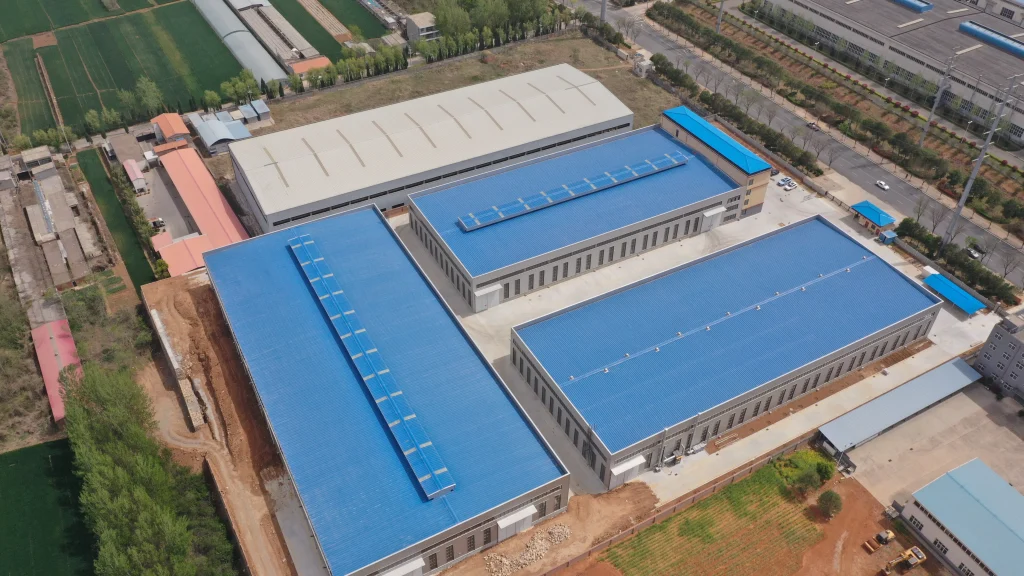
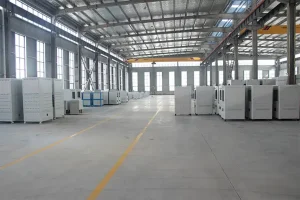
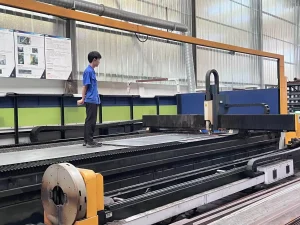
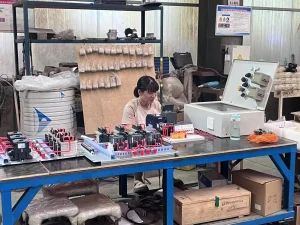
Company Profile
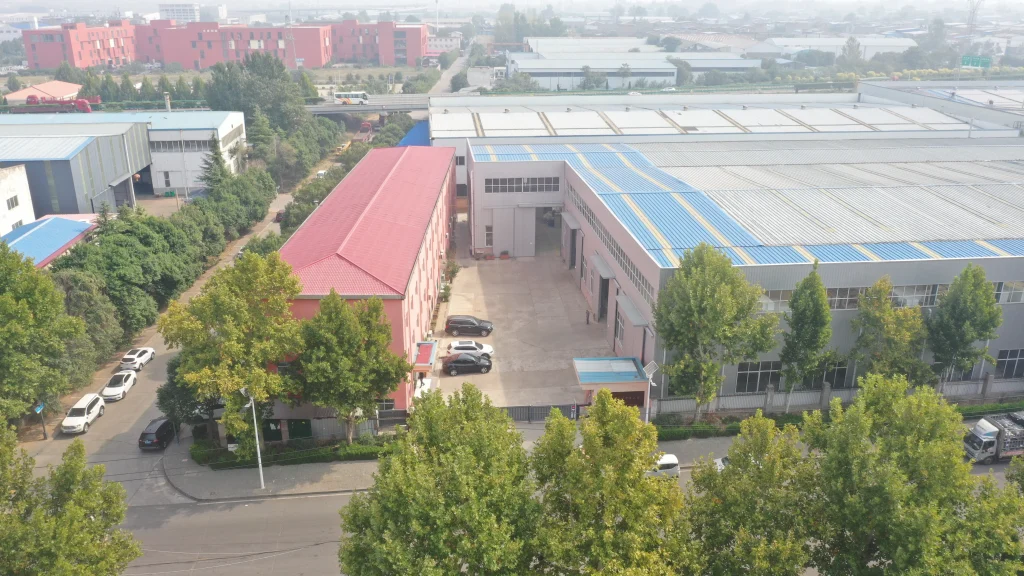
A professional enterprise specializing in heat treatment technology services and the R&D, manufacturing, and sales of high-temperature electric furnaces.
The company focuses on developing high-temperature electric furnaces covering a full temperature range of -100℃ to 2600℃. Its products include experimental electric furnaces, vacuum atmosphere furnaces, industrial kilns, and medium-frequency induction heating equipment. Main products include box furnaces, tube furnaces, lifting furnaces, pusher kilns, bogie furnaces, rotary kilns, tunnel kilns, and various specialized medium-frequency furnaces.
The company adheres to technological innovation and has passed ISO9001 and EU CE certifications. It owns 21 registered trademarks, 29 patents, and 27 software copyrights.
Payment Methods
TT
Shipment Methods
The electric furnace is packaged in three layers: first wrapped in foam paper, then wrapped in plastic film, and finally packed in a wooden crate.
Frequently Asked Questions (FAQ)
- What is the maximum operating temperature of this car-bottom furnace?
The maximum operating temperature is 1200°C, with a temperature control range of 80–1200°C.
- Can the loading platform be pulled completely out of the furnace body?
Yes. The equipment features a pull-out loading platform that can be manually extended outside the furnace, facilitating the loading and unloading of large or heavy workpieces—or items that are otherwise difficult to place directly into the furnace chamber.
- What heating method does the equipment use?
It utilizes high-temperature alloy resistance strips, providing heating from three sides.
- Can the heating rate be adjusted?
Yes. The heating rate can be freely configured according to your process requirements—ranging from a maximum of approximately 15°C/min to a minimum of about 1°C/h. Please note that the actual heating rate may be influenced by factors such as the weight of the load, material properties, and specific process conditions.
- Is it possible to set multi-stage temperature profiles?
Yes. The equipment supports 30-segment program control, allowing you to configure heating, holding (soaking), and cooling phases. It also supports the input and recall of multiple temperature profiles.