Luoyang Anjing Intelligence Equipment are a global leader in high-temperature electric furnaces



Types of Induction Foundry Furnaces: A Complete Guide
What Types of Induction Foundry Furnaces Are There? A Complete Guide to Induction Foundry Furnaces
As the foundry industry moves towards higher efficiency, energy conservation, and intelligent manufacturing, induction casting furnaces have become the mainstream equipment for modern metal smelting. Compared to traditional fuel furnaces, induction casting furnaces utilize the principle of electromagnetic induction to directly heat the metal. This not only results in faster melting speeds and more precise temperature control but also reduces metal loss and improves casting quality. Therefore, they are widely used in the smelting of steel, cast iron, copper, aluminum, and various alloy materials.
Different types of induction casting furnaces have their own characteristics in terms of capacity, frequency, furnace structure, and production methods. Understanding the advantages and applicable scenarios of various equipment helps companies choose the most suitable smelting solution based on their production scale and process requirements.
I. General Introduction to Induction Casting Furnaces
An induction casting furnace is an industrial device that uses alternating current to generate a magnetic field, which induces eddy currents within the metal through electromagnetic induction, thereby achieving melting or heat preservation.
A complete induction casting furnace typically consists of a medium-frequency power supply, induction coils, furnace body, tilting mechanism, cooling system, and PLC control system. Depending on the frequency, furnace structure, and application, it can be classified into various types to meet different needs, from small-batch melting in the laboratory to large-scale continuous casting production.
In recent years, with the development of IGBT medium-frequency power supplies, high-efficiency water-cooling systems, and intelligent control technology, induction casting furnaces have not only improved energy efficiency but also achieved automated melting, precise temperature control, and remote monitoring, gradually becoming an important piece of equipment for green casting.
II. Main Types and Characteristics of Induction Casting Furnaces
- Coreless Induction Furnace
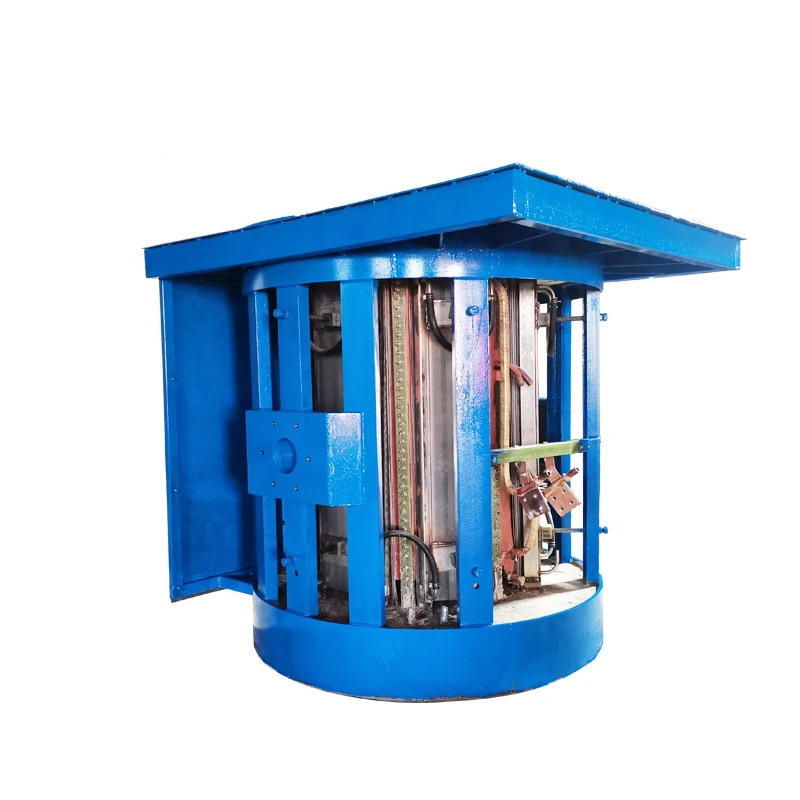
The coreless induction furnace is currently the most widely used induction melting equipment in the foundry industry. Metal is placed directly in a refractory crucible inside the induction coil, and melting is achieved through electromagnetic induction.
Main Features:
- Fast melting speed and high production efficiency.
- Good metal stirring effect, resulting in more uniform composition.
- Suitable for melting steel, iron, copper, aluminum, and various alloys.
- Easy to change alloy grades, suitable for multi-variety production.
Due to its simple structure and convenient maintenance, the coreless induction furnace has become the mainstream choice for small and medium-sized foundries.
- Channel Induction Furnace
The channel induction furnace, also known as a grooved induction furnace, has an iron core inside the inductor, mainly used for metal insulation and continuous liquid supply.
Main Features:
- High insulation efficiency and low energy consumption.
- Strong continuous operation capability.
- Small metal temperature fluctuations.
- More suitable for long-term continuous production.
This equipment is typically used in aluminum alloy, copper alloy, and cast iron production lines, and its performance is even better when used in conjunction with a melting furnace.
- Medium Frequency Induction Furnace
Medium frequency induction furnaces are the most common type of equipment in the modern foundry industry, with operating frequencies typically ranging from 250Hz to 10000Hz.
Main features:
- Fast melting speed.
- Effective electromagnetic stirring.
- Precise temperature control.
- Energy saving compared to traditional industrial frequency equipment.
Medium frequency induction furnaces are widely used in the steel, precision casting, and recycled metal industries, and currently have the highest market share in induction melting equipment.
- High Frequency Induction Furnace
High frequency induction furnaces are mainly used for small-capacity, high-precision melting and localized heating.
Main features:
- Extremely fast heating speed.
- Low metal oxidation loss.
- High temperature control accuracy.
- Suitable for precious metals and laboratory melting.
Commonly used in jewelry processing, experimental research, and special alloy production.

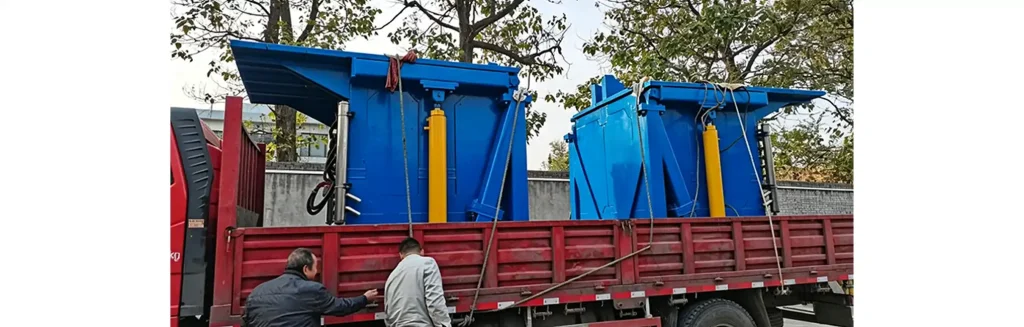
- Twin Induction Furnace System
A twin-furnace system consists of two furnaces sharing a single medium-frequency power supply, allowing one furnace to melt while the other holds the heat, or to operate alternately.
Main features:
- Improved equipment utilization.
- Reduced waiting time.
- Meets continuous casting requirements.
- Reduces overall production costs.
Large foundries typically adopt this solution to improve production cycle time and stability.
| Comparison Dimension | Core-Type Induction Furnace | Coreless Induction Furnace |
|---|---|---|
| Iron Core Structure | Iron core passes through the inductor | No iron core |
| Power Supply Frequency | Mains frequency (50Hz/60Hz) | Mains frequency / Triple frequency / Medium frequency / High frequency |
| Electrical Efficiency | ≥ 90% | Medium frequency 96%~97% |
| Melting Temperature | Lower (suitable for non-ferrous metals, cast iron) | Higher (1650℃~1800℃) |
| Alloy Change Flexibility | Requires retaining molten heel; alloy change inconvenient | Can be completely drained; alloy change flexible |
| Maximum Capacity | 270 tons | Mains frequency: 100 tons / Medium frequency: 20 tons |
| Typical Applications | Continuous melting of cast iron, brass, bronze, zinc | Steel, alloy steel, stainless steel, precious metals |
III. Two Key Topics Affecting Casting Efficiency
1.How to Select an Induction Casting Furnace Based on Metal Type?
Different metals have different requirements for melting equipment.
For cast iron and carbon steel, due to their high melting points and large melting capacities, medium-frequency coreless induction furnaces can provide faster heating rates and better electromagnetic stirring, ensuring uniform chemical composition.
Copper and copper alloys have high electrical conductivity, requiring appropriate matching of frequency and coil parameters to improve heating efficiency.
Aluminum alloy melting places greater emphasis on oxidation control and heat preservation performance; therefore, many production lines adopt a combination of a “medium-frequency melting furnace + grooved holding furnace” to achieve stable liquid supply and continuous pouring.
Therefore, when selecting an induction casting furnace, it is necessary to consider not only the melting capacity but also the metal type, melting point, electrical conductivity, and production cycle time for comprehensive evaluation.
2.How Does Intelligent Control Improve Melting Quality?
Modern induction casting furnaces are no longer just heating equipment but intelligent systems integrating automatic control, data acquisition, and safety management.
Advanced equipment typically features a PLC control system, a touchscreen interface, and intelligent temperature control programs, enabling real-time monitoring of power, current, voltage, water temperature, and furnace operating status.
Some systems can also record data from each smelting furnace, achieving traceability of the production process and providing a basis for process optimization.
Furthermore, intelligent control can automatically adjust output power, reducing overheating and metal loss, improving energy efficiency, and simultaneously reducing the workload of operators, providing reliable support for automated casting production.
IV. Main Application Areas of Induction Casting Furnaces
- Metal Casting Industry: Used for smelting gray cast iron, ductile iron, cast steel, stainless steel, and various alloys; it is a core piece of equipment in modern foundry workshops.
- Non-ferrous Metal Processing: Widely used in the smelting, heat preservation, and casting of copper, aluminum, zinc, and their alloys, improving metal purity and finished product quality.
- Metal Recycling and Regeneration: Suitable for smelting recycled metals such as scrap steel, scrap copper, and scrap aluminum, effectively reducing energy consumption and improving resource utilization.
- Precision Casting and Special Materials: Used for high-performance alloy smelting in industries such as aerospace, high-end equipment, new energy vehicles, and medical devices, where high requirements are placed on temperature control and metal composition uniformity.
V.Supplier
Luoyang Anjing Intelligent Equipment Co., Ltd. is an enterprise dedicated to the research, development, production, sales, and technical services of heat treatment equipment such as high-temperature electric furnaces. We produce laboratory, vacuum, industrial, and medium frequency furnace, covering a temperature range from -100℃ to 2600℃, serving industries such as new energy, semiconductors, and advanced materials. We can provide customized solutions based on specific atmosphere, ultra-high temperature, and intelligent control system requirements. Please feel free to contact us if you are interested.