Luoyang Anjing Intelligence Equipment are a global leader in high-temperature electric furnaces



What Is a Debinding Furnace? Working Principle, Process, and Applications
What Is a Debinding Furnace? Working Principle, Process, and Applications
A debinding furnace is a specialized thermal-processing furnace used to remove organic binders, waxes, lubricants, and other temporary additives from molded ceramic or metal-powder parts before sintering. It uses a controlled heating profile, airflow or protective atmosphere, and exhaust treatment to remove binder safely while minimizing cracking, deformation, and residual carbon.
I. Introduction
A debinding furnace is used to remove temporary organic materials from a shaped green body before sintering or subsequent high-temperature processing. This step is critical in ceramic manufacturing, powder metallurgy, Metal Injection Molding (MIM), electronic ceramics, and other advanced-material processes.
Unlike a conventional furnace that simply heats a workpiece, a debinding furnace must control heating rate, temperature, atmosphere, gas removal, and exhaust treatment. An improperly designed debinding cycle can cause cracking, blistering, deformation, or residual carbon inside the green body. Research on thermal debinding shows that binder removal is a delicate stage because rapid or poorly matched heating can generate defects in molded parts.
This article explains what a debinding furnace is, how it works, the typical debinding process, major applications, and what buyers should consider when selecting equipment.
II.What Is a Debinding Furnace?
A debinding furnace is a furnace specifically designed to remove binders and other organic additives from molded or pressed components before sintering.
In many manufacturing processes, ceramic or metal powders cannot be formed easily on their own. Manufacturers therefore mix powders with temporary additives such as:
- Waxes
- Polymers
- Resins
- Plasticizers
- Lubricants
- Other organic binders
These additives provide the flowability, strength, or molding characteristics needed during forming.
After molding, however, the organic binder must be removed before sintering.
The basic production sequence is:
Powder Mixing → Molding → Green Body → Debinding → Pre-Sintering/Sintering → Final Product
During debinding, the furnace gradually heats the green body so that the binder can melt, evaporate, decompose, or otherwise leave the component in a controlled manner. Thermal debinding is widely used in particulate processing because it can remove polymer binders through controlled heating in a defined atmosphere.
1.How Does a Debinding Furnace Work?
(1) Preheating
The green body is gradually heated from room temperature.
This initial stage removes residual moisture and prepares the component for the binder-removal stages.
The heating rate needs to be carefully controlled because molded components can be relatively fragile before sintering.
(2)Binder Softening and Melting
As the temperature increases, some binder components may soften or melt.
At this stage, the objective is to allow the binder to migrate or escape without causing the component to lose its shape.
For some binder systems, liquid-phase removal or wicking can be used before thermal decomposition of the remaining binder. The exact route depends on the binder formulation and manufacturing process.
This is one reason a debinding furnace needs a programmable temperature profile rather than simply operating at one constant temperature.
(3) Controlled Thermal Decomposition
As the temperature continues to rise, remaining organic binder components begin to thermally decompose.
This produces gaseous and volatile decomposition products.
The gas must be removed from the component and furnace chamber at an appropriate rate.
If binder decomposition is too fast or the generated gases cannot escape efficiently, internal pressure can develop inside the green body.
This can lead to:
- Cracking
- Blistering
- Distortion
- Internal pores
- Soot or carbon residue
- Loss of dimensional accuracy
Technical literature identifies cracking, blistering, slumping, and residual carbon as important risks associated with an improperly designed thermal debinding cycle.
(4)Exhaust and Volatile Removal
The gases generated during debinding need to be directed away from the workpiece and furnace chamber.
Depending on the furnace design, the system may use:
- Forced airflow
- Controlled air intake
- Protective gas
- Vacuum
- Dedicated exhaust channels
- VOC exhaust treatment
The correct gas flow is particularly important for thermal debinding because insufficient gas movement can slow the removal of gaseous binder products and contribute to defects. Research reviews identify gas flow as an important processing variable in thermal debinding.
(5)Exhaust Gas Purification
Binder decomposition can produce organic vapors and VOC-containing exhaust gas.
For industrial or laboratory systems, the furnace may therefore be integrated with an exhaust gas purification system.
For a debinding furnace, this means binder removal and exhaust treatment can be designed as one coordinated thermal process.
2.What Happens to the Binder During Debinding?
A simplified thermal debinding process can be represented as:
Organic Binder + Heat → Volatile Products + Residual Solid Components
The actual mechanism depends on the binder chemistry.
Different components may:
- Melt
- Evaporate
- Depolymerize
- Thermally decompose
- Oxidize under suitable conditions
This is why a single temperature is rarely sufficient to define an optimal debinding process.
The furnace temperature curve should be developed around the decomposition characteristics of the actual binder system.
For example, a study of ceramic-polymer moldings found that heating rate significantly affected cracking during binder removal, demonstrating the importance of matching the thermal schedule to the material system.
3.Why Is Heating Rate So Important in a Debinding Furnace?
One of the most important parameters in thermal debinding is the heating rate.
A faster heating rate may shorten processing time, but it can also increase the rate at which decomposition gases are generated.
If those gases cannot escape through the pore network quickly enough, pressure can build inside the green body.
This may cause defects.
Published research has shown that heating rate and binder formulation can significantly affect cracking behavior during thermal debinding of ceramic injection moldings.
Therefore, the objective should not be:
“Heat as fast as possible.”
Instead, the objective is:
“Remove the binder as efficiently as possible while maintaining structural integrity.”
4.Why Is Temperature Uniformity Important?
Temperature uniformity is essential because different parts of the batch should experience similar thermal conditions.
If one region of the furnace becomes significantly hotter than another, binder decomposition may occur at different rates.
This can result in:
- Uneven binder removal
- Local gas buildup
- Different shrinkage behavior
- Distortion
- Uneven sintering in subsequent stages
MeltingFurnace.net’s AJ-800 ceramic dewaxing/degreasing furnace uses forced hot-air circulation from multiple directions to reduce temperature stratification and improve temperature distribution.
For production customers, this type of thermal uniformity can be particularly important when processing large batches.
5.What Is the Difference Between a Debinding Furnace and a Sintering Furnace?
Although debinding and sintering may be performed in the same equipment, they have different process objectives.
| Feature | Debinding Furnace | Sintering Furnace |
|---|---|---|
| Main purpose | Remove organic binder | Densify and bond particles |
| Main process | Binder evaporation/decomposition | Solid-state or liquid-phase sintering |
| Gas generation | Significant | Usually much lower |
| Heating rate | Often carefully limited | Depends on material |
| Exhaust treatment | Often important | Usually less dominant |
| Temperature range | Often lower than sintering | Usually higher |
The important distinction is that debinding is primarily an organic-removal process, while sintering is a densification process.
For some applications, integrating the two stages in one furnace can reduce handling steps.
6.Can a Debinding Furnace Also Perform Sintering?
Yes, depending on the furnace design.
A multi-purpose furnace can perform both:
Debinding → Pre-Sintering → Sintering
However, the equipment must be designed to manage both the low-temperature organic removal stage and the higher-temperature sintering stage.
Important considerations include:
- Temperature range
- Heating elements
- Temperature uniformity
- Exhaust system
- Atmosphere control
- Furnace cleanliness
- Control software
- Cooling profile
7.What Furnace Features Are Important for Debinding?
Programmable Temperature Control
A programmable controller allows operators to establish multiple heating and holding stages.
This is important because different binder components can decompose at different temperatures.
A controlled program can include:
Preheating → Low-Temperature Hold → Binder Removal → Intermediate Hold → Final Debinding → Sintering
The actual profile should be developed from the material and binder system.
Forced Air Circulation
Forced hot-air circulation can improve temperature distribution within the furnace.
MeltingFurnace.net’s AJ-800 furnace uses a high-volume forced-air circulation system from the top, bottom, left, and right to reduce temperature stratification and improve uniformity.
Exhaust Gas Treatment
This feature becomes particularly important when the binder generates significant organic vapors.
Atmosphere Control
Some processes require air circulation because oxidation is part of binder removal.
Others may require inert or controlled atmospheres to protect the material.
The correct atmosphere therefore depends on:
- Binder chemistry
- Powder chemistry
- Desired carbon level
- Subsequent sintering process
- Oxidation sensitivity
III.Debinding Furnace Solutions
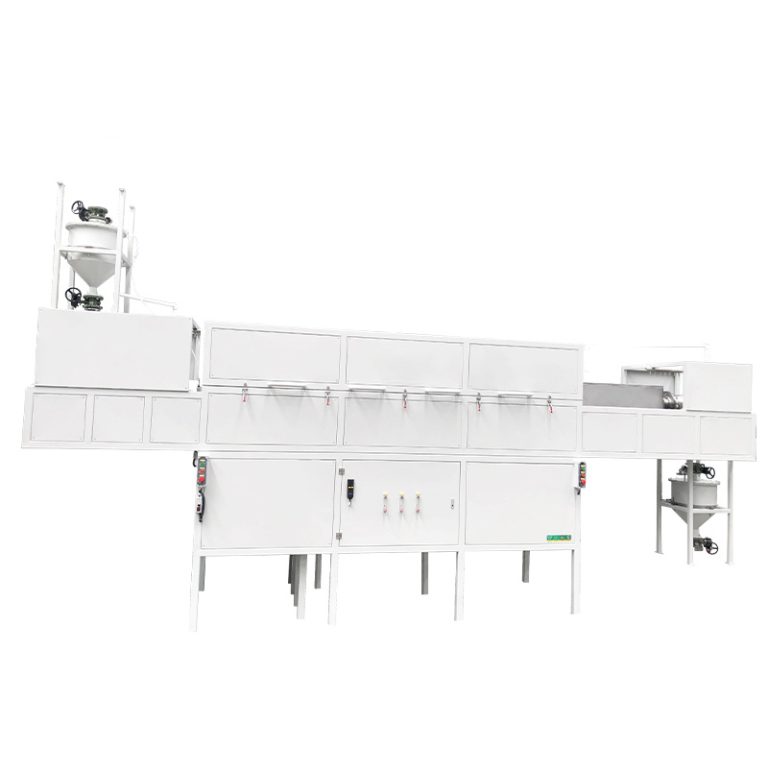
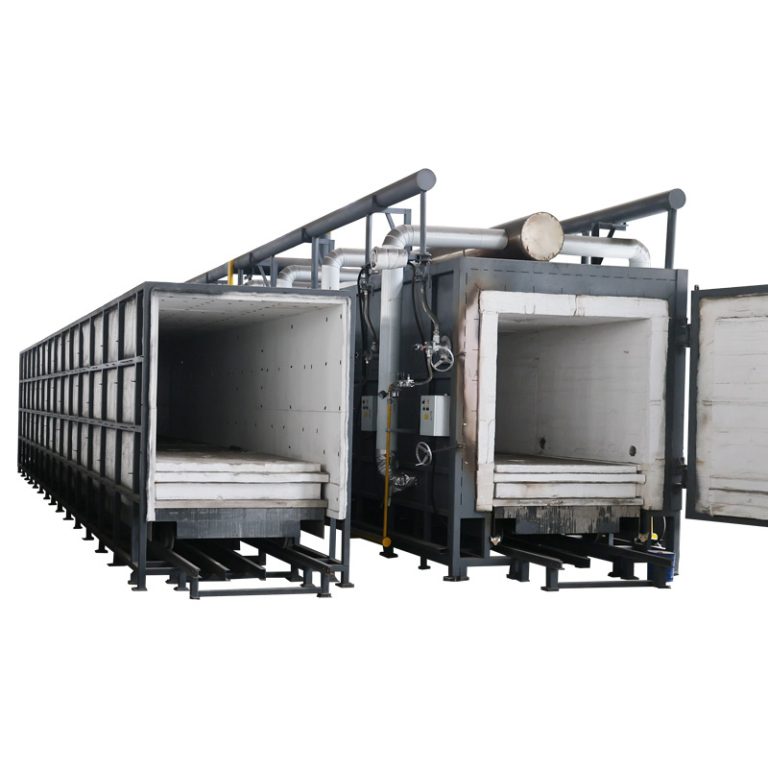
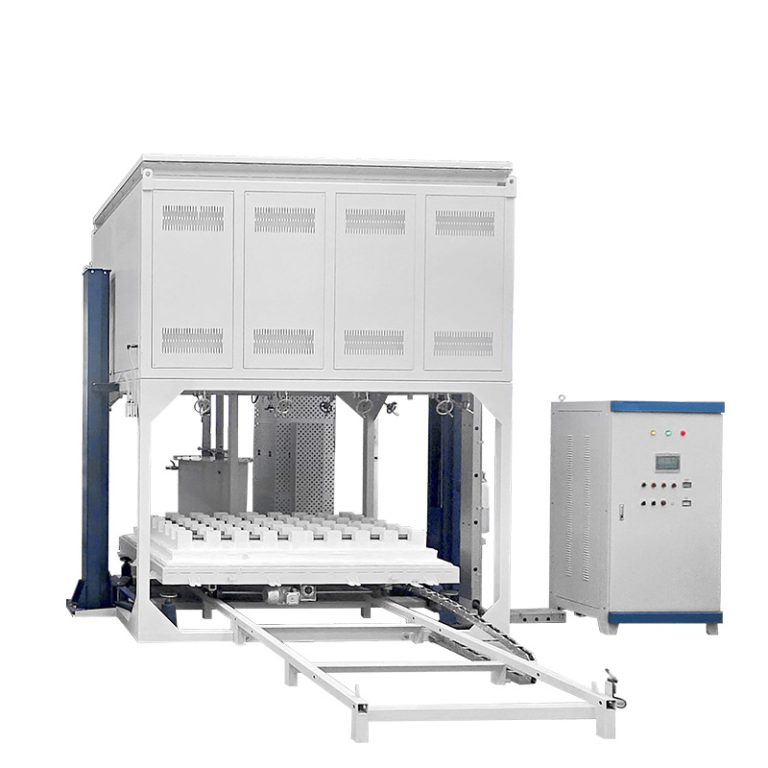
MeltingFurnace.net’s current industrial furnace portfolio includes a dedicated Exhaust Gas Purification Furnace / Degreasing Furnace category for binder removal, degreasing, volatile treatment, and exhaust purification. The company’s product range specifically targets applications in ceramics, electronic materials, powder metallurgy, new-energy materials, and related industries.
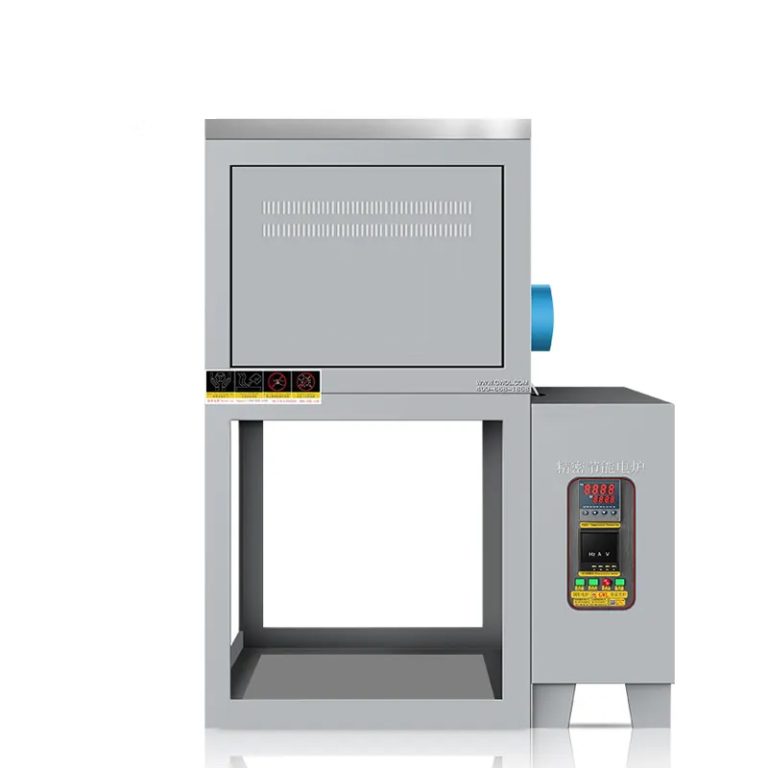
1200°C five-sided heating muffle furnace with exhaust gas purification, designed to integrate debinding and sintering. Its five-sided heating arrangement is intended to improve temperature uniformity, while the integrated VOC purification system treats organic waste gas generated during binder removal.
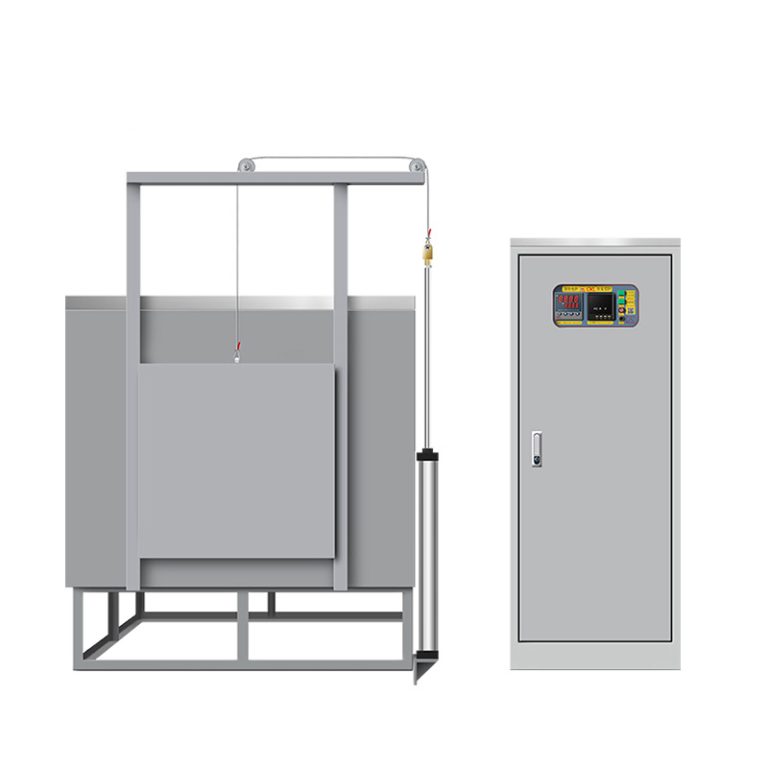
For larger or specialized applications, the company’s industrial and vacuum furnace portfolio includes additional configurations for debinding, sintering, heat treatment, and atmosphere-controlled processing. Its 1300°C bell-jar furnace, for example, lists debinding of ceramic and powder-metallurgy products among its applications and provides programmable multi-segment temperature control.
The appropriate configuration should therefore be selected according to:
Binder Chemistry + Green Body Size + Loading Density + Debinding Temperature + Heating Rate + Atmosphere + Exhaust Gas + Sintering Requirement
IV. Conclusion
A debinding furnace is a specialized thermal-processing system designed to remove waxes, polymers, resins, lubricants, and other organic binders from molded ceramic or metal-powder components before sintering.
Its working principle depends on controlled heating, binder softening and decomposition, efficient removal of volatile products, and appropriate exhaust treatment. Temperature uniformity and heating rate are especially important because overly rapid binder decomposition can create internal pressure, cracking, blistering, deformation, or residual carbon.
For ceramic, powder metallurgy, MIM, and electronic-material applications, the right debinding furnace should be selected according to the binder chemistry, component geometry, batch size, temperature profile, atmosphere, exhaust requirements, and whether debinding and sintering need to be integrated.
Contact MeltingFurnace.net to discuss your debinding requirements and get a furnace configuration matched to your material, binder system, production capacity, temperature profile, and exhaust-treatment needs.
Click “Request a Quote” to get a customized solution.
V.FAQ
1.What is a debinding furnace?
A debinding furnace is a thermal-processing furnace designed to remove organic binders, waxes, lubricants, resins, and other temporary additives from molded ceramic or metal-powder components before sintering.
2.What is the purpose of debinding before sintering?
Debinding removes temporary organic materials so that the remaining powder structure can proceed to high-temperature sintering without excessive organic residue. Inadequate binder removal can contribute to cracking, deformation, porosity, or residual carbon.
3.What temperature is used for debinding?
There is no single universal debinding temperature. The required temperature profile depends on the binder chemistry, powder material, part thickness, geometry, heating rate, and atmosphere. Different binder components may require separate heating and holding stages.
4.What is the difference between a debinding furnace and a sintering furnace?
A debinding furnace primarily removes organic binders before high-temperature densification, while a sintering furnace is primarily used to densify and bond powder particles. Some furnace systems can integrate both processes in the same chamber.
5.Can a debinding furnace remove VOCs?
A debinding furnace can be combined with an exhaust-gas treatment system to process organic vapors and VOCs generated during binder decomposition. MeltingFurnace.net offers debinding/degreasing systems with dedicated exhaust-gas purification for ceramic, electronic-material, and powder-metallurgy applications.
Supplier
Luoyang Anjing Intelligent Equipment Co., Ltd. is an enterprise dedicated to the research, development, production, sales, and technical services of heat treatment equipment such as high-temperature electric furnaces. We produce laboratory, vacuum, industrial, and medium frequency furnace, covering a temperature range from -100℃ to 2600℃, serving industries such as new energy, semiconductors, and advanced materials. We can provide customized solutions based on specific atmosphere, ultra-high temperature, and intelligent control system requirements. Please feel free to contact us if you are interested.