Luoyang Anjing Intelligence Equipment are a global leader in high-temperature electric furnaces



Reliable 1150°C Double-Tube Rotary Calcining Furnace with Quartz Glass Tubes
PRODUCT PARAMETERS
Description
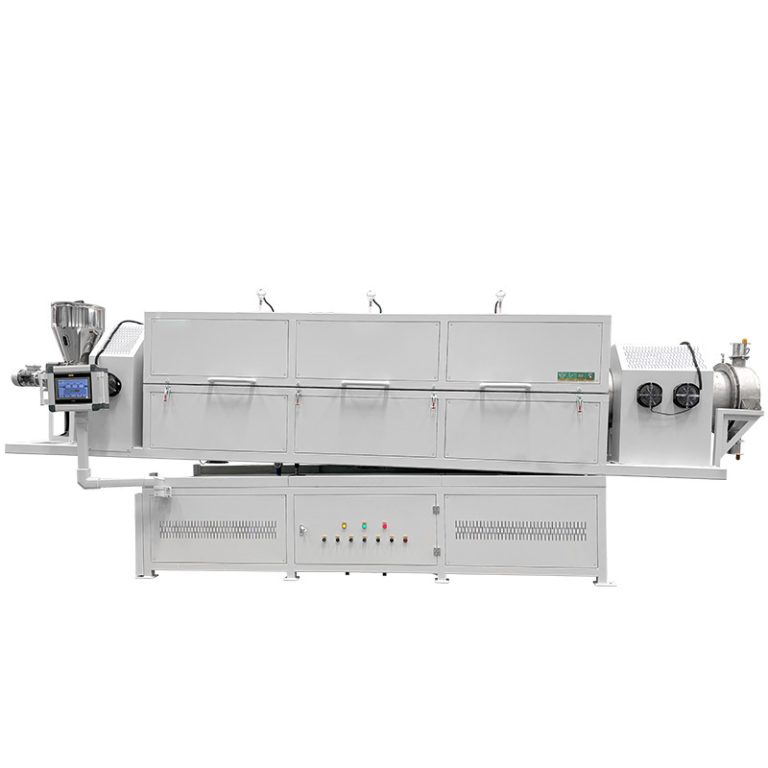
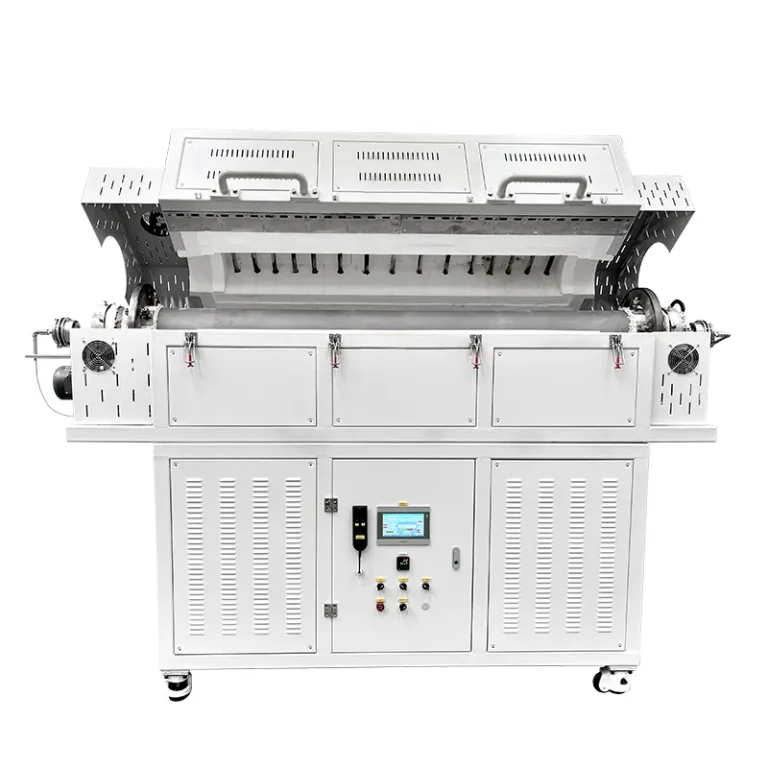
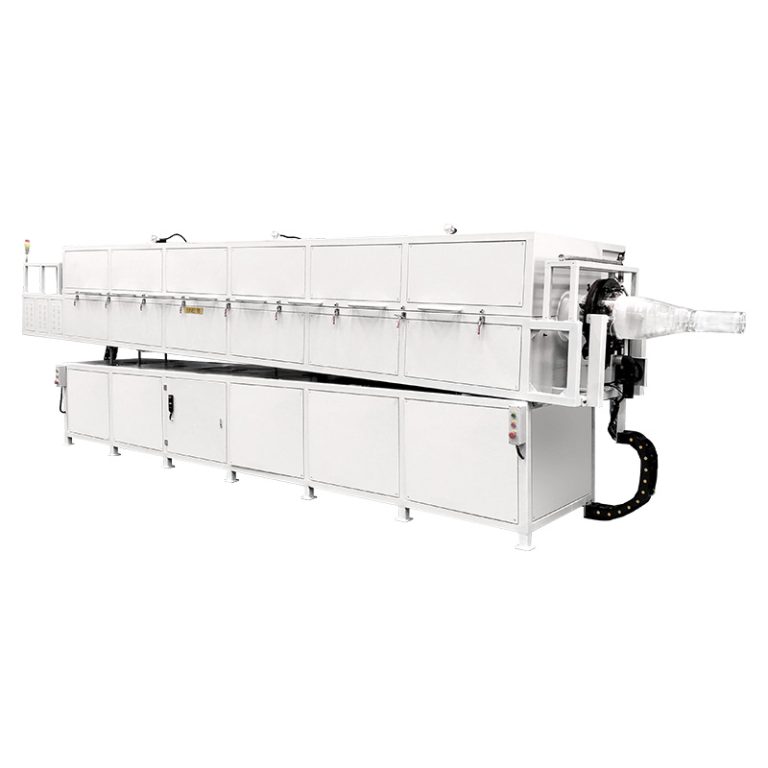
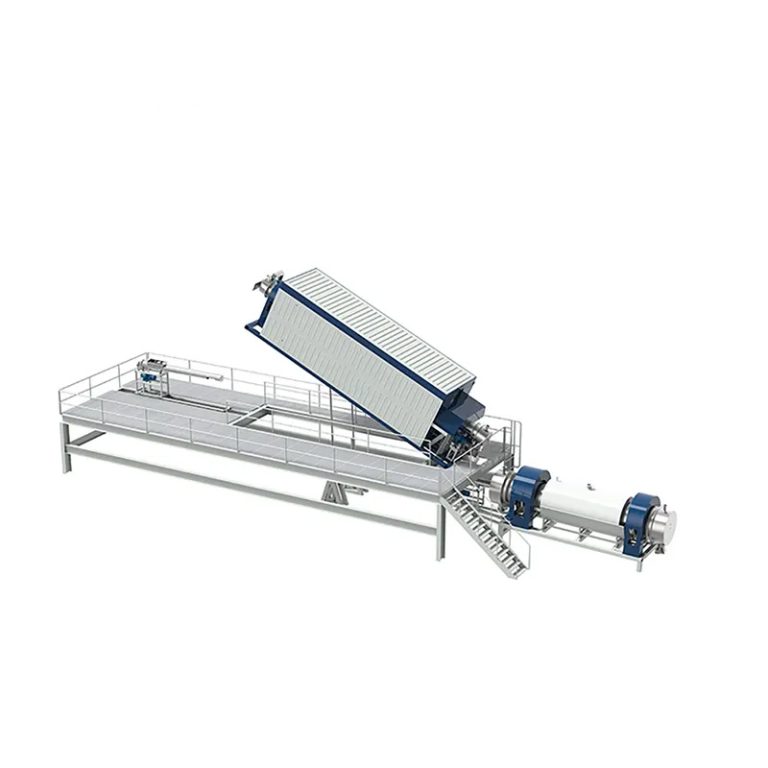
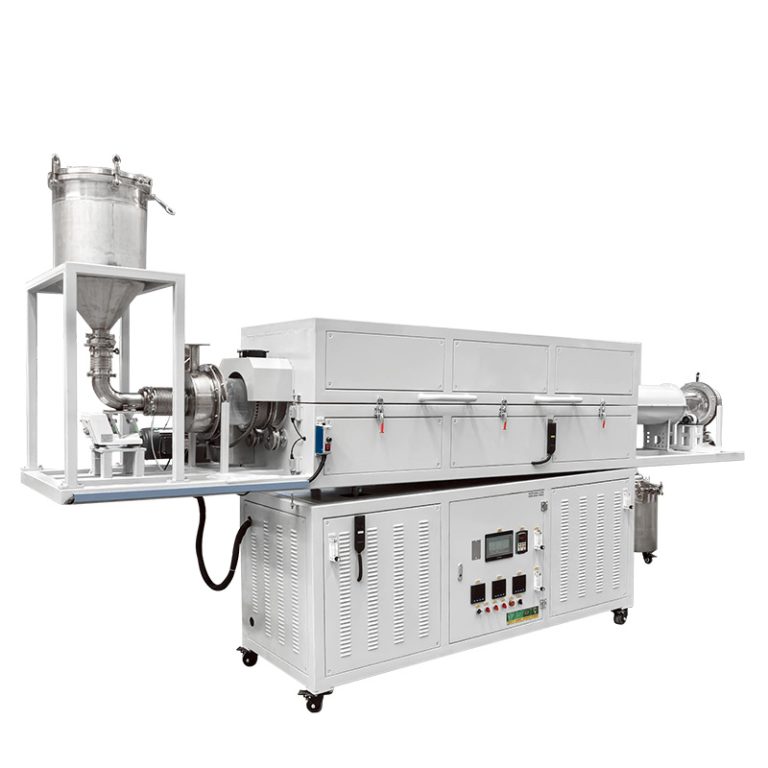
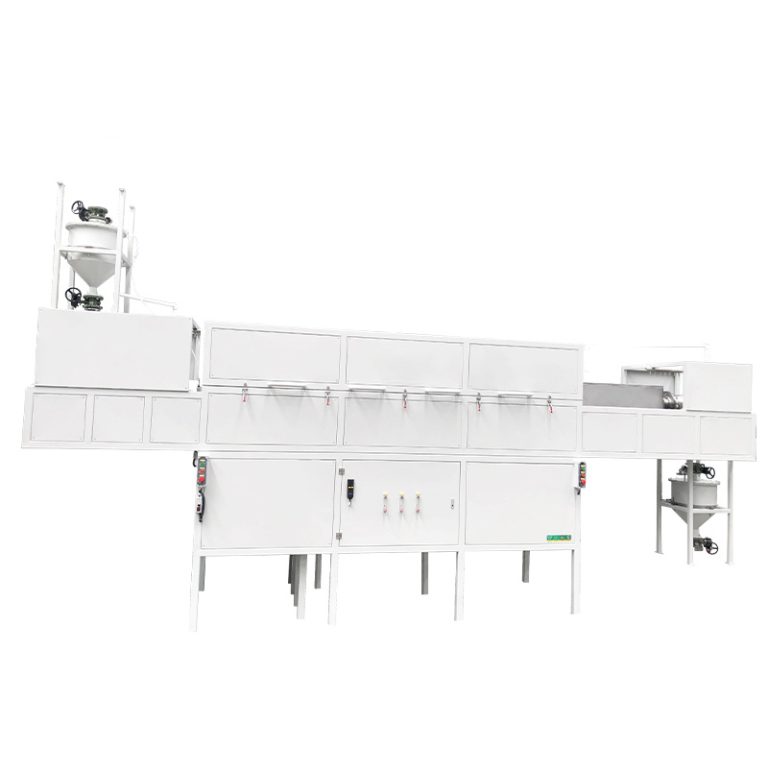
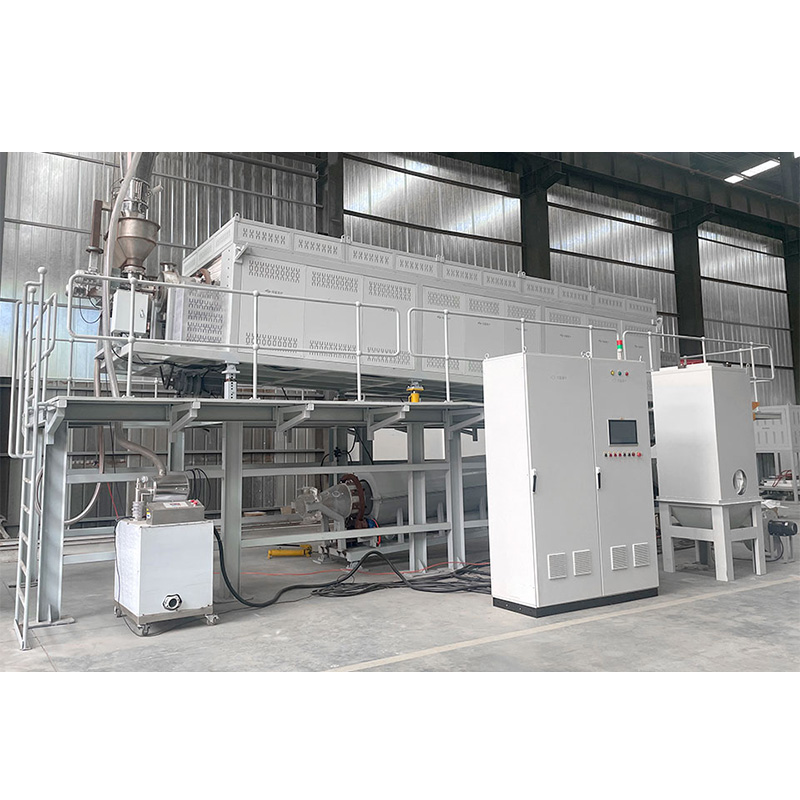
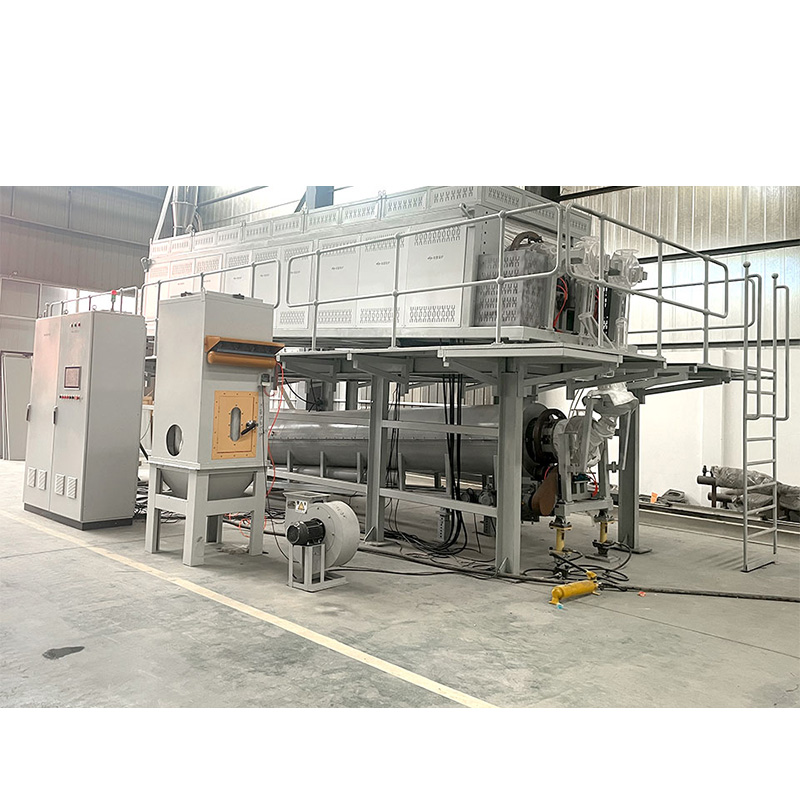
1150°C Large-Scale Quartz Glass Double-Tube Rotary Calcining Furnace with Cooling Electric Furnace
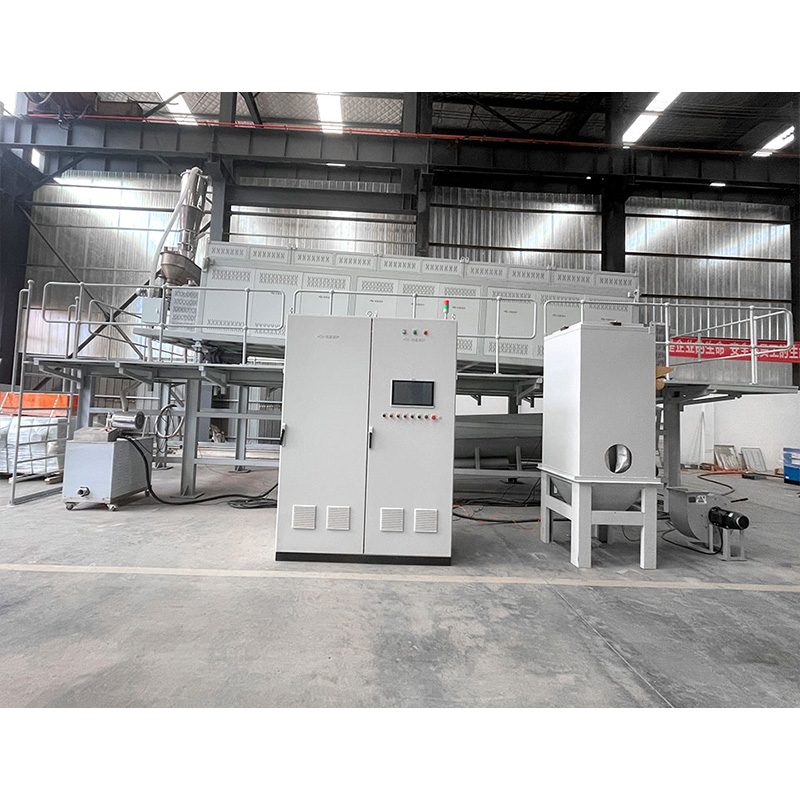
The large-scale quartz glass double-tube rotary calcining furnace is a large-scale continuous rotary furnace specifically designed for the continuous calcination, roasting, drying, and heat treatment processes of powder materials. The equipment adopts a double-quartz glass furnace tube structure, equipped with three independent temperature control zones, continuous spiral feeding, water-cooled spray cooling, and a PLC automatic control system, enabling continuous and stable production. The furnace tubes are made of high-purity quartz glass, featuring cleanliness, corrosion resistance, and high-temperature resistance.
Product Features
- Dual Quartz Glass Furnace Tubes for High-Capacity Continuous Production
Equipped with two heating section furnace tubes (φ420×φ404×7500mm, heating zone length 6000mm) and one cooling section furnace tube (φ420×φ404×5000mm). The parallel dual-tube design significantly increases the single-unit capacity, reaching 25-33 kg/h (reference value), suitable for large-scale industrial continuous production.
- Barbed Inner Wall Structure for Improved Material Dispersion
The front and middle sections of the heating section feature a barbed structure to maximize material dispersion, increase the contact area between the material and the hot surface, improve material dispersion and heating uniformity, and prevent material agglomeration.
- Spray Water Cooling for Rapid Cooling
The cooling section is approximately 5000mm long and uses a spray water cooling system. Circulating water sprays thoroughly cool the outer wall of the furnace tubes, resulting in faster cooling. The furnace tubes are supported by rollers on both sides of the furnace body, which can be adjusted radially along the furnace tube.
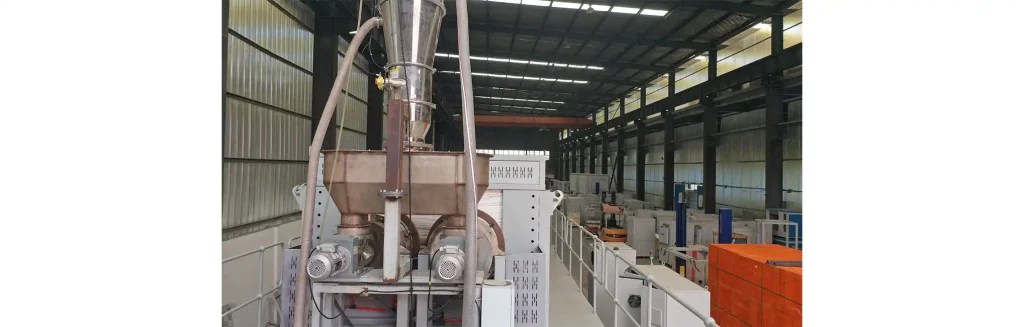
- Screw Feeding + Vacuum Feeding, High Degree of Automation
The feeding device uses a screw feeding method, with a 750W screw propulsion motor and a SUS304 stainless steel casing. It employs an unequal pitch structure (the pitch gradually increases from back to front) to improve the dispersion of material at the screw tip. Equipped with a vacuum feeder (maximum capacity 400L/h, material in contact with 304 stainless steel, polished inside and out of the barrel), it connects to the client’s own feeding hopper to achieve fully automatic feeding.
- Quartz Glass Furnace Head/Tail Seal, Double-Sealed Structure
Both the furnace head and tail hoods are made of quartz glass and feature a double-sealed structure. The furnace head hood is designed with an exhaust port and a gas exchange port (the gas exchange rate controls the exhaust temperature and internal pressure difference), while the furnace tail hood has an inlet for introducing inert gases or other reactive gases.
- Baghouse Dust Collector + Pulse Backflushing, Environmentally Friendly Emissions
Equipped with a 300m³/h baghouse dust collector, using polyester non-woven bags (75×500mm×12 bags) as filter elements, and an automatic pulse backflushing system for dust removal. The supplier is responsible for the piping between the electric furnace and the dust collector, achieving clean production.
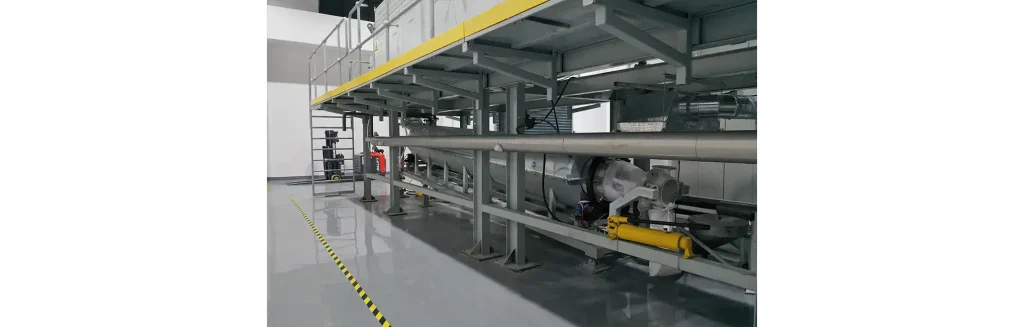
- Adjustable Furnace Tilt (0-3°), Variable Frequency Drive (VFD)
The furnace body rotates in the center, with electric adjusting screws at both ends, allowing for a tilt angle adjustable from 0-3°. The furnace tube speed is continuously adjustable from 0.5-5 rpm via VFD. The heating section drive motor is 2.2kW, and the water-cooling section drive motor is 1.1kW.
| Category | Specification |
|---|---|
| Maximum Design Temperature | 1050℃ |
| Operating Temperature | 100 ~ 1000℃ |
| Heating Tube Dimensions | φ420 × φ404 × 7500mm (two tubes) |
| Heating Zone Length | φ420 × φ404 × 6000mm (2 sections) |
| Cooling Zone Length | φ420 × φ404 × 5000mm (1 section) |
| Total Heating Zone Length | 6000mm |
| Heating Elements | Silicon carbide (SiC) rods, 1600 type |
| Temperature Control Method | Intelligent temperature controller, fully automatic PID self-tuning, SCR power regulation |
| Furnace Shell Temperature Rise | ≤ 50℃ |
| Temperature Control Zones | 3 independently controlled zones (front, middle, rear) |
| Temperature Control Accuracy | ±1℃ |
| Tube Rotation Speed | 0~5 r/min, continuously adjustable via frequency converter |
| Furnace Tilt Angle | 0~3°, adjustable |
| Production Capacity (reference) | 25~33 kg/h |
| Design Power | 180kW (heating rate 10~20℃/min, power automatically adjusted based on temperature and feed rate) |
| Power Supply | 380V / 50Hz / 3P+N |
| Cooling Method | Spray water cooling |
II. Design Scheme
| Component | Description |
|---|---|
| Overall Structure | Rotary drum-type structure, externally heated quartz glass tube for uniform material heating. Composed of furnace tube, furnace body, heating elements (SiC), screw feeder, tube head/tail sealing covers, support devices, drive unit, base (lifting mechanism), gas inlet/outlet devices, water cooling system, dust collector, etc. |
| Automation System | Programmable logic controller (PLC) + touchscreen + configuration interface for automatic operation control, status monitoring, simulation display, and fault alarm indication |
| Furnace Tube | Two heating sections: φ420×φ404×7500mm; one cooling section: φ420×φ404×5000mm. Internal barbs arranged in the front-middle of heating sections to maximize material dispersion and contact with high temperature. Tube material: quartz glass, capable of long-term use at 1050℃ |
| Heating System | 3 independent temperature zones, each 60kW, total 180kW (normal operating power 30%~50%). Heating elements: 1600-type SiC rods. Thermocouples positioned above and below the tube for more accurate powder temperature measurement. Control accuracy ±5℃. Insulation: fiber board modules + blanket |
| Water Cooling System | Cooling zone length 5000mm, with water spray cooling jacket around the tube for accelerated cooling via circulating water. Total water inlet DN30, outlet DN80. Inlet water pressure 0.3~0.5MPa, consumption 20~40m³/h |
| Feeding & Discharging | Screw feeder (750W motor, SUS304 housing, variable-pitch screw for improved material dispersion). Feeder top connected to vacuum loader, then to client-supplied hopper. Discharge outlet with butterfly valve + DN150 flange, equipped with 2 × 50L discharge containers |
| Vacuum Loader | Max. capacity 400L/h; material-contact parts: 304 stainless steel; internal/external polished drum; pneumatic rotary cylinder discharge (Kenner, UK); reversing valve + pulse jet cleaning system + polyester nonwoven filter bags (75×500mm × 12 pcs); 7.5kW vortex dual-stage vacuum pump; 304 stainless steel piping; mobile and height-adjustable |
| Sealing Device | Dust-proof sealing covers at both tube inlet and outlet ends; stainless steel shrouds for centralized dust collection. Cover material: quartz glass. Front cover with exhaust and gas mixing ports; rear cover with gas inlet for inert/reactive gas introduction. Exhaust ports reserved on top, with 300m³/h baghouse dust collector (supplier responsible for piping from furnace to collector; client responsible for outdoor piping) |
| Drive Unit | Sprocket + chain + reducer + coupling + frequency converter + motor; tube speed 0.5~5 r/min continuously adjustable; heating section motor 2.2kW, cooling section motor 1.1kW. Tube supported by roller supports (front and rear, radially adjustable). Sprocket with protective cover |
| Support Frame | Steel section + steel plate welded construction; bottom support base with tilt adjustment mechanism (center pivot, electric screw drives at both ends), tilt angle 0~3° |
| Electrical Control | High-precision full-digital integrated power controller (4~20mA signal, phase-shift triggering); multiple control modes selectable (constant voltage / constant current / constant power) |
III. Key Features
| Feature | Description |
|---|---|
| Low Energy Consumption | Modular insulation structure; energy consumption over 20% lower than competitors under same operating conditions |
| Low Surface Temperature | Reduced furnace surface temperature improves working environment; no noticeable radiant heat during operation |
| Intelligent Control | Data acquisition, display, communication, and fault alarm for automated intelligent production management |
| Protection Design | Overcurrent, overvoltage, overtemperature, and thermocouple break alarm protection |
| Reliable Sealing | Double-seal structure (silicone seals) at both inlet and outlet; prevents hot gas or dust leakage |
| Easy Maintenance | Compact structure; easy disassembly of feeder and head/tail covers for maintenance |
| Anti-Bridging Feed Design | Screw feeder with material agitation rotor to prevent material bridging |
| Anti-Contamination (Roller Oil/Mud) | Oil/mud collection trays beneath roller supports to prevent floor contamination |
Application Areas
- Quartz Sand/High-Purity Silicon Calcination: Suitable for continuous high-temperature calcination of materials such as quartz sand and high-purity silicon.
- Battery Material Heat Treatment: Suitable for continuous calcination and heat treatment of positive and negative electrode materials and precursors for lithium batteries.
- Catalyst Activation and Calcination: Suitable for continuous activation and calcination of materials such as catalyst supports and molecular sieves.
- Metal Oxide Preparation: Suitable for the synthesis and calcination of metal oxides.
- Continuous Production of Nanomaterials: Suitable for the continuous large-scale production of materials such as nanopowders and nanooxides.
- New Material R&D and Pilot Production: Suitable for calcination process research and pilot-scale production of various new materials.
Company Profile
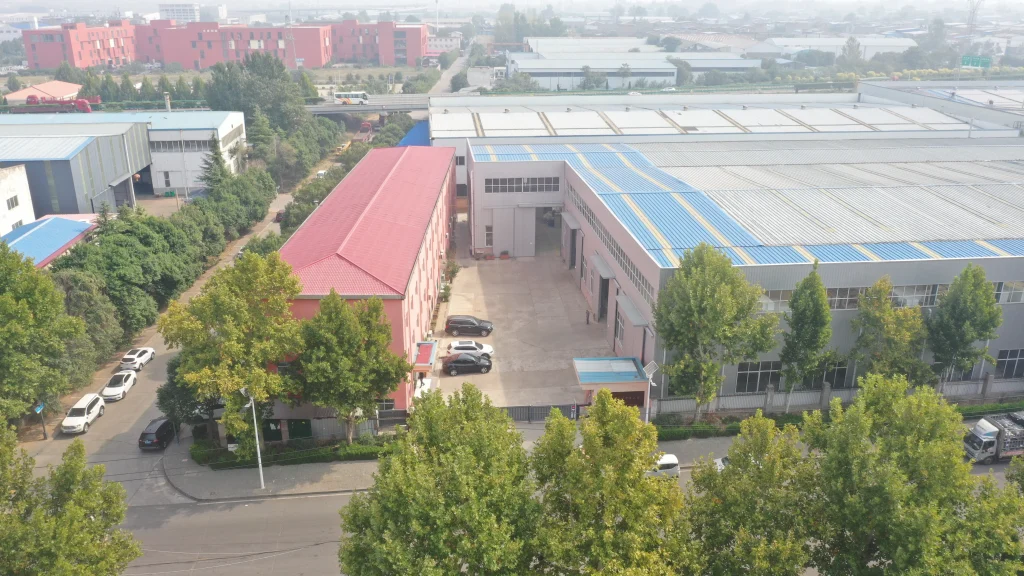
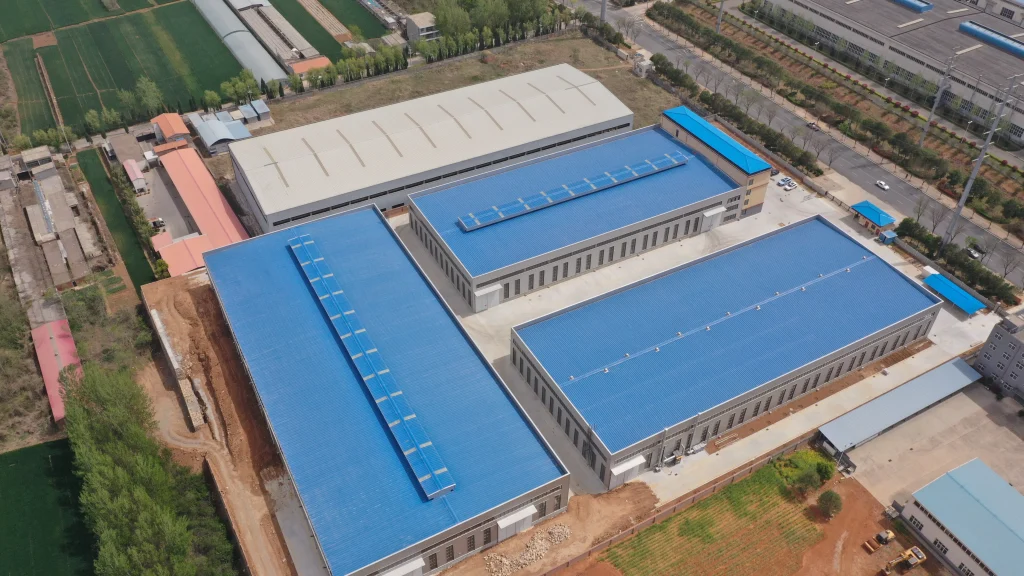
A professional enterprise specializing in heat treatment technology services and the R&D, manufacturing, and sales of high-temperature electric furnaces.
The company focuses on developing high-temperature electric furnaces covering a full temperature range of -100℃ to 2600℃. Its products include experimental electric furnaces, vacuum atmosphere furnaces, industrial kilns, and medium-frequency induction heating equipment. Main products include box furnaces, tube furnaces, lifting furnaces, pusher kilns, bogie furnaces, rotary kilns, tunnel kilns, and various specialized medium-frequency furnaces.
The company adheres to technological innovation and has passed ISO9001 and EU CE certifications. It owns 21 registered trademarks, 29 patents, and 27 software copyrights.
Payment Methods
TT
Shipment Methods
The electric furnace is packaged in three layers: first wrapped in foam paper, then wrapped in plastic film, and finally packed in a wooden crate.
Frequently Asked Questions (FAQ)
- What materials is this equipment suitable for continuous calcination?
Suitable for continuous calcination processes of new energy materials, catalysts, ceramic powders, electronic materials, oxides, inorganic powders, and chemical materials.
- What material is the furnace tube made of?
High-purity quartz glass furnace tubes are used, featuring corrosion resistance, high temperature resistance, and cleanliness, making them suitable for the heat treatment of high-purity materials.
- Does the equipment support continuous feeding and discharging?
Yes. The equipment is equipped with a spiral continuous feeding system and a continuous discharging system, enabling 24-hour continuous operation.
- Can the equipment be supplied with protective gases?
Yes, a gas interface is reserved at the furnace tail, allowing the introduction of protective atmospheres such as nitrogen and argon to meet different process requirements.
- Does the equipment support customization?
Yes. Furnace tube dimensions, heating zone length, number of temperature zones, automatic feeding system, dust removal system, cooling method, and control system can all be customized according to customer process requirements.