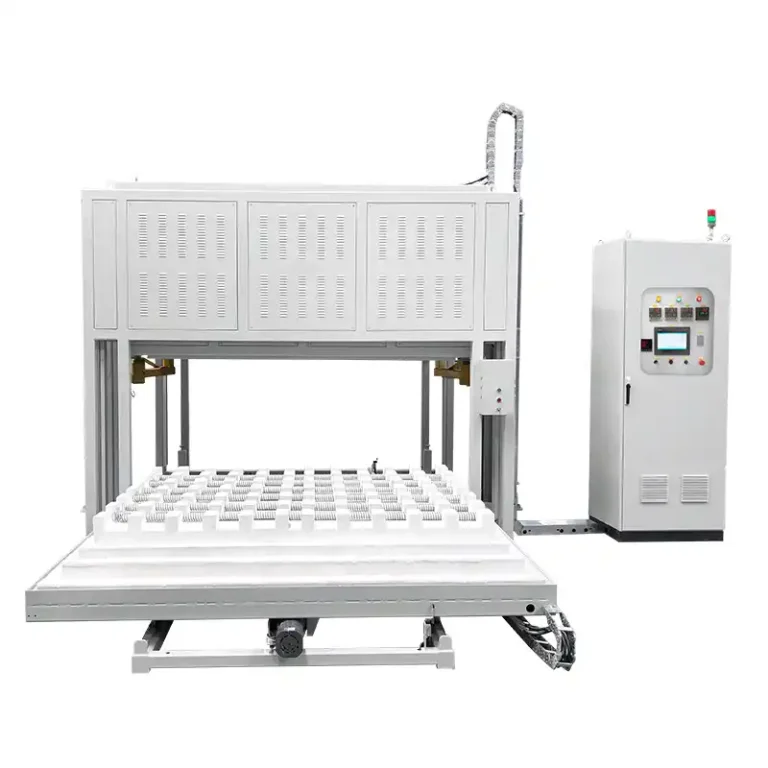
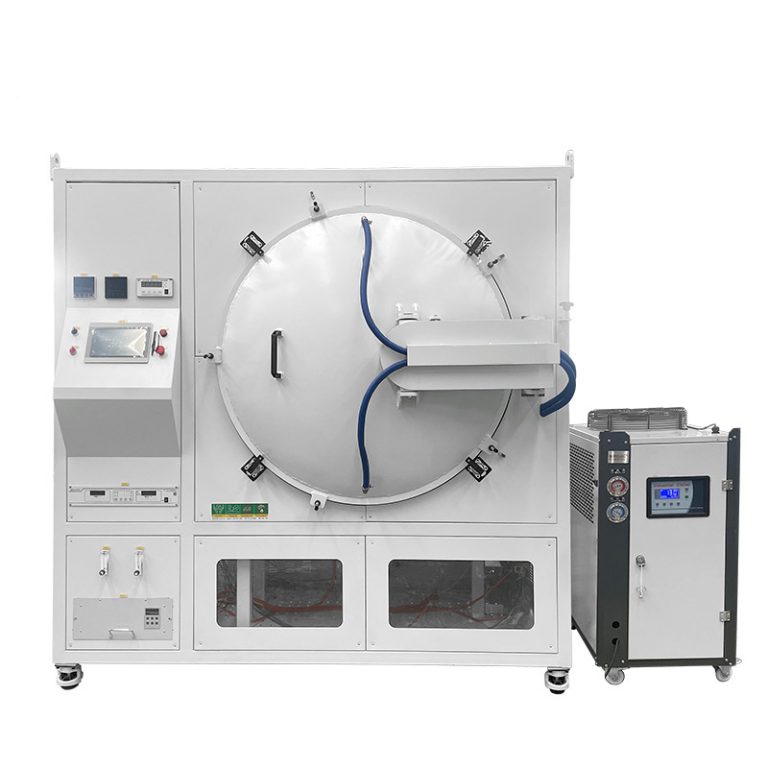
Luoyang Anjing Intelligence Equipment are a global leader in high-temperature electric furnaces



What Is a Dewaxing Furnace? A Complete Guide to Dewaxing and Debinding Furnaces
A dewaxing furnace is a specialized thermal-processing furnace used to remove wax, binders, lubricants, and other organic materials from molded or pressed components before sintering or high-temperature processing.
I.What Is a Dewaxing Furnace?
A dewaxing furnace is an important piece of equipment in powder metallurgy, ceramics, metal injection molding (MIM), and advanced materials manufacturing. Before a part can be sintered at high temperature, wax, binder, or lubricant must often be removed in a controlled manner to prevent cracking, deformation, contamination, or other defects.
A dewaxing furnace is a thermal-processing system specifically designed to remove wax and other organic binders from a material or molded component before subsequent high-temperature processing.
In many manufacturing processes, powders are mixed with binders, waxes, plasticizers, or lubricants so that the raw material can be molded, pressed, or injection molded into the required shape.
The temporary organic materials must then be removed before sintering.
A typical process is:
Molding → Dewaxing/Debinding → Preheating → Sintering → Cooling
If the organic materials are removed too quickly, gases and vapors generated during decomposition may build up inside the component. This can result in:
- Cracks
- Blistering
- Internal pores
- Shape deformation
- Surface defects
- Carbon or organic residue
A well-designed dewaxing furnace therefore provides controlled heating, appropriate exhaust handling, and stable temperature distribution.
II.What is the Difference Between Dewaxing and Degreasing?
1.How Does a Dewaxing Furnace Work?
A dewaxing furnace works by gradually heating the workpiece through a carefully controlled temperature profile.
As temperature rises, waxes, binders, lubricants, or other organic additives begin to soften, evaporate, melt, or thermally decompose.
The furnace must provide enough time for these materials to leave the component safely without damaging its structure.
A typical process may include several stages:
- Preheating:The material is heated slowly to remove residual moisture and prepare the component for binder removal.
- Binder or Wax Softening:The organic material begins to soften or melt, depending on its composition.
- Controlled Decomposition:As the temperature increases, the binder system decomposes and produces gases or vapors.
- Exhaust and Purification:The generated gases are directed away from the furnace chamber and, where required, treated by an exhaust purification system.
- Final Debinding:The remaining organic components are removed before the component proceeds to sintering or another high-temperature process.
The exact temperature curve depends heavily on the material formulation, binder chemistry, component thickness, and desired production rate.
2.What Is the Difference Between Dewaxing and Debinding?
The terms dewaxing and debinding are closely related, but they are not always identical.
Dewaxing usually refers specifically to the removal of waxes from a molded or pressed material.
Debinding is a broader term referring to the removal of binders and other organic additives.
For example, a powder metallurgy or MIM feedstock may contain several organic components rather than wax alone. The thermal process used to remove these materials is generally described as thermal debinding.
Therefore, a furnace marketed as a dewaxing furnace may also perform broader debinding functions, depending on its design.
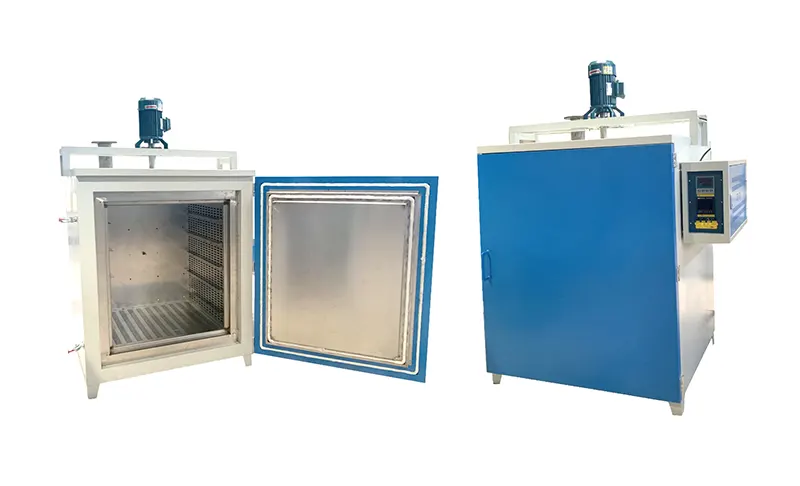
3.Why Is Temperature Control Important in a Dewaxing Furnace?
Temperature control is one of the most important aspects of dewaxing and debinding.
The furnace should not simply heat the material as quickly as possible.
Instead, the temperature profile must be matched to the decomposition characteristics of the binder system.
A typical controlled profile may involve:
Low-temperature holding → Controlled ramp → Intermediate holding → Further heating → Final debinding stage → Sintering or transfer
The heating rate may need to be reduced in temperature ranges where significant binder decomposition occurs.
Too-fast heating can generate gases faster than they can escape, increasing internal pressure and the risk of cracking or distortion.
This is why a dewaxing furnace should ideally provide programmable multi-segment temperature control.
Luoyang Anjing’s electric furnace accessory systems use intelligent temperature controllers with PID control, multi-segment program curves, alarm functions, and communication interfaces. The company states a temperature-control accuracy of ±1°C for the applicable control system.
These control capabilities can be integrated into thermal-processing systems where precise heating profiles are required.
4.Why Does Exhaust Gas Treatment Matter?
Dewaxing and debinding release organic vapors and decomposition gases.
Simply allowing these gases to accumulate inside the furnace chamber can create process, contamination, and safety problems.
A properly engineered system may therefore include:
Furnace Chamber → Exhaust Collection → Condensation / Separation / Oxidation / Purification → Discharge
The exact treatment method depends on the binder chemistry and process emissions.
This is particularly important for industrial systems operating continuously or with high material throughput.
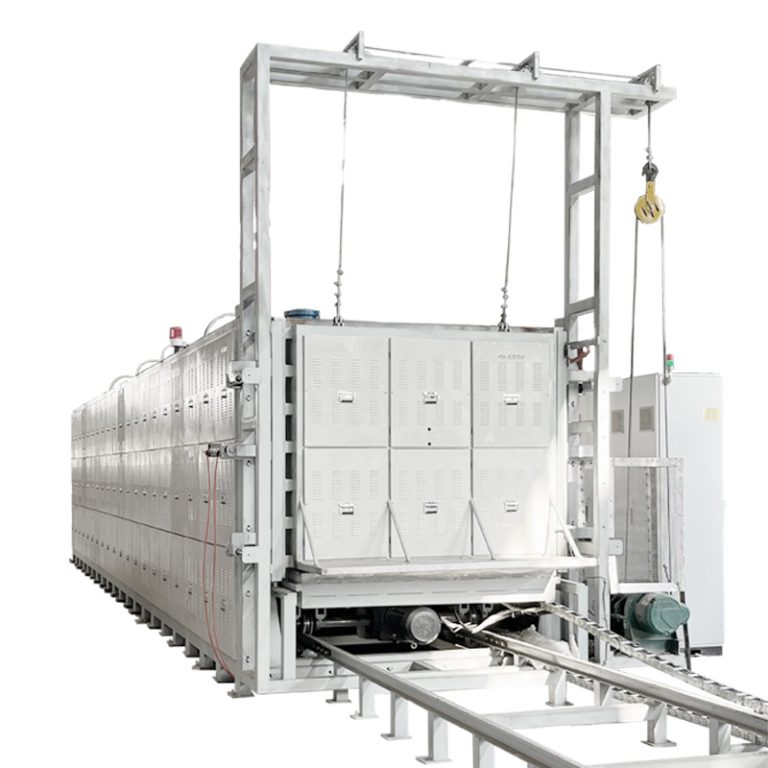
Luoyang Anjing’s industrial furnace product categories specifically include an Exhaust Gas Purification Furnace / Degreasing Furnace, indicating a dedicated equipment category for processes involving degreasing, exhaust treatment, and related thermal processing.

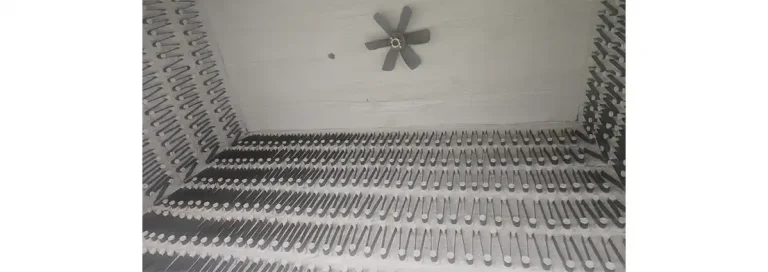
5.What Heating Elements Are Used in Dewaxing Furnaces?
The heating elements depend on the required operating temperature and furnace configuration.
For lower and intermediate temperature stages, resistance heating elements may be selected according to the thermal process.
For higher-temperature downstream sintering, the furnace may use different heating technologies.
This allows furnace designers to select heating components according to the required thermal cycle rather than using one heating element for every application.
For a dewaxing furnace, however, the heating element should be evaluated together with the binder decomposition range, chamber atmosphere, required heating rate, and whether the same furnace will also perform sintering.
6.What Furnace Atmosphere Is Used for Dewaxing?
The required atmosphere depends on the material and binder system.
Many processes may be conducted in controlled atmospheric conditions to manage oxidation, decomposition behavior, and final material properties.
Possible process environments include:
- Air
- Nitrogen
- Argon
- Vacuum
- Specialized reducing atmospheres
The appropriate atmosphere must be determined from the chemistry of the material and binder system.
An important consideration is that the atmosphere used during debinding may not be identical to the atmosphere required during the subsequent sintering stage.
Some systems therefore use carefully separated or programmable process stages.
7.What Is the Difference Between a Dewaxing Furnace and a Sintering Furnace?
A dewaxing furnace and a sintering furnace can be part of the same production process, but they perform different thermal functions.
| Feature | Dewaxing Furnace | Sintering Furnace |
|---|---|---|
| Main purpose | Remove wax and binders | Densify and strengthen material |
| Primary challenge | Controlled organic decomposition | High-temperature material transformation |
| Gas generation | Significant during debinding | Usually lower than during debinding |
| Temperature profile | Often slow and multi-stage | High-temperature heating and soaking |
| Exhaust treatment | Particularly important | Depends on process |
| Material stage | Green body | Debound component |
In some manufacturing systems, debinding and sintering are performed in separate furnaces to optimize each process.
In other applications, an integrated debinding and sintering furnace may be used to reduce handling and improve process continuity.
The best configuration depends on product geometry, binder system, production volume, atmosphere requirements, and target sintering temperature.
III.What Should You Consider When Choosing a Dewaxing Furnace?
Selecting a dewaxing furnace requires more than specifying a furnace temperature.
1. Binder Composition
Identify the wax, polymer, lubricant, or binder system that needs to be removed.
2. Part Geometry
Thick, dense, or complex components may require slower heating and longer holding stages.
3. Production Capacity
Determine whether the operation is batch-based or continuous and specify the required throughput.
4. Temperature Range
Define the actual dewaxing temperature range and whether the same furnace will also perform pre-sintering or sintering.
5. Temperature Uniformity
The entire load should experience a consistent temperature profile to reduce process variation.
6. Exhaust Treatment
Specify the volume and composition of gases and vapors generated during debinding.
7. Atmosphere
Determine whether the process requires air, inert gas, vacuum, or a specialized atmosphere.
8. Automation
For industrial production, programmable temperature curves, alarms, PLC integration, and process monitoring can improve consistency and reduce operator intervention.
Anjing’s electric furnace accessory systems support PID temperature control, multi-segment temperature programming, PLC and touchscreen options, power regulation, and other control functions for industrial and laboratory furnace systems.
IV.Conclusion
A dewaxing furnace is a specialized thermal-processing system used to remove waxes, binders, lubricants, and other organic materials from molded or pressed components before sintering or further heat treatment. Its performance depends on accurate temperature control, controlled heating rates, suitable atmosphere management, effective exhaust handling, and proper thermal uniformity.
For powder metallurgy, MIM, ceramics, and advanced materials, selecting the right dewaxing or debinding system can help reduce cracking, deformation, residue, and process variation. Please contact Anjing and tell us your materials to obtain a customized dewaxing furnace solution.
Click “Request a Quote” to get a customized solution.
V. FAQ Section
1. What is a dewaxing furnace used for?
A dewaxing furnace is used to remove wax, binders, lubricants, and other organic materials from molded or pressed components before sintering or other high-temperature processing.
2. What is the difference between dewaxing and debinding?
Dewaxing typically refers specifically to the removal of wax-based components, while degreasing refers to a broader process that includes the removal of polymers, lubricants, plasticizers, and other organic binder components from the green body.
3. Why is slow heating important during dewaxing?
By controlling the heating rate, organic adhesives can be softened, volatilized, or decomposed at a suitable rate. If the temperature rises too quickly, the volatilized gases cannot escape in time, which may lead to product cracking, blistering, deformation, or internal defects.
4. Do dewaxing furnaces need exhaust gas treatment?
Some integrated systems can combine debinding and sintering, but their suitability depends on the materials, binder system, temperature range, atmosphere, and process control requirements. For more demanding processes, it may be more prudent to separate debinding and sintering in different furnaces.
5. Can a dewaxing furnace also be used for sintering?
Integrated debinding and sintering systems are not a universal solution and must be determined based on material, binder, temperature, atmosphere, and process control requirements. For demanding applications, separate debinding and sintering furnaces may be more suitable.
Supplier
Luoyang Anjing Intelligent Equipment Co., Ltd. is an enterprise dedicated to the research, development, production, sales, and technical services of heat treatment equipment such as high-temperature electric furnaces. We produce laboratory, vacuum, industrial, and medium frequency furnace, covering a temperature range from -100℃ to 2600℃, serving industries such as new energy, semiconductors, and advanced materials. We can provide customized solutions based on specific atmosphere, ultra-high temperature, and intelligent control system requirements. Please feel free to contact us if you are interested.