Luoyang Anjing Intelligence Equipment are a global leader in high-temperature electric furnaces



Do All Tube Furnaces Operate Under Vacuum?
Many users new to tube furnaces mistakenly believe that a tube furnace is simply a vacuum device, requiring all experiments to be conducted in a vacuum environment. This is a very common misconception.
Not all tube furnaces operate in a vacuum. Vacuum is merely a working mode, not the fundamental principle. Depending on the experimental process and material requirements, tube furnaces can operate in air, inert atmospheres, reactive atmospheres, or vacuum environments. Understanding the Tube Furnace Working Principle and the impact of different atmospheres on the process is crucial for correctly selecting equipment configurations and obtaining stable experimental results.
I. General Introduction to Tube Furnaces
A tube furnace is a device that uses resistance heating elements to uniformly heat furnace tubes, completing high-temperature treatments in a controlled environment. Compared to ordinary box furnaces, the biggest advantage of tube furnaces is that samples are placed inside individual furnace tubes, making it easier to control the furnace atmosphere.
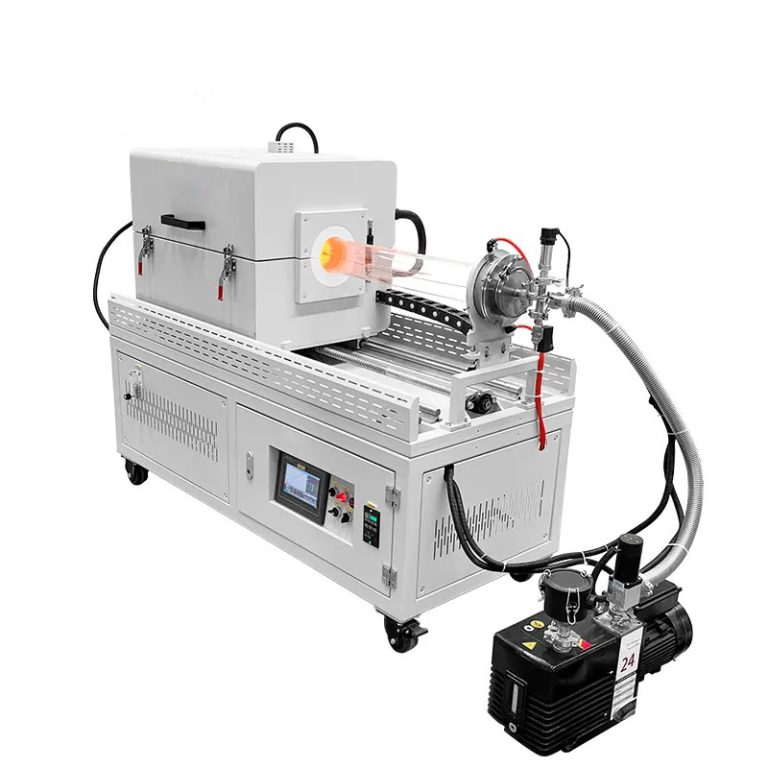
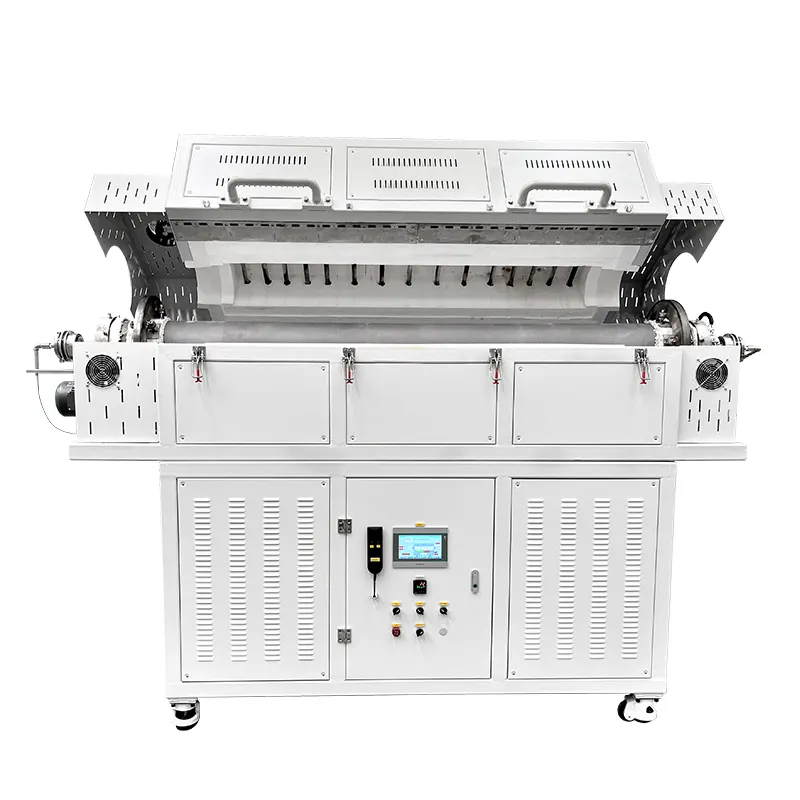
A standard tube furnace typically includes a furnace body, heating elements, furnace tubes, a temperature control system, and insulation. If special processes are required, vacuum pumps, sealing flanges, mass flow controllers (MFCs), and gas pipelines can be added to achieve a vacuum or protective atmosphere environment.
Therefore, what determines whether a tube furnace operates under vacuum is not the furnace body itself, but whether a vacuum system is installed and whether the process requires vacuum conditions.
II. Product Features and Advantages
- Atmospheric Environment Operation: The Simplest Mode of Use
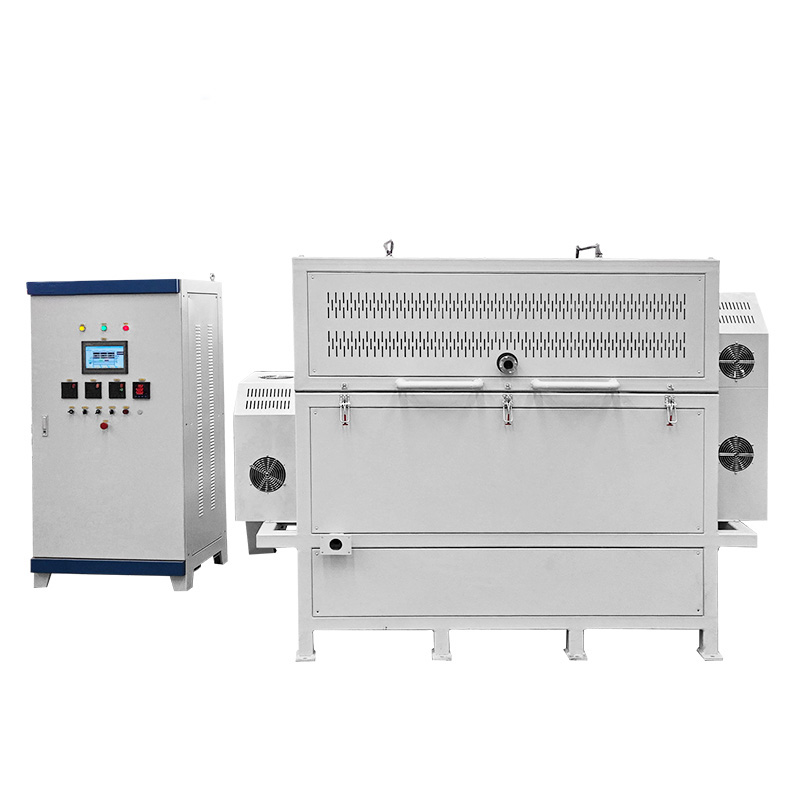
Operating under normal atmospheric pressure is the most basic operating mode of the tube furnace. Samples are heated in ordinary atmospheric air, and the ends of the furnace tube do not require sealing or only require simple sealing. The advantage of this method is its simplicity of operation, eliminating the need for a gas source and vacuum pump. Applicable scenarios include: conventional sintering of ceramic materials, annealing of metals in air, and glass softening—processes where oxidation is not a concern.
- Atmosphere-Protected Operation: Specific Gas Introduction
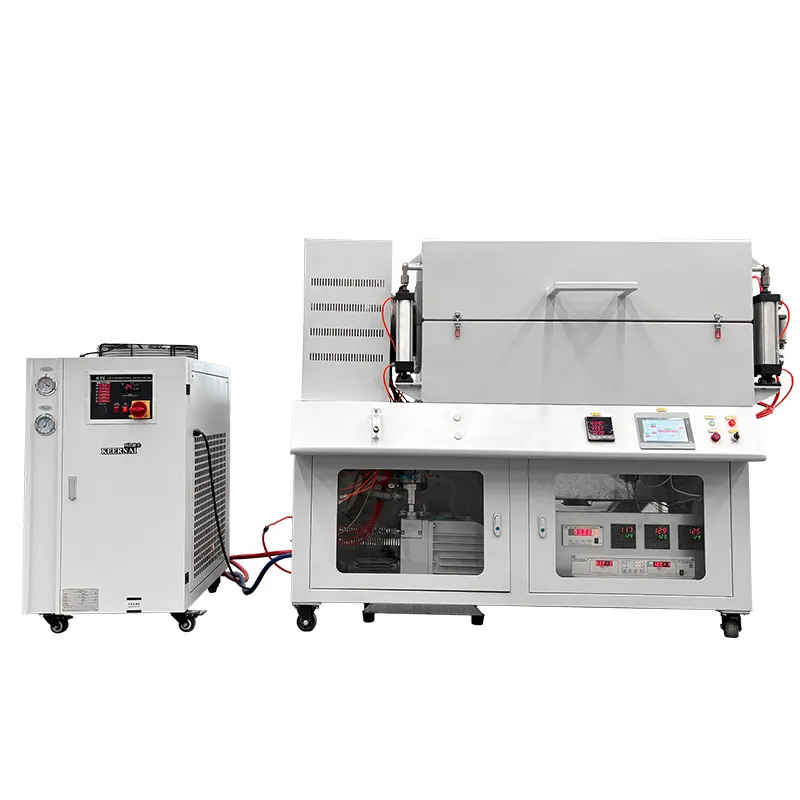
In this mode, both ends of the furnace tube are sealed with flanges. Nitrogen, argon, hydrogen, or other gases are introduced from one end and discharged from the other, creating a specific gaseous atmosphere within the furnace tube. The purpose of introducing the gas includes: preventing metal oxidation (using nitrogen or argon), removing surface oxide films (using hydrogen), or providing a specific gaseous environment for chemical reactions. The typical pressure in atmosphere-protected mode is slightly positive pressure, and the flow rate is observed by bubbling using a gas washing bottle.
- Vacuum Operation: Air Removal from the Furnace
When using vacuum mode, the air in the furnace tubes must first be evacuated using a vacuum pump to achieve a certain vacuum level before heating can begin. Vacuuming is primarily to prevent the material from oxidizing, decarburizing, or reacting with other gases at high temperatures, ensuring sample purity and quality. The vacuum level that can be achieved depends on the type of pump used—mechanical pumps can reach approximately 10⁻¹ Pa, while molecular pump units can reach 10⁻³ Pa or even 10⁻⁵ Pa.
- Vacuum System is Optional, Not Standard
From a product configuration perspective, the vacuum system (vacuum pump, vacuum gauge, vacuum valves) is an optional accessory, not a standard feature, in most tube furnaces. A tube furnace may only come with a sealing flange and inlet/outlet ports; the user needs to purchase a vacuum pump separately to achieve vacuum functionality. This means that a tube furnace without a vacuum pump can still be used as a regular atmosphere furnace or an air furnace.
| Prerequisite | Specific Requirements & Description | Key Restrictions / Cautions |
|---|---|---|
| 1. Sealed Flange System | Both ends of the furnace tube must be equipped with stainless steel vacuum flanges fitted with O‑ring silicone rubber seals to ensure airtightness under negative pressure. | If the furnace uses an open tube design (without sealing flanges), vacuum evacuation is not possible. |
| 2. Tube Material & Connection | Both quartz tubes and alumina (corundum) tubes are suitable for vacuum use, provided they are properly sealed with the flanges. | Critical limitation for alumina tubes: Do not evacuate while the tube is at temperatures above 1500°C – the combined effect of high temperature and negative pressure may cause the tube to crack or rupture. |
| 3. Vacuum Pump System | Select the pump type based on the required vacuum level: – Rotary vane mechanical pump: ultimate vacuum approx. 5×10⁻¹ Pa – Turbomolecular pump system: ultimate vacuum可达 10⁻³ Pa or higher | Users must choose the appropriate pump according to process requirements – cost and pumping speed vary significantly between pump types. |
III. Two Easily Confused Key Issues
- Does Vacuum Mean Better Heating?
Many people believe that a vacuum environment is always superior to an air environment, but this is not the case. The main function of a vacuum is to reduce oxidation, minimize contamination, and avoid unnecessary chemical reactions, not to increase heating efficiency.
For processes requiring an oxidizing atmosphere, such as ceramic sintering and glass heat treatment, an air environment can actually yield more ideal results. Therefore, the decision to use a vacuum should be based on material properties and process requirements, rather than simply pursuing “the higher the vacuum level, the better.”
- Can all tube furnaces be upgraded to vacuum furnaces?
The answer is also no. Converting a conventional air-tube furnace to vacuum operation requires meeting several conditions:
The furnace tubes must have good vacuum resistance;
Equipped with high-vacuum sealing flanges;
Additional vacuum pumps and vacuum piping;
Configuration of a vacuum pressure monitoring device;
The control system must support vacuum interlock protection.
If the equipment itself is not designed for vacuum operation, forcibly creating a vacuum may damage the furnace tubes, cause seal failure, and even compromise equipment safety. Therefore, when purchasing equipment, it is necessary to determine in advance whether a vacuum function is required based on future process needs, rather than simply modifying it later.
IV. Three Operating Modes of Tube Furnaces Corresponding to Different Application Scenarios
- Atmosphere Protection Mode: This is the most commonly used method in materials science. Sintering of lithium-ion battery positive and negative electrode materials requires a nitrogen or argon atmosphere to prevent oxidation and discoloration. CVD growth of graphene and carbon nanotubes requires the introduction of a carbon source gas and a carrier gas, with precise control of the atmosphere composition. Reduction annealing of metal powders involves the introduction of hydrogen or an argon-hydrogen mixture to remove surface oxide films.
- Vacuum Mode: Used for processes extremely sensitive to oxygen and moisture. Sintering of high-purity ceramics is carried out in a vacuum to avoid impurity contamination. Vacuum brazing and vacuum annealing are used for aerospace high-temperature alloys and titanium alloy components. A vacuum environment is also used to remove gases and volatile impurities from materials, improving density.
- Air Mode: Suitable for the conventional sintering of oxide ceramics such as alumina and zirconium oxide, as well as the annealing of glass products. These processes do not require an additional atmosphere and can be completed in an air environment, resulting in the lowest operating costs.
V.Supplier
Luoyang Anjing Intelligent Equipment Co., Ltd. is an enterprise dedicated to the research, development, production, sales, and technical services of heat treatment equipment such as high-temperature electric furnaces. We produce laboratory, vacuum, industrial, and medium frequency furnace, covering a temperature range from -100℃ to 2600℃, serving industries such as new energy, semiconductors, and advanced materials. We can provide customized solutions based on specific atmosphere, ultra-high temperature, and intelligent control system requirements. Please feel free to contact us if you are interested.