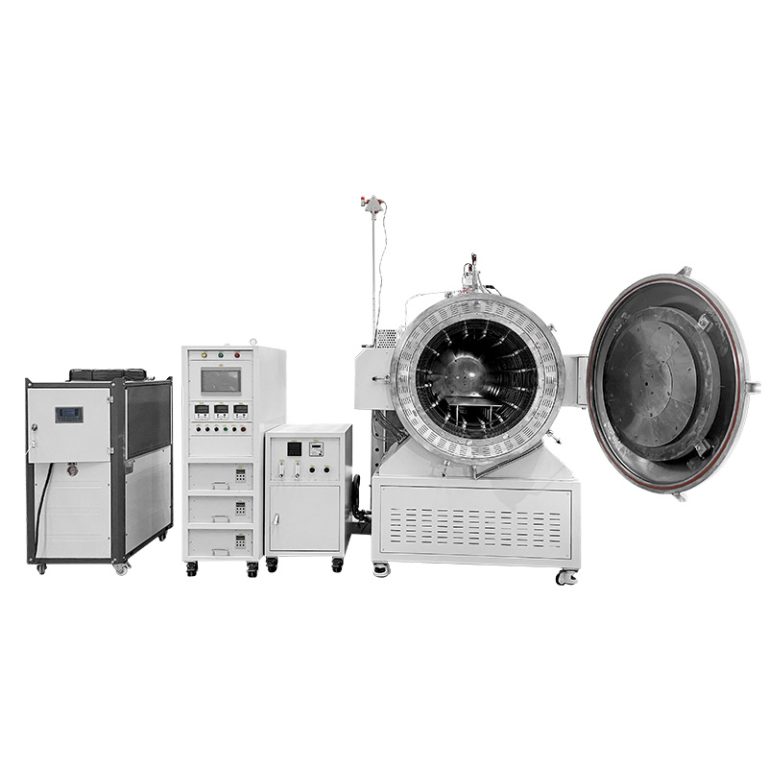
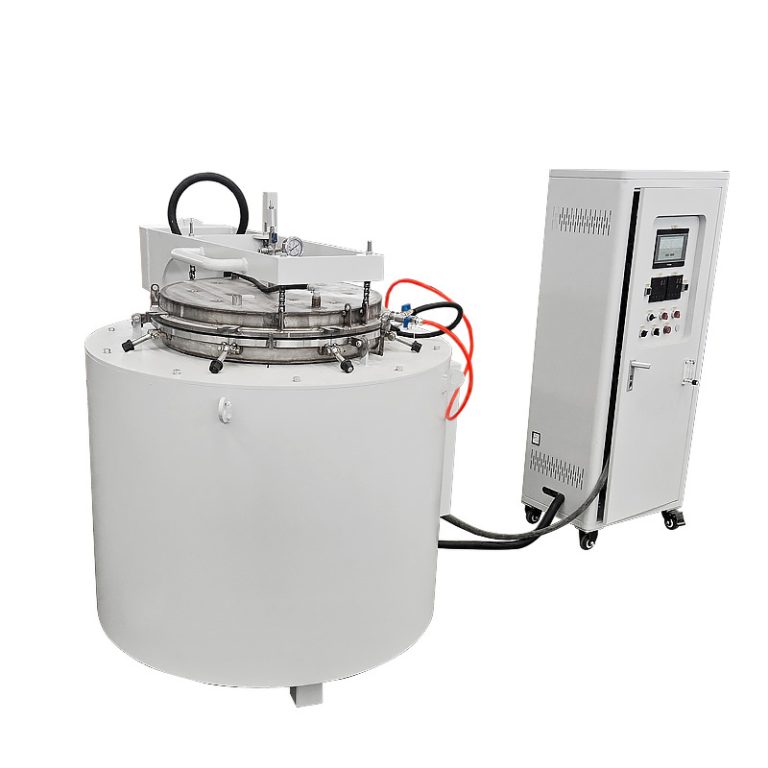
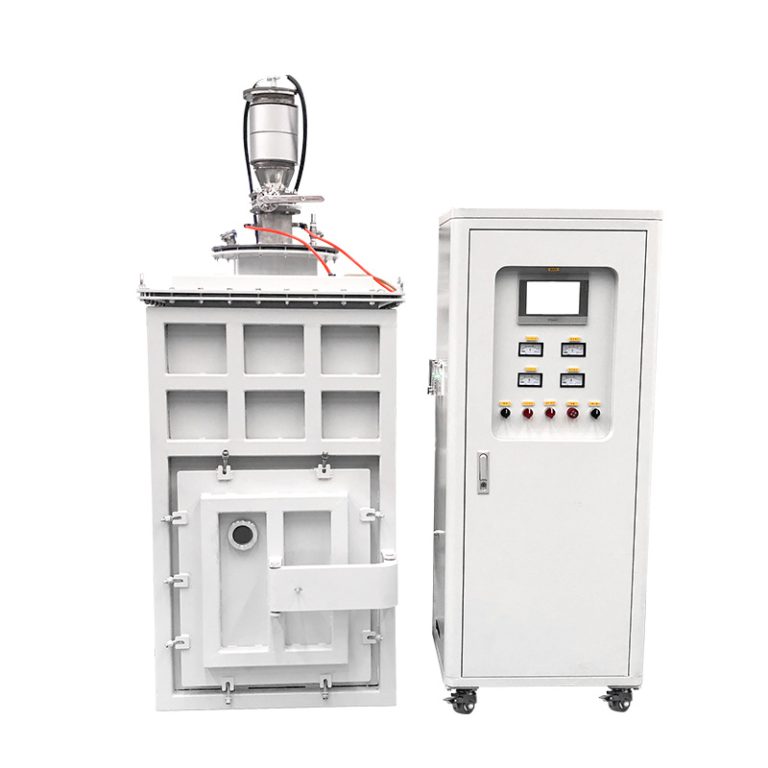
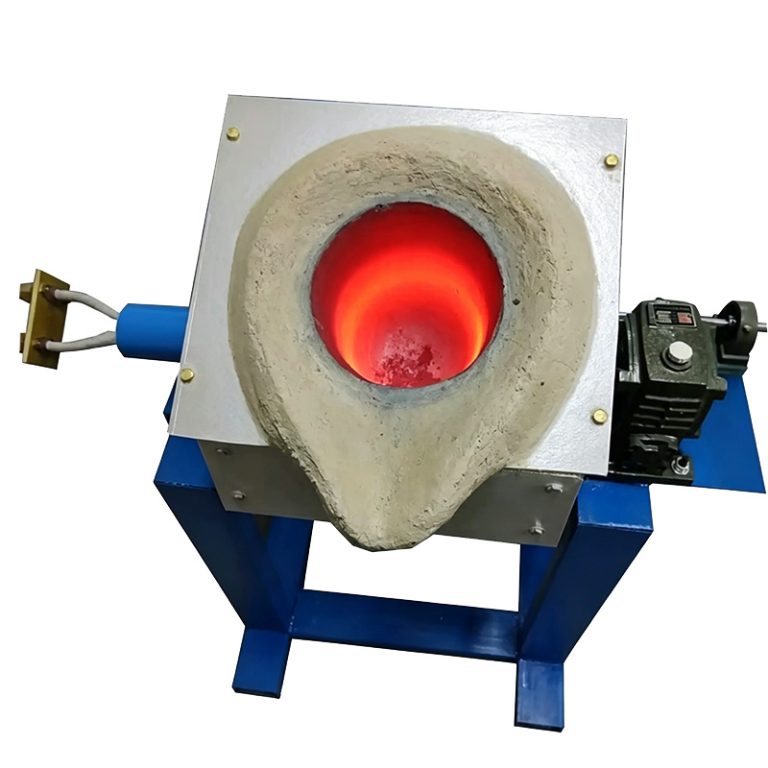
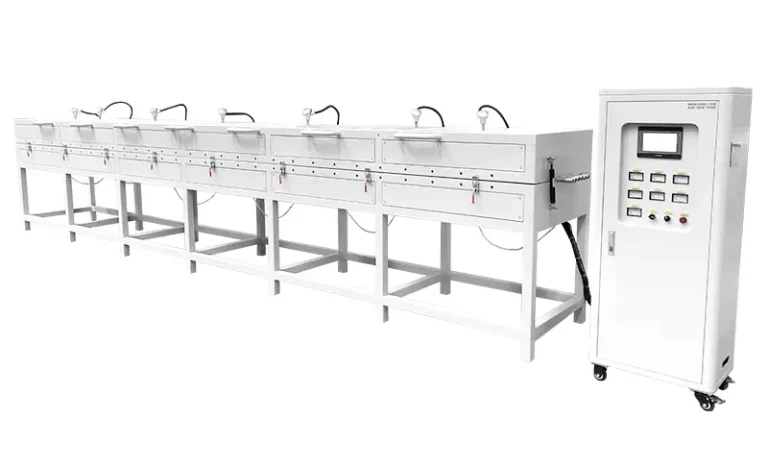
Luoyang Anjing Intelligence Equipment are a global leader in high-temperature electric furnaces



What Is a Cupellation Furnace Used for in Fire Assaying?
A cupellation furnace is used during the cupellation stage of fire assaying to oxidize and remove lead and other base metals from a lead button, leaving a precious-metal bead containing gold and silver for accurate analysis. Controlled temperature, airflow, and heating conditions are essential for obtaining reliable assay results.
I.Introduction
A cupellation furnace is a key piece of equipment used in fire assaying, particularly for the quantitative analysis of precious metals such as gold and silver. After a sample has been smelted and valuable metals have been collected in a lead button, the cupellation stage removes lead and other base metals through controlled oxidation.
For mining laboratories, geological testing centers, metallurgical laboratories, and precious-metal assay facilities, understanding how a cupellation furnace works is important for selecting equipment that provides stable temperature, controlled airflow, repeatable results, and efficient batch processing.
This article explains what a cupellation furnace is used for, how cupellation works, why temperature and ventilation matter, and how to select a suitable fire assay furnace.
II. Body Content
1.What Is a Cupellation Furnace Used for?
A cupellation furnace is used to separate precious metals from lead and other base metals during fire assay.
In a typical fire assay process, the original sample is first mixed with fluxes and melted. During this stage, precious metals such as gold and silver are collected into a lead-rich metallic phase, commonly referred to as a lead button.
The lead button is then placed in a porous cupel and heated under oxidizing conditions.
As the temperature is maintained and air is supplied:
Lead → Lead oxide (PbO) → Absorbed into the cupel
At the same time, gold and silver remain as a precious-metal bead because they do not oxidize under the cupellation conditions in the same manner as lead.
The resulting bead can then be further processed and weighed or analyzed to determine the precious-metal content of the original sample. The fundamental purpose of cupellation is therefore the separation and concentration of precious metals for quantitative fire assay analysis.
2.How Does Cupellation Work in Fire Assaying?
2.1 Formation of the Lead Button
The first major stage of fire assay is fusion.
The prepared sample is mixed with appropriate fluxes and heated in a high-temperature furnace. During melting, unwanted components are incorporated into the slag, while precious metals are collected by lead.
Once the fusion is complete, the molten material is poured or otherwise processed to recover the metallic lead button.
This button contains the precious metals that need to be separated and measured.
2.2 Placement in a Cupel
The lead button is placed in a cupel, which is a porous refractory vessel.
A cupel serves an important function during cupellation because it can absorb molten lead oxide while allowing the precious-metal component to remain on the surface.
The cupel must withstand elevated temperatures and the chemical conditions created during oxidation. Traditional cupels may use porous refractory materials such as bone ash or other suitable compositions depending on the application.
2.3 Heating Under Oxidizing Conditions
The furnace raises the cupel and lead button to a controlled cupellation temperature.
Air is supplied to the furnace or cupellation area so that lead can oxidize.
The simplified reaction can be represented as:
2Pb + O₂ → 2PbO
The resulting lead oxide, also known as litharge, can be absorbed by the porous cupel or otherwise removed from the reaction area.
This leaves a much smaller precious-metal bead containing primarily gold and silver.
Published descriptions of cupellation commonly place the operating range around 850–950°C, although the appropriate temperature depends on the sample, cupel, furnace design, and assay procedure.
3.Why Is Airflow Important in a Cupellation Furnace?
Temperature alone does not determine the quality of the cupellation process.
The furnace must also provide appropriate oxidizing conditions.
Adequate airflow allows lead to react with oxygen and form lead oxide. At the same time, the furnace needs suitable exhaust and ventilation to manage fumes generated during the process.
This means that a professional cupellation or fire assay furnace may require:
- Controlled air supply
- Stable furnace temperature
- Reliable exhaust
- Proper ventilation
- Consistent heating conditions
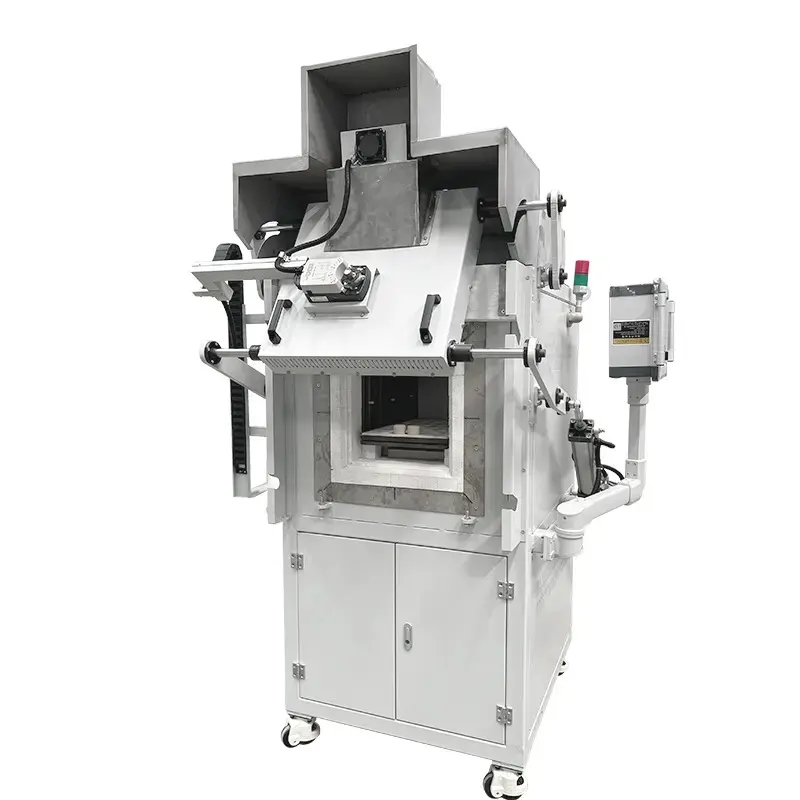
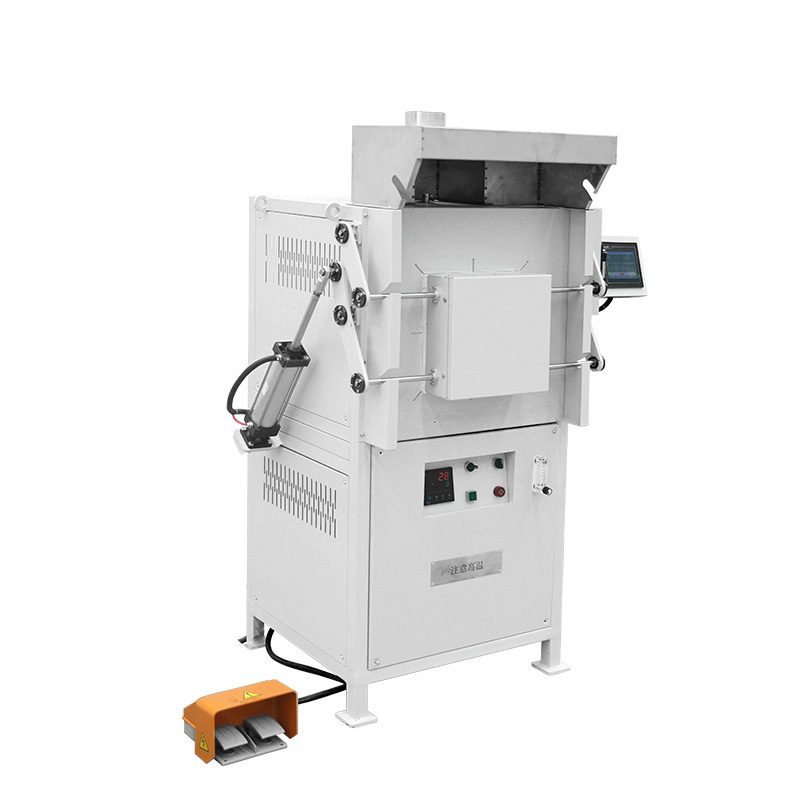
For automated or specialized ash-blowing applications, furnace systems may incorporate dedicated air-inlet and ventilation systems. Your website’s fully automated visual fire assay furnace, for example, uses rear ventilation and oxygen-supply piping together with a blower and flow-control system for the ash-blowing process.
4.What Is the Difference Between Fire Assay Melting and Cupellation?
Fire assay is a multi-stage analytical process, and melting and cupellation perform different functions.
| Process | Main Purpose | Main Result |
|---|---|---|
| Fusion / Smelting | Separate valuable metals from the sample matrix | Lead button containing precious metals |
| Cupellation | Remove lead and oxidizable base metals | Precious-metal bead |
| Further Analysis | Determine precious-metal content | Quantitative assay result |
During fusion, the goal is to collect precious metals efficiently.
During cupellation, the goal is to remove the lead collector.
This distinction is important when selecting a furnace because a furnace optimized for initial sample fusion may have different requirements from equipment designed for cupellation or ash blowing.
5.Which Metals Can Be Analyzed Using Cupellation?
Cupellation is most strongly associated with gold and silver fire assay, and fire assay equipment is also used in analysis involving other precious metals such as platinum and palladium depending on the analytical procedure. Your fire assay furnace product range lists applications for gold, silver, platinum, and palladium analysis, as well as ore, concentrate, tailings, metallurgical intermediates, and secondary-resource samples.
Typical sample sources include:
Geological Samples
Fire assay laboratories may analyze:
- Rock samples
- Drill cores
- Soil
- River sediments
- Mineral concentrates
- Ore and tailings
These applications are particularly relevant to exploration geochemistry and mining laboratories.
Metallurgical Materials
Cupellation and related fire assay procedures can also be used for:
- Smelting intermediates
- Metallurgical products
- Precious-metal-bearing materials
- Recycling materials
Secondary Resources
Fire assay may also support precious-metal analysis of materials such as spent catalysts, electronic waste, and jewelry-processing residues.
III.How to Choose a Cupellation Furnace for Fire Assaying?
Before purchasing a furnace, laboratories should evaluate the complete assay workflow rather than looking only at maximum temperature.
1. Required Temperature
Determine the actual operating temperature required by the assay method.
A furnace rated at a higher maximum temperature is not automatically a better choice. Temperature stability and uniformity within the working range are often more important.
2. Number of Samples per Batch
For a laboratory processing a small number of assays, a compact furnace may be adequate.
For mining laboratories or commercial testing facilities, a larger chamber can improve throughput.
3. Airflow and Exhaust Requirements
Cupellation involves oxidation and the formation of lead oxide and other fumes.
The furnace installation should therefore be considered together with appropriate ventilation and exhaust systems.
For applications involving automated ash blowing, controlled oxygen supply and airflow can also become important equipment specifications.
4. Operator Safety and Furnace Access
Frequent loading and unloading make furnace-door design an important consideration.
Electric or pneumatic top-opening systems can reduce the physical effort required for repeated operation and provide additional control over opening height.
IV. Conclusion
A cupellation furnace is used in fire assaying to oxidize and remove lead and other base metals from the lead button, leaving a precious-metal bead that can be analyzed for gold and silver content. The process depends on controlled temperature, sufficient oxygen, suitable cupel materials, and reliable ventilation.
For assay laboratories, choosing the right furnace requires more than checking the maximum temperature. Sample capacity, temperature uniformity, programmable control, furnace access, airflow, exhaust, and automation should all be considered.
Looking for a cupellation or fire assay furnace for gold, silver, or geological sample analysis? Contact MeltingFurnace.net for a furnace configuration matched to your sample capacity and assay process.
Click “Request a Quote” to get a customized solution.
V. FAQ
1.What is a cupellation furnace used for in fire assaying?
A cupellation furnace is used to remove lead and other oxidizable base metals from a lead button produced during fire assay. The lead is oxidized and absorbed by the cupel, leaving a precious-metal bead for further analysis.
2.What happens during cupellation?
During cupellation, a lead button is heated in a porous cupel under oxidizing conditions. Lead reacts with oxygen to form lead oxide, which is absorbed by the cupel, while gold and silver remain concentrated in the metallic bead.
3.What temperature is used for cupellation?
Cupellation is commonly performed at approximately 850–950°C, although the appropriate operating temperature depends on the assay method, sample composition, cupel material, and furnace configuration.
4.Is a cupellation furnace the same as a fire assay furnace?
Not necessarily. A fire assay furnace is a broader term for equipment used in different stages of fire assay, including sample fusion and ash blowing. A cupellation furnace refers specifically to equipment configured for the cupellation stage and its requirements for controlled heating, oxidation, and ventilation.
5.Can a fire assay furnace process multiple samples at once?
Yes. The required capacity depends on the furnace model. For example, the 1200°C fire assay furnace on MeltingFurnace.net is designed for 12 samples per batch, while a larger 1400°C configuration is specified for up to 50 crucibles per batch under its stated crucible configuration.
Supplier
Luoyang Anjing Intelligent Equipment Co., Ltd. is an enterprise dedicated to the research, development, production, sales, and technical services of heat treatment equipment such as high-temperature electric furnaces. We produce laboratory, vacuum, industrial, and medium frequency furnace, covering a temperature range from -100℃ to 2600℃, serving industries such as new energy, semiconductors, and advanced materials. We can provide customized solutions based on specific atmosphere, ultra-high temperature, and intelligent control system requirements. Please feel free to contact us if you are interested.