Luoyang Anjing Intelligence Equipment are a global leader in high-temperature electric furnaces



What Refractory Materials Are Used in an Intermediate Frequency Furnace?
The main refractory materials used in an intermediate frequency furnace are acidic, neutral, and basic linings. Acidic linings typically use high-purity or fused quartz, neutral linings use alumina or high-alumina materials, and basic linings use fused corundum, high-purity magnesia, or spinel.
I. Introduction
Intermediate frequency furnace refractory materials, also called induction furnace lining material, dry ramming mix, furnace ramming material, or refractory lining mix, are critical to the safe and efficient operation of an induction melting furnace. The correct lining must withstand high temperatures, thermal cycling, molten-metal corrosion, and electromagnetic stirring.
In this guide, we explain the three main types of refractory materials used in intermediate frequency furnaces—acidic, neutral, and basic refractories—and how to select the right lining according to the metal being melted, furnace type, and operating conditions.
II.What Refractory Materials Are Used in an Intermediate Frequency Furnace?
1. Acidic Refractory Materials
Acidic refractory material is one of the commonly used lining systems for intermediate frequency induction furnaces.
The principal raw materials are typically:
- High-purity quartz
- Fused quartz
- Composite additives used to promote sintering and improve lining performance
Quartz-based acidic linings are widely used because they can provide good resistance to thermal shock and are suitable for many cast-iron and certain steel-melting applications.
For cast iron and steel foundries, acidic furnace linings offer a more practical balance between cost, thermal performance, and service life if the chemical composition of the slag and molten metal is compatible with the siliceous furnace lining.
However, acidic lining material is not automatically suitable for every alloy. The slag chemistry and operating conditions must be considered before selecting a silica-based refractory.
2. Neutral Refractory Materials
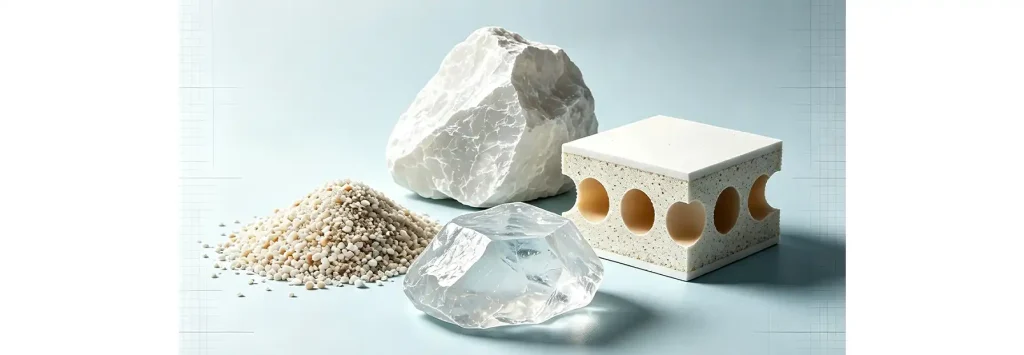
Neutral refractory materials are generally based on alumina or high-alumina raw materials.
Typical formulations use:
- High-purity alumina
- High-alumina refractory materials
- Composite sintering additives
Neutral refractories are selected when a broader range of melting conditions or improved chemical resistance is required.
Compared with silica-based acidic linings, high-alumina systems can provide different levels of resistance to molten metal and slag attack, depending on the formulation and operating conditions.
For foundries that process several different alloys in the same intermediate frequency furnace, a properly formulated neutral lining can sometimes provide greater flexibility than a lining optimized for only one metal family.
The specific formulation is still very important. “High alumina” does not mean that it is suitable for all furnaces and steel grades. Particle size distribution, purity, sintering characteristics, construction density, and operating temperature all affect the final performance of the furnace lining.
3. Basic Refractory Materials
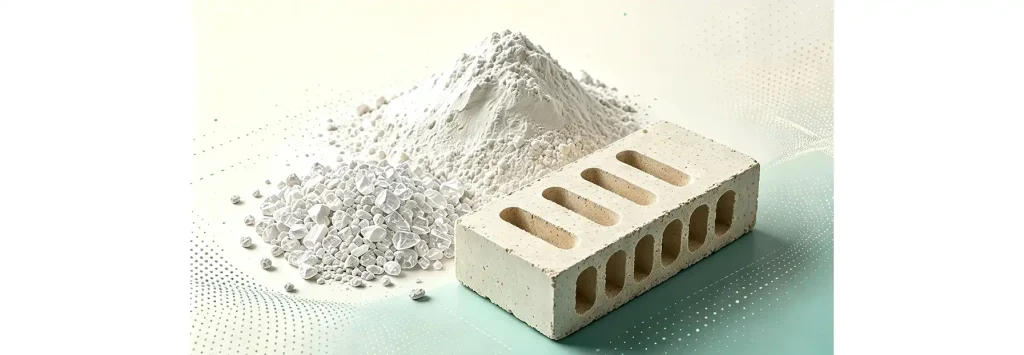
Basic refractory materials are another important option for induction furnaces, especially where the molten metal or slag requires a lining with strong resistance to basic chemical attack.
Typical high-quality raw materials include:
- High-purity fused corundum
- High-purity fused magnesia
- High-purity spinel
- Composite additives used as the sintering system
Basic linings can be used for a range of demanding melting applications and selected ferrous alloys.
The major advantage of selecting a basic refractory is the possibility of improving resistance to certain slag and molten-metal chemistries. However, chemical compatibility must always be evaluated together with thermal shock resistance, furnace operating temperature, and actual slag composition.
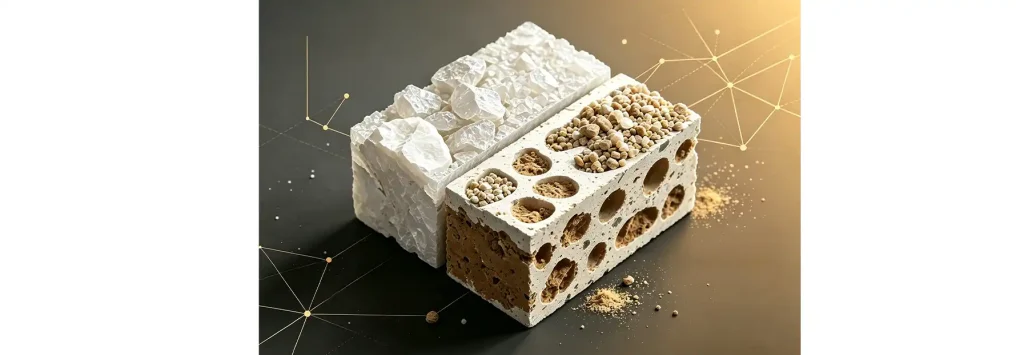
How Do You Choose Between Acidic, Neutral, and Basic Refractories?
The best lining material is not determined by furnace frequency alone. The selection should be based on the metal being melted and the complete operating environment.
| Refractory Type | Main Raw Materials | Typical Applications |
|---|---|---|
| Acidic | High-purity quartz, fused quartz | Cast iron, selected steels and iron alloys |
| Neutral | Alumina, high-alumina materials | Cast iron, carbon and alloy steels, stainless steel, aluminum alloys |
| Basic | Fused corundum, fused magnesia, spinel | Carbon and alloy steels, demanding ferrous-alloy melting |
4.Can These Refractory Materials Be Used in Different Induction Furnace Types?
Yes. Acidic, neutral, and basic refractory systems are widely used in both coreless intermediate frequency induction furnaces and channel induction furnaces, provided the selected lining is compatible with the furnace design and melting process.
A refractory lining is not merely an insulating layer. In an induction furnace, it must perform several functions simultaneously:
- Contain molten metal safely
- Resist chemical attack
- Withstand high temperatures
- Tolerate thermal cycling
- Resist erosion and mechanical wear
- Protect the induction coil and furnace structure
- Maintain adequate heat retention
An improperly selected or poorly installed lining can result in premature wear, metal penetration, cracking, or even serious furnace safety problems.
For this reason, refractory selection should be considered part of the overall induction furnace system, rather than an independent consumable decision.
5.How Is Refractory Material Installed in an Intermediate Frequency Furnace?
Many induction furnace linings are installed using a dry ramming process.
A typical installation involves preparing the furnace shell, installing the required lining layers, adding the refractory dry mix in controlled increments, mechanically or manually ramming the material to the required density, and then carrying out a controlled sintering procedure.
The quality of installation is just as important as the raw material itself.
Poor installation can create:
- Low-density areas
- Cracks
- Weak sintered zones
- Uneven lining thickness
- Premature metal penetration
- Reduced lining service life
Therefore, the refractory supplier, furnace manufacturer, and operating team should use a defined installation and sintering procedure rather than treating dry ramming material as a simple fill material.
6.Why Is the Refractory Lining Important in an Intermediate Frequency Furnace?
The refractory lining directly affects furnace reliability, melting efficiency, contamination, and operational safety.
A suitable lining can help:
- Reduce heat loss
- Protect the induction coil
- Minimize molten-metal penetration
- Maintain stable furnace operation
- Reduce refractory consumption
- Improve lining life
- Reduce maintenance and downtime
Medium-frequency furnaces rely on electromagnetic induction to heat the furnace charge, but the melting effect cannot be determined solely by the electromagnetic heating system. The furnace lining, induction coils, furnace shell, cooling system, power supply, and temperature control system all must work in concert.
Therefore, when selecting a medium-frequency furnace, one cannot only consider the capacity and melting rate; it is also crucial to ensure that the recommended furnace lining system matches the alloy being melted.
III.What Metals Can an Intermediate Frequency Furnace Melt?
With the appropriate furnace configuration and refractory lining, intermediate frequency induction furnaces can be used for a broad range of metals and alloys.
Typical applications include:
Iron and cast iron: gray cast iron, ductile iron, malleable cast iron, compacted graphite iron, and cast-iron alloys.
Steel: carbon steel, alloy steel, high-manganese steel, tool steel, heat-resistant steel, and stainless steel.
Aluminum: aluminum and aluminum alloys.
Copper alloys: copper, brass, white copper, bronze, and other copper alloys.
The refractory system should be matched to the particular metal family. For example, the lining requirements for molten aluminum are not necessarily identical to those for high-temperature steel melting.
IV.Summarize
The main refractory materials used in an intermediate frequency furnace are acidic, neutral, and basic refractory systems. Acidic linings generally use high-purity or fused quartz, neutral linings use alumina or high-alumina materials, and basic linings use high-purity fused corundum, magnesia, or spinel. The correct choice depends on the molten metal, slag chemistry, temperature, furnace type, thermal cycling, and required lining life.
For coreless induction furnaces and channel induction furnaces, selecting the right furnace refractory material, dry ramming mix, and installation process is essential for reliable and safe melting. Explore Anjing’s induction and industrial furnace solutions at greatfurnaces.com/products/ or contact the engineering team to discuss the furnace capacity, alloy, operating temperature, and refractory requirements for your application.
Click “Request a Quote” to get a customized solution.
V. FAQ
1. What are the three main types of refractory materials for an intermediate frequency furnace?
The three main categories are acidic, neutral, and basic refractory materials. Acidic materials are primarily quartz-based, neutral materials are commonly alumina-based, and basic materials may use magnesia, fused corundum, or spinel.
2. What refractory material is best for melting cast iron in an induction furnace?
A quartz-based acidic lining is commonly used for many cast-iron melting applications, but the best refractory depends on the exact alloy, slag chemistry, furnace operating temperature, and process conditions.
3. What refractory material is used for melting stainless steel in an intermediate frequency furnace?
Stainless-steel melting can use neutral or basic refractory systems depending on the furnace configuration, steel grade, slag chemistry, operating temperature, and required lining performance.
4. What is dry ramming material for an induction furnace?
Dry ramming material is a specially formulated granular refractory mixture installed inside an induction furnace and compacted to form the working lining. It may also be called induction furnace lining material, ramming mix, furnace ramming material, or dry refractory mix.
5. Can one refractory material be used to melt all metals?
Not necessarily. Different metals and alloys produce different thermal and chemical conditions. A furnace lining that works well for cast iron may not be suitable for smelting stainless steel, aluminum alloys, or copper alloys. The furnace lining must be selected based on the specific smelting process.
Supplier
Luoyang Anjing Intelligent Equipment Co., Ltd. is an enterprise dedicated to the research, development, production, sales, and technical services of heat treatment equipment such as high-temperature electric furnaces. We produce laboratory, vacuum, industrial, and medium frequency furnace, covering a temperature range from -100℃ to 2600℃, serving industries such as new energy, semiconductors, and advanced materials. We can provide customized solutions based on specific atmosphere, ultra-high temperature, and intelligent control system requirements. Please feel free to contact us if you are interested.