Luoyang Anjing Intelligence Equipment are a global leader in high-temperature electric furnaces



How Do I Clean My Tube Furnace?
To clean a tube furnace, first switch off and cool the furnace completely, isolate power, gas, and vacuum systems, then remove loose residue from the furnace tube with suitable tools and clean the tube according to its material.
I. Why Should You Clean a Tube Furnace?
A tube furnace creates a controlled high-temperature environment for material processing. During repeated heating cycles, residue can accumulate inside the furnace tube from,If these residues are not removed, they can contaminate subsequent samples or affect the experimental environment.
Tube furnaces are commonly used for inorganic compound synthesis, organic synthesis, high-temperature sintering, materials analysis, new-energy material research, and catalyst research. Our tube furnace systems support vacuum, inert-gas, reducing, and oxidizing-atmosphere applications, so cleaning requirements can vary significantly depending on the process.
II.Cleaning tube furnace method
1.Before Cleaning: Make Sure the Furnace Is Safe
Never begin cleaning a hot tube furnace.
Before starting, allow the furnace to cool to a safe temperature. The exact safe temperature depends on the furnace design, tube material, residue, and manufacturer’s operating instructions.
The basic shutdown sequence should be:
Stop heating → allow the furnace to cool → isolate power → isolate process gases → isolate vacuum equipment → inspect the tube → clean
If the furnace has been used with hazardous, corrosive, toxic, flammable, or reactive materials, follow the appropriate laboratory or industrial safety procedure before opening or cleaning the system.
Important Safety Rules
- Do not clean the furnace while the heating elements are energized.
- Do not touch a hot quartz, ceramic, or metal furnace tube.
- Do not spray water into the furnace.
- Do not pour liquid directly into a hot furnace tube.
- Do not use a metal tool that can scratch or damage a quartz tube.
- Do not use a cleaning chemical unless it is compatible with the tube material and residue.
- Make sure process gases are shut off before disconnecting components.
- If the furnace uses vacuum, isolate the vacuum system before opening the tube.
- Wear appropriate heat-resistant gloves and other required PPE when handling recently heated components.
Our tube furnace systems include safety protections such as over-temperature and electrical protection, but safe cleaning still requires the furnace to be properly shut down before maintenance
2. Remove the Sample and Furnace Accessories
Before cleaning the furnace tube, remove:
- Samples
- Crucibles
- Boats
- Ceramic trays
- Thermocouple fixtures, if removable
- Gas-flow accessories that are designed to be removed
- Other removable process components
Allow these components to cool before handling them.
Inspect the sample boat or crucible at the same time. If it contains accumulated material, clean or replace it before the next experiment.
Do not allow loose powder to fall deeper into the tube or into the furnace insulation.
3.Cool the Tube Furnace Completely
Cooling is one of the most important parts of the cleaning procedure.
A quartz or ceramic tube can experience thermal shock if it is exposed to rapid temperature changes.
Do not attempt to accelerate cooling by:
- Pouring water onto the tube
- Spraying cold liquid on the tube
- Introducing an inappropriate cold gas at high flow
- Opening the furnace in a way that causes a sudden temperature change
Instead, follow the furnace manufacturer’s normal cooling procedure.
Our tube furnace systems support programmable heating and cooling curves, allowing the operator to control the thermal process rather than relying on abrupt temperature changes.
4. Isolate Power, Gas, and Vacuum
Once the furnace has cooled sufficiently, shut down the relevant systems.
Depending on the furnace configuration, this may include:
- Main electrical power
- Heating power
- Process gas supply
- Vacuum pump
- Gas inlet valves
- Exhaust system
- Cooling-water system, if applicable
This step is particularly important for vacuum and atmosphere tube furnaces.
Our tube furnace range includes models designed for vacuum and controlled-atmosphere experiments, so the cleaning procedure should account for the specific gas and vacuum configuration of the furnace.
5.Remove Loose Powder and Residue
Start with dry mechanical cleaning whenever possible.
Use a soft brush or suitable vacuum system to remove loose particles.
For example:
Loose powder → soft brush → vacuum removal → visual inspection
Avoid immediately using a liquid cleaner when the contamination can be removed mechanically.
This reduces the possibility of creating a slurry that spreads contamination along the inside of the tube.
For Powder Processing
If you process powders, pay particular attention to:
- Tube ends
- Sample boats
- Gas inlet areas
- Gas outlet areas
- Thermocouple locations
- The center of the heating zone
Fine powder can migrate during gas-flow or vacuum operation and may accumulate in areas away from the original sample location.
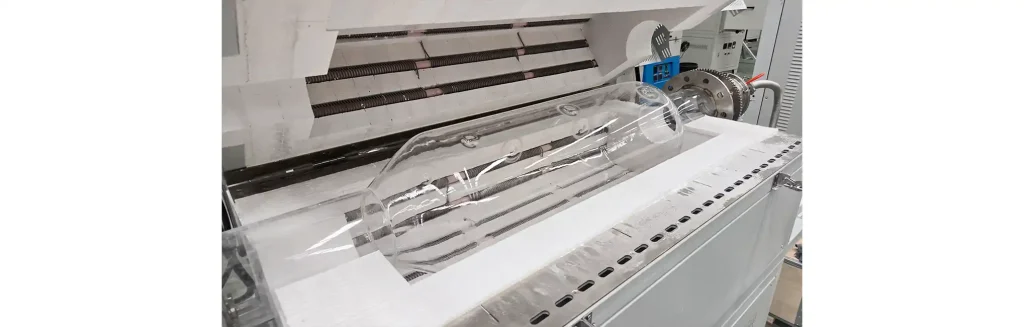
6.Clean a Quartz Furnace Tube
Quartz is commonly used for laboratory tube furnaces because of its high-temperature performance and compatibility with many experimental processes.
Our tube furnace product range supports quartz, ceramic, and metal furnace tubes depending on the application.
Recommended Quartz-Tube Cleaning Procedure
- Make sure the tube is completely cool.
- Remove loose particles with a soft brush.
- Use a suitable lint-free cloth or soft cleaning material where accessible.
- If a liquid cleaner is required, confirm that it is compatible with quartz and the specific contamination.
- Remove any cleaning residue completely.
- Allow the tube to dry fully.
- Inspect the tube under good lighting before reinstalling it.
What Should You Avoid?
Avoid:
- Abrasive pads
- Sandpaper
- Metal scrapers
- Sharp tools
- Sudden temperature changes
- Unverified aggressive chemicals
A small scratch or surface defect can become more important during repeated thermal cycling, so quartz tubes should be handled carefully.
7.Clean a Ceramic Furnace Tube
Ceramic furnace tubes are selected for applications requiring high-temperature performance and specific chemical or thermal properties.
The cleaning procedure is similar to quartz cleaning, but mechanical handling is particularly important.
Recommended Procedure
- Cool the furnace completely.
- Remove loose contamination gently.
- Use a soft brush rather than a hard metal tool.
- Inspect the ceramic surface for cracks or chips.
- Clean stubborn deposits only with a compatible method.
- Dry the tube completely before reuse.
Do not force a cleaning brush through a restricted or partially blocked tube.
If the deposit cannot be removed without applying excessive mechanical force, it may be safer to replace the tube or consult the furnace manufacturer.
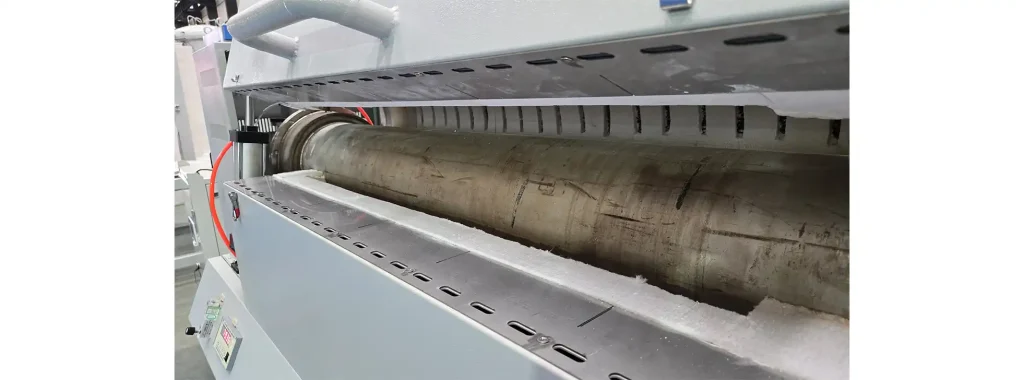
8.Clean a Metal Furnace Tube
Metal furnace tubes require a somewhat different approach.
Our tube furnace range includes metal tube configurations, and specific models use materials such as 310S stainless steel.
For a metal tube, first identify:
- Tube material
- Process atmosphere
- Type of contamination
- Chemical composition of the residue
- Whether the tube is vacuum sealed
- Whether seals or flanges could be affected by the cleaning agent
Basic Procedure
- Cool the furnace.
- Remove loose material.
- Wipe or brush the accessible surface.
- Use a compatible cleaning agent only when necessary.
- Remove all chemical residue.
- Dry the tube completely.
- Inspect the sealing surfaces and connections.
Do not assume that a cleaning chemical suitable for stainless steel is automatically suitable for the seals, gaskets, quartz components, or other materials connected to the furnace.
9.Clean the Tube Ends, Flanges, and Sealing Areas
The inside of the furnace tube is not the only area that needs attention.
For vacuum or controlled-atmosphere tube furnaces, inspect:
- Flanges
- O-rings
- Gaskets
- Sealing surfaces
- Gas inlet connections
- Gas outlet connections
- Vacuum fittings
- Water-cooling connections, where applicable
For example, some tube furnace designs use vacuum-sealing structures and water cooling around the tube ends to protect sealing components during high-temperature operation.
Keep sealing surfaces clean and free from powder.
A small amount of contamination on a sealing surface can affect vacuum performance.
10.Inspect the Furnace Tube for Damage
Cleaning is also an opportunity to perform a visual inspection.
Look for:
- Cracks
- Chips
- Scratches
- Discoloration
- Severe deposits
- Warping
- Corrosion
- Deformation
- Damaged sealing areas
When Should You Replace the Tube?
Consider replacement if you find:
- A visible crack
- Serious structural damage
- Severe corrosion
- Significant deformation
- Damage around a sealing area
- A persistent contamination problem that cannot be safely removed
Do not continue using a damaged tube simply because it can still reach the required temperature.
11.Reassemble and Check the Furnace
After cleaning, reinstall the furnace tube and components according to the manufacturer’s instructions.
Before starting the next heating cycle, check:
Mechanical Check
- Is the tube correctly positioned?
- Are the supports secure?
- Are the flanges correctly assembled?
- Are the sealing components installed correctly?
Gas Check
- Are gas lines connected?
- Are valves in the correct position?
- Is the gas flow direction correct?
Vacuum Check
For vacuum tube furnaces:
- Is the vacuum connection secure?
- Are sealing surfaces clean?
- Can the required vacuum level be achieved?
Electrical Check
- Are thermocouples correctly positioned?
- Are heating-element connections intact?
- Are electrical connections secure?
Only start the next heating cycle after the system has passed the appropriate checks.
III.How to Keep Your Tube Furnace Cleaner for Longer
The easiest furnace to clean is the furnace that has been protected from unnecessary contamination.
1. Use Appropriate Sample Containers
Use suitable crucibles, boats, or trays for the material being processed.
2. Avoid Overloading
Do not place excessive amounts of powder into a small sample container.
3. Use Controlled Gas Flow
Incorrect gas-flow conditions can move fine particles through the furnace tube.
4. Clean Between Incompatible Materials
If you switch from one material system to another, clean the tube before starting the next experiment when contamination could affect results.
5. Record Contamination Events
Keep a simple maintenance record noting:Material processed,Maximum temperature,Atmosphere,Cleaning date,Type of residue,Cleaning method,Tube condition
This can help identify recurring contamination problems.
IV.Summarize
Cleaning a tube furnace is a straightforward but important part of furnace maintenance. Always cool and isolate the furnace before cleaning, remove loose residue first, use cleaning tools compatible with the tube material, and inspect the tube, seals, gas connections, and vacuum components before restarting the equipment. Quartz, ceramic, and metal furnace tubes require different handling methods, so avoid aggressive chemicals or abrasive tools unless their compatibility has been confirmed. For a new furnace, replacement tube, or customized atmosphere-control system, provide your temperature, tube material, tube size, atmosphere, and application requirements to the manufacturer.
Need a tube furnace for your laboratory or industrial application?
View Tube Furnace Products
Click “Request a Quote” to get a customized solution.
V. FAQ
1. How do I clean a tube furnace?
First switch off the furnace and allow it to cool completely. Isolate the electrical, gas, and vacuum systems as applicable, remove samples and loose residue, then clean the furnace tube with tools and cleaning materials compatible with the tube material. Finally, inspect the tube and sealing components before reassembly.
2. How do you clean a quartz tube furnace?
Allow the quartz tube to cool completely, remove loose powder with a soft brush, and use a compatible non-abrasive cleaning method for stubborn deposits. Avoid metal scrapers, abrasive materials, sudden temperature changes, and chemicals that may damage quartz or leave contamination.
3. Can I use water to clean a tube furnace?
Water should not be introduced into a hot tube furnace. If a water-based cleaning method is appropriate for a removable, cooled component, make sure the component is completely dry before it is returned to high-temperature service.
4. How often should a tube furnace be cleaned?
The cleaning cycle depends on the situation—the materials, temperature, atmosphere, residue levels, and cleanliness requirements all vary.
5. When should I replace my tube furnace tube?
Replace the tube when it develops cracks, severe chips, deformation, significant corrosion, damaged sealing areas, or contamination that cannot be safely removed.
Supplier
Luoyang Anjing Intelligent Equipment Co., Ltd. is an enterprise dedicated to the research, development, production, sales, and technical services of heat treatment equipment such as high-temperature electric furnaces. We produce laboratory, vacuum, industrial, and medium frequency furnace, covering a temperature range from -100℃ to 2600℃, serving industries such as new energy, semiconductors, and advanced materials. We can provide customized solutions based on specific atmosphere, ultra-high temperature, and intelligent control system requirements. Please feel free to contact us if you are interested.