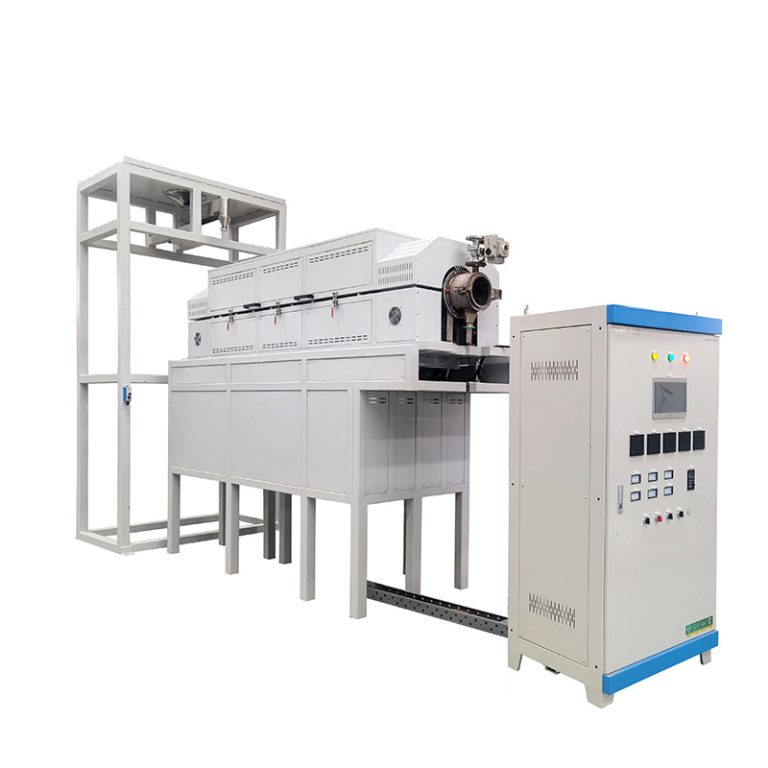
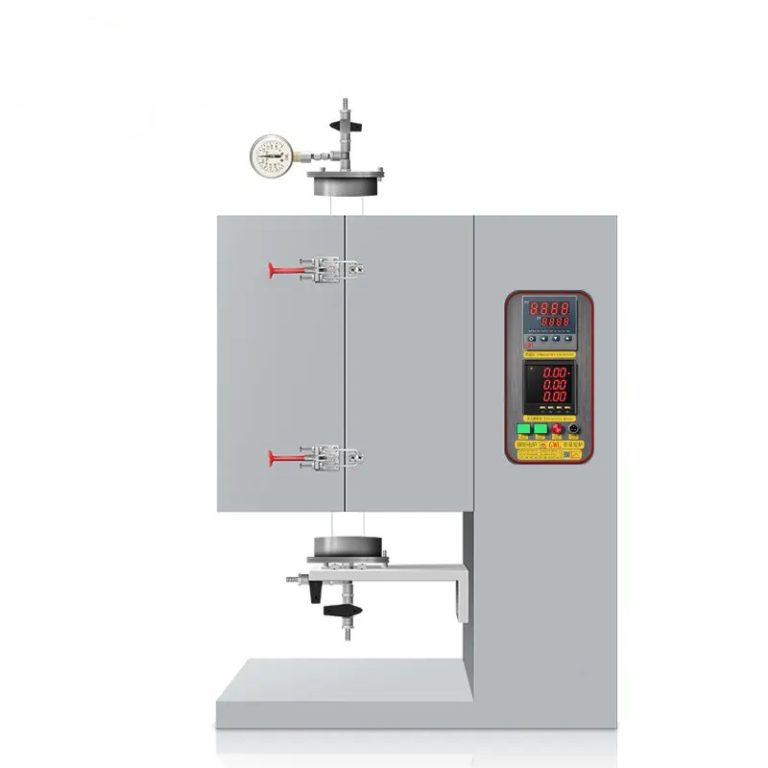
Luoyang Anjing Intelligence Equipment are a global leader in high-temperature electric furnaces



Vertical vs Horizontal Tube Furnace: Key Differences and How to Choose
A tube furnace is a heat treatment device commonly used in materials research, high-temperature experiments, and industrial R&D. Based on the installation direction of the furnace tubes, it is mainly divided into Vertical Tube Furnaces and Horizontal Tube Furnaces.
Both types of tube furnaces can provide a stable high-temperature environment and support vacuum, inert gas, or special atmosphere treatment. However, the difference in structural orientation directly affects sample placement, gas flow patterns, ease of experimental operation, and applicable fields.Simply put, vertical tube furnaces are more suitable for experiments requiring vertical reactions, powder handling, and high space utilization; horizontal tube furnaces are more suitable for routine material heat treatment, sample observation, and continuous experimental operations.
Choosing the right tube furnace not only affects experimental results but also equipment operating efficiency and long-term operating costs.
I. Product Overview
Tube furnaces can be divided into two main types according to the installation direction of the furnace tubes: vertical and horizontal. The core difference lies in the orientation of the furnace tubes—one is placed vertically, and the other horizontally. This seemingly simple difference in orientation actually determines the temperature field characteristics, sample processing methods, space occupation, and applicable processes of the equipment.
Vertical tube furnaces have vertically mounted furnace tubes, with samples loaded from either the top or bottom, and heating elements distributed around the furnace tubes. Horizontal tube furnaces have horizontally placed furnace tubes, and are the more widely used traditional structure in the industry, with samples pushed in horizontally from one end.Both have their advantages. Vertical furnaces have a natural advantage in saving space, reducing particulate contamination, and achieving temperature gradients; horizontal furnaces are superior in terms of ease of operation, sample adaptability, and temperature field uniformity. The core of selection is not which is “better,” but which better matches your sample shape and process requirements.
II. Features and Advantages of Vertical Tube Furnaces and Horizontal Tube Furnaces
- Vertical Tube Furnaces: Suitable for Vertical Reactions and Special Material Processing
The vertical tube furnace tubes are installed vertically, and samples are loaded from the top or bottom. Gravity is used to allow powders, particles, or liquid precursors to settle naturally during processing.
Key advantages include:
Reduced sample buildup;
Easy control of material growth direction;
Saving experimental space;
Suitable for special gas-phase reactions.
Vertical structures are particularly suitable for experiments such as nanomaterial preparation, thin film deposition, and powder heat treatment.

- c: More Convenient and Flexible Operation
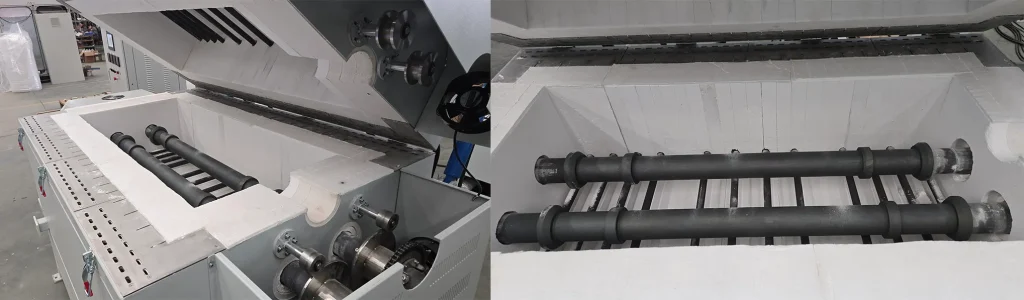
Horizontal tube furnaces are currently the most widely used structure in laboratories. The furnace tube is placed horizontally, and samples are typically loaded into the central isothermal zone through both ends of the tube.
The main advantages are:
Easy sample loading;
More intuitive experimental observation;
Suitable for repeated experiments;
Easier maintenance.
For common material sintering, heat treatment, and atmosphere experiments, horizontal tube furnaces offer greater ease of use.
- Temperature Uniformity and Thermal Field Control
Regardless of whether the furnace is vertical or horizontal, temperature uniformity is a crucial factor affecting experimental results. Good tube furnaces typically employ a multi-stage heating zone design, creating a stable isothermal zone at the center of the furnace tube.
Horizontal structures offer a fixed sample position, making temperature control relatively easier; vertical structures are more suitable for experiments requiring the use of vertical temperature gradients for material growth or reaction control.
Therefore, when selecting a furnace type, it’s essential to consider not only the maximum temperature but also the actual thermal field requirements of the sample during the experiment.
- Atmosphere Control Capability
One of the key features of a tube furnace is its ability to integrate gas systems to achieve different experimental environments.
Vertical tube furnaces, where the gas flow direction is usually aligned with the furnace tube direction, facilitate the formation of stable gas flows in certain deposition and gas-phase reaction experiments.
Horizontal tube furnaces are more suitable for conventional atmosphere heat treatment, such as material annealing and oxidation experiments.
| Comparison Dimension | Vertical Tube Furnace | Horizontal Tube Furnace |
|---|---|---|
| Space Occupation | Small footprint, suitable for compact labs | Larger footprint, requires operating space |
| Operation Convenience | Sample loading/unloading requires tools | Horizontal push/pull, intuitive operation |
| Temperature Uniformity | Excellent radial uniformity | Excellent axial uniformity |
| Particle Contamination Risk | Low (particles fall vertically away from sample) | Higher (particles may settle on sample surface) |
| Sample Adaptability | Suitable for powders, small parts, slender samples | Suitable for bulk, sheet, long-dimension, batch samples |
| Atmosphere Sealing | Compact sealing structure | Mature and stable sealing structure |
| Typical Applications | Crystal growth, semiconductor processing, high-purity heat treatment | Annealing, sintering, CVD, conventional materials synthesis |
| Automation Level | High (especially in semiconductor production grade) | Medium |
III. Two Key Topics in Choosing Between Vertical and Horizontal Tube Furnaces
- Why are vertical tube furnaces suitable for powder and material growth experiments?
The biggest advantage of a vertical structure is that the sample movement direction is aligned with the direction of gravity.
In powder processing, vertical placement reduces lateral movement of powder within the furnace tube, resulting in a more stable material distribution.
Simultaneously, in some material growth experiments, vertical airflow helps control reactant transport, improving experimental reproducibility.
For example:
Nanowire growth;
Thin film deposition;
Powder heat treatment.
These processes typically focus more on the material formation process, thus vertical tube furnaces offer certain advantages.
- Why are horizontal tube furnaces more suitable for general laboratories?
Horizontal tube furnaces have a simpler structure, and their operation aligns with the usage habits of most researchers.
Samples can be placed directly in a quartz or ceramic boat and then pushed into the constant-temperature zone of the furnace tube.
This operating method is suitable for:
Frequent sample changes;
Multiple experimental comparisons;
Material performance testing.
Therefore, horizontal tube furnaces remain a widely used choice in university laboratories, research institutions, and industrial R&D centers.
IV. Product Applications
- Vertical Tube Furnaces: In semiconductor manufacturing, vertical furnaces are standard equipment for silicon wafer oxidation, diffusion, annealing, and CVD thin film deposition. Almost all wafer fabs use vertical furnaces to process silicon wafers 200mm and larger. In crystal growth, the Czochralski method and crucible-lowering method for growing single-crystal silicon and sapphire require the vertical temperature gradient of a vertical furnace. Vertical furnaces are also commonly used for small-batch powder processing such as powder metallurgy, nanomaterial synthesis, and catalyst calcination.
- Horizontal Tube Furnaces: In materials science, horizontal furnaces are the main equipment for annealing, sintering, and alloying processes, suitable for batch processing of samples such as ceramic substrates, electrode sheets, and metal bulk materials. Chemical vapor deposition (CVD) and conventional laboratory heat treatments also primarily use horizontal furnaces.
V.Supplier
Luoyang Anjing Intelligent Equipment Co., Ltd. is an enterprise dedicated to the research, development, production, sales, and technical services of heat treatment equipment such as high-temperature electric furnaces. We produce laboratory, vacuum, industrial, and medium frequency furnace, covering a temperature range from -100℃ to 2600℃, serving industries such as new energy, semiconductors, and advanced materials. We can provide customized solutions based on specific atmosphere, ultra-high temperature, and intelligent control system requirements. Please feel free to contact us if you are interested.