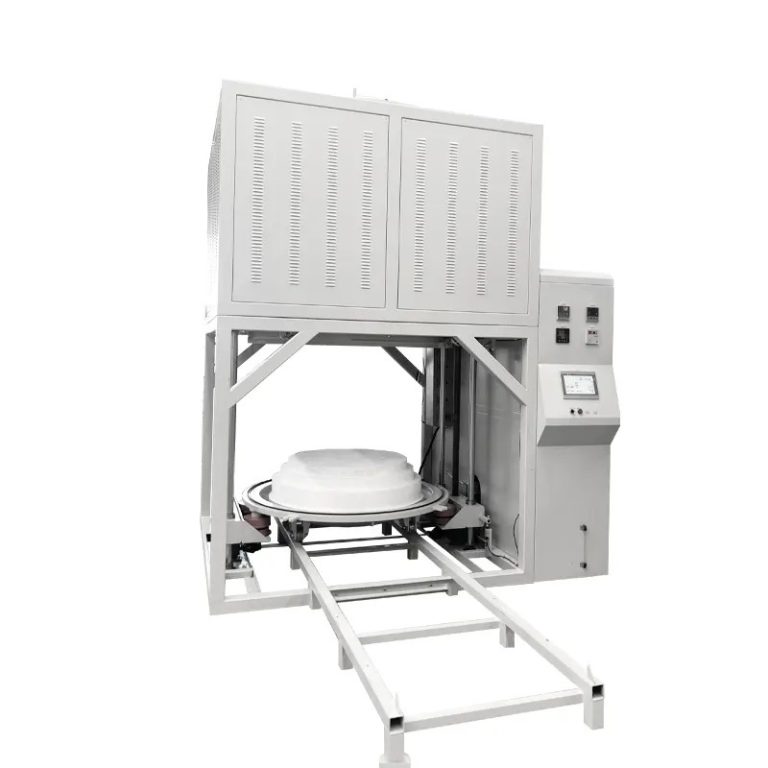
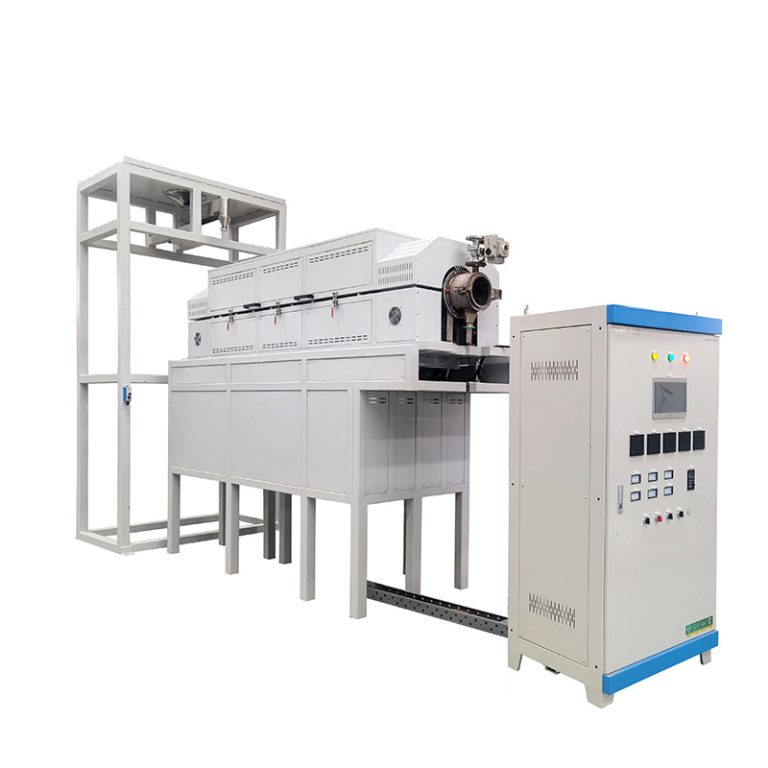
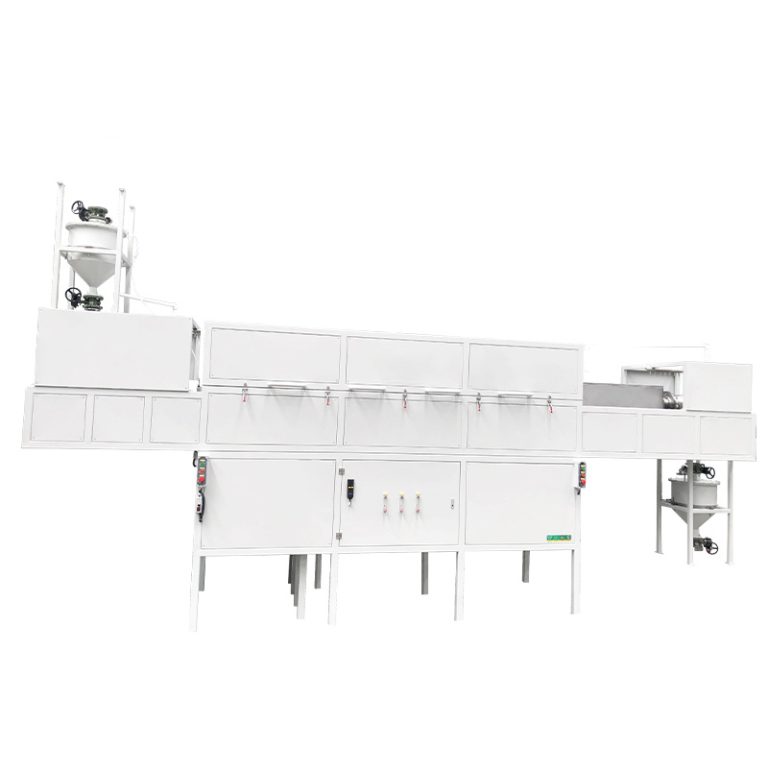
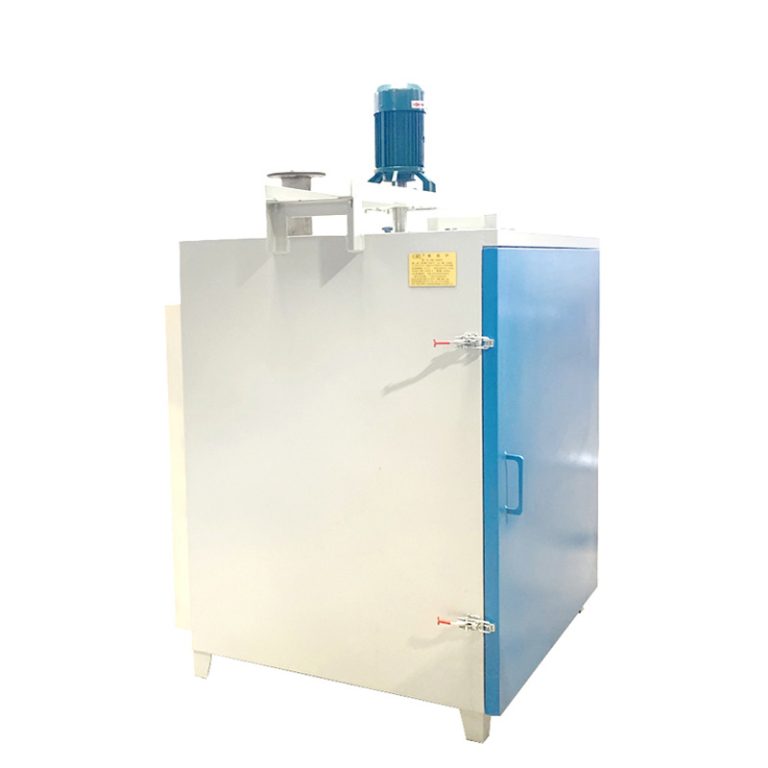
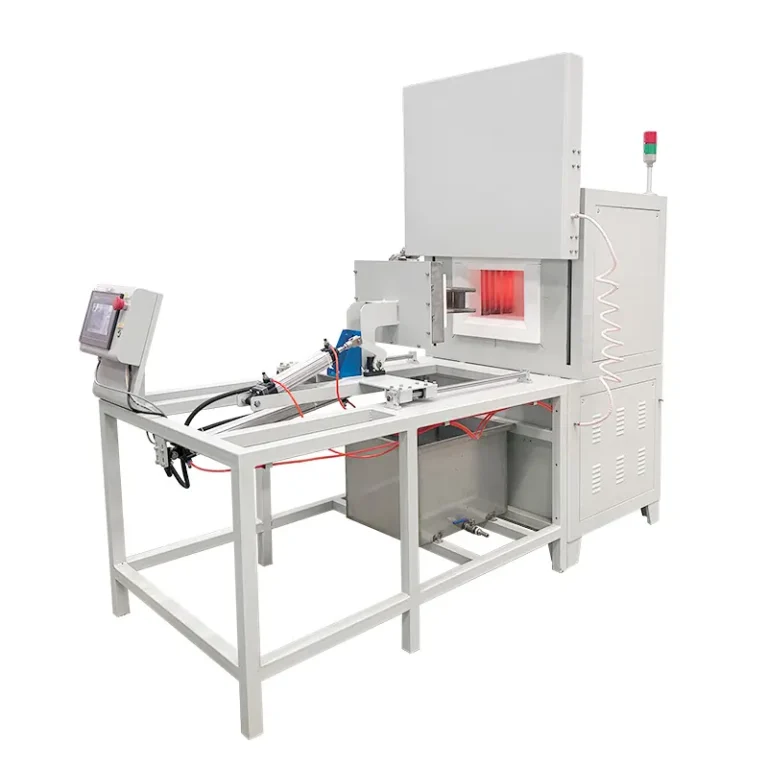
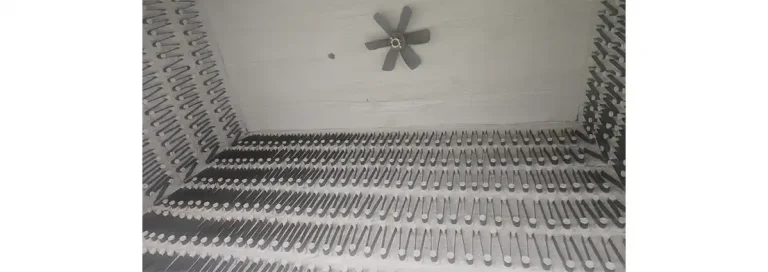
Luoyang Anjing Intelligence Equipment are a global leader in high-temperature electric furnaces



What Is a Vertical Tube Furnace?
Vertical tube furnaces are high-temperature experimental devices installed vertically, used for material sintering, heat treatment, atmosphere testing, powder processing, and new material research and development.Compared to horizontal tube furnaces, the vertical structure utilizes vertical heating space, ensuring sample stability under gravity and easy control of gas flow, making it suitable for processes with high requirements for atmosphere, growth direction, and space.
I. Overview of Vertical Tube Furnace Products
A Vertical Tube Furnace is a high-temperature heating device with vertically mounted furnace tubes.
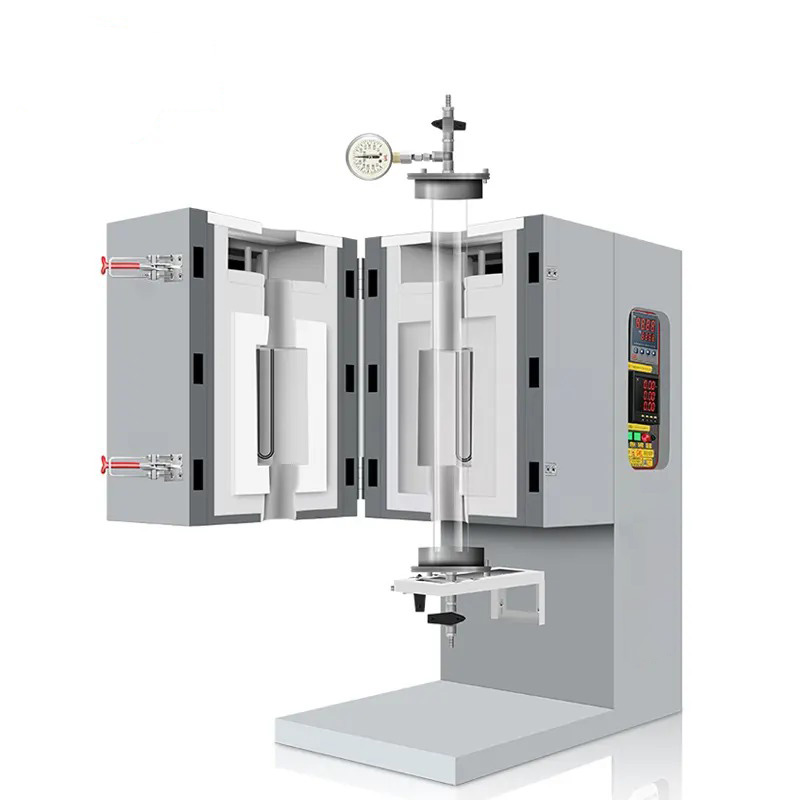
The equipment mainly consists of the following parts:
Vertical furnace structure;
High-temperature furnace tubes;
Heating system;
Temperature control system;
Gas control system;
Vacuum and safety protection devices.
During operation, heating elements generate heat around the furnace tubes, creating a stable high-temperature zone inside the tubes. Samples are typically placed in the center of the furnace tubes. By controlling the temperature, gas flow rate, and pressure, different material processing procedures are achieved.
This type of equipment typically uses stainless steel, quartz glass, or corundum tubes as the furnace tube material to adapt to different temperature and experimental environment requirements.
II. Key Features and Advantages of Vertical Tube Furnaces
- Vertical Structure Improves Space Utilization
Vertical tube furnaces are placed vertically, saving space. This structure is quite practical for laboratories with limited space—the heating zone can still be made long, but it takes up less horizontal space. Even with multiple units, it doesn’t feel cramped, making excellent space utilization.
- Suitable for Powder and Particulate Material Processing
Because the furnace tubes are arranged vertically, the lateral displacement of powder particles is relatively small during heat treatment due to gravity. For powder, granular, or suspension samples, vertical tube furnaces are beneficial for maintaining the stability of the charge.
This feature makes vertical tube furnaces commonly used for:
Nanopowder preparation;
Catalytic material research;
Functional material synthesis.
- More Flexible Atmosphere Control
Vertical tube furnaces are typically equipped with a gas control system that allows for the introduction of different gases according to experimental requirements.
For example: nitrogen protection; argon protection; hydrogen reduction; mixed reaction gases. The vertical airflow design helps maintain stable gas exchange processes in some experiments, improving the controllability of the reaction environment.
- Stable Temperature Range
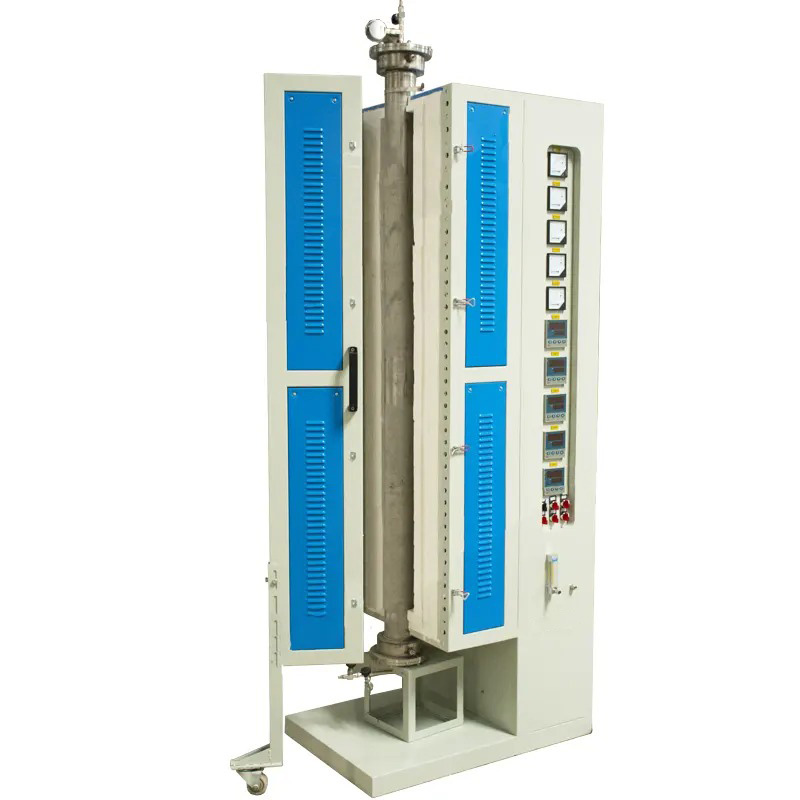
High-performance vertical tube furnaces employ a multi-segment independent heating structure, which can form a stable isothermal zone in the middle of the furnace tubes, effectively reducing the impact of local temperature differences on material properties. For material growth and crystal structure research, the stability of the temperature field is a crucial factor affecting experimental repeatability.
- Support for Multiple Experimental Modes
Depending on the configuration, the Vertical Tube Furnace can incorporate: a vacuum system; gas flow control; an automatic lifting mechanism; and a programmed temperature control system. These features enable the equipment to adapt to more complex experimental conditions.
III. Two Core Topics of Vertical Tube Furnaces
- Why are vertical tube furnaces suitable for material growth and powder experiments?
The core advantage of the vertical structure lies in the easier control of airflow and sample orientation. During gas-phase reactions, gas can pass vertically through the furnace tube, ensuring full contact with the sample. Simultaneously, placing powder samples vertically reduces uneven accumulation problems caused by horizontal placement.
| Comparison Dimension | Vertical Single-Zone Tube Furnace | Vertical Multi-Zone Tube Furnace |
|---|---|---|
| Number of Zones | Single zone, simple structure | Multiple independent zones with individual control |
| Temperature Uniformity | Uniform heating across the entire zone | Each zone independently adjustable for gradient profiles |
| Temperature Profile Flexibility | Single temperature for standard heat treatment | Multiple temperature segments for complex distributions |
| Applications | Routine annealing, sintering, heat treatment | Multi-stage reactions, CVD, gradient sintering, zone refining |
| Operational Complexity | Simple and easy to operate | More complex programming with multi-point coordination |
| Equipment Cost | Relatively lower | Relatively higher |
| Typical Uses | General lab experiments, uniform material treatment | Functional materials, semiconductor processing, multi-zone reactions |
- How to ensure the safe operation of a vertical tube furnace?
High-temperature and atmospheric experiments place high demands on equipment safety. During use, the following aspects need to be focused on:
Gas pressure control: The equipment can be equipped with a dual-indicator pressure detection system (positive and negative pressure).
When the exhaust port is closed or the furnace tube pressure rises abnormally, the protection system can shut off the gas supply and activate the exhaust alarm, reducing operational risks.
Gas leak detection: For experiments using hazardous gases or special atmospheres, a leak alarm system is required.
When the concentration of hazardous gas in the chamber exceeds the set value, the system can shut off the gas supply and activate the exhaust protection.
Cooling Structure Maintenance: The equipment employs a double-layer furnace shell and air-cooling structure to maintain a low surface temperature of the furnace body.
During normal operation, the external temperature of the furnace body can be controlled below 45℃, improving operational safety.
IV. Product Applications
- Semiconductor Manufacturing: Vertical furnaces are standard equipment for silicon wafer oxidation, diffusion, annealing, and CVD thin film deposition. The requirements for particle contamination control and temperature field uniformity make vertical structures the mainstream choice.
- Crystal Growth: For the growth of single-crystal silicon, sapphire, and scintillation crystals using the Czochralski method and crucible dropping method, the vertical temperature gradient of the vertical tube furnace is a core condition for the process.
- Powder Material Processing: For powder sintering, fluidized bed CVD deposition, and nanomaterial synthesis, samples are naturally stable due to gravity, preventing spillage or displacement.
- Quenching and Rapid Cooling Experiments: After heating in the vertical furnace, samples can fall directly into the cooling medium (water, oil, or gas) below, with a transfer time controlled within 1-2 seconds, suitable for phase transition studies of metallic materials.
- Chemical Vapor Deposition (CVD): The vertical airflow design allows for more thorough contact between the reactant gas and the substrate, suitable for the growth of materials such as carbon nanotubes, graphene, and ZnO nanowires.
- Heat treatment of high-temperature alloys and ceramics: Annealing, sintering and solution treatment are completed in a vacuum or protective atmosphere to avoid material oxidation and decarburization.
V.Supplier
Luoyang Anjing Intelligent Equipment Co., Ltd. is an enterprise dedicated to the research, development, production, sales, and technical services of heat treatment equipment such as high-temperature electric furnaces. We produce laboratory, vacuum, industrial, and medium frequency furnace, covering a temperature range from -100℃ to 2600℃, serving industries such as new energy, semiconductors, and advanced materials. We can provide customized solutions based on specific atmosphere, ultra-high temperature, and intelligent control system requirements. Please feel free to contact us if you are interested.