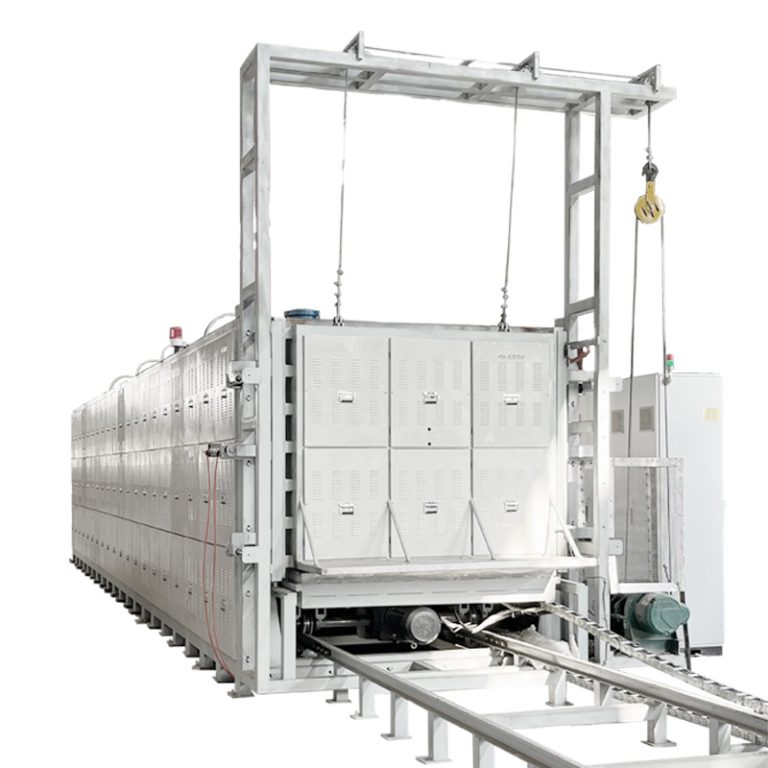
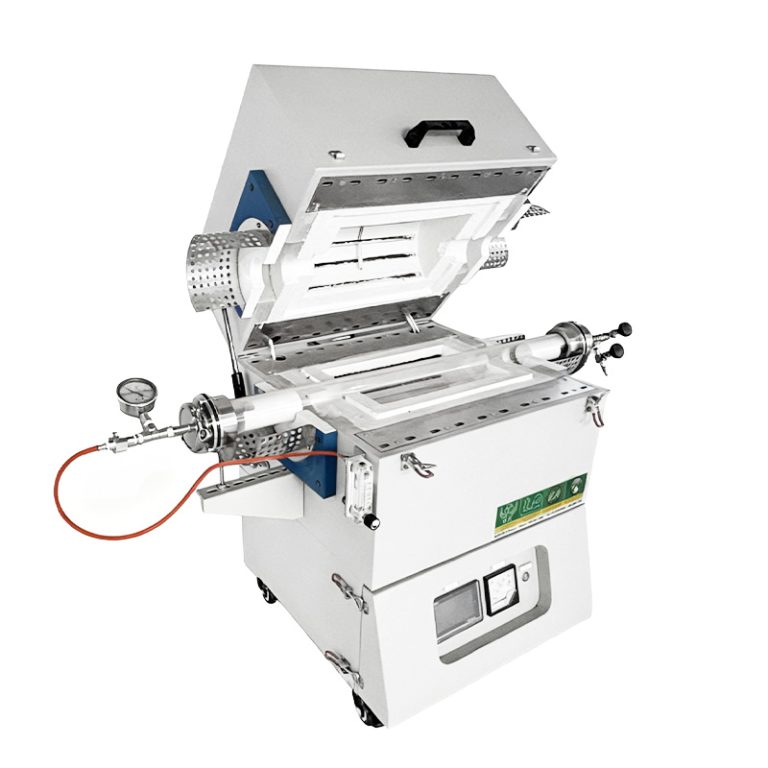
Luoyang Anjing Intelligence Equipment are a global leader in high-temperature electric furnaces



Batch Furnace vs Continuous Furnace: Which Is Better for Production?
A batch furnace offers greater flexibility for different products and heat-treatment cycles, while a continuous furnace provides higher throughput, consistent processing, and better production efficiency for large-volume, standardized manufacturing.
I.Introduction
When selecting an industrial furnace for production, one of the first decisions is whether to use a batch furnace or a continuous furnace. Batch furnaces process a fixed load through one complete heating cycle, while continuous furnaces move products through multiple heating and cooling zones without stopping production.
Neither design is automatically better. The right choice depends on production volume, product variety, cycle time, temperature profile, automation requirements, floor space, energy consumption, and capital investment.
This guide compares batch vs continuous furnaces from a production perspective and explains when each furnace type makes more sense.
II. Batch Furnace vs Continuous Furnace: What Is the Difference?
The fundamental difference is how material moves through the thermal process.
A batch furnace processes one defined load at a time. Parts are loaded into the chamber, the furnace runs through the programmed heating, soaking, and cooling stages, and the batch is then removed.
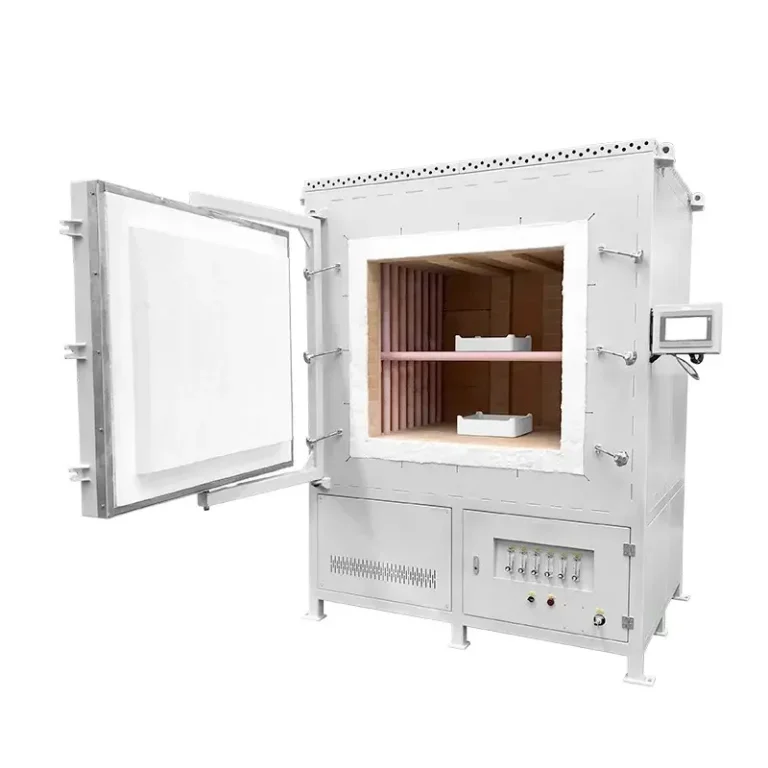
Typical batch furnaces include:
- Box furnaces
- Car bottom furnaces
- Pit furnaces
- Bell furnaces
- Lifting furnaces
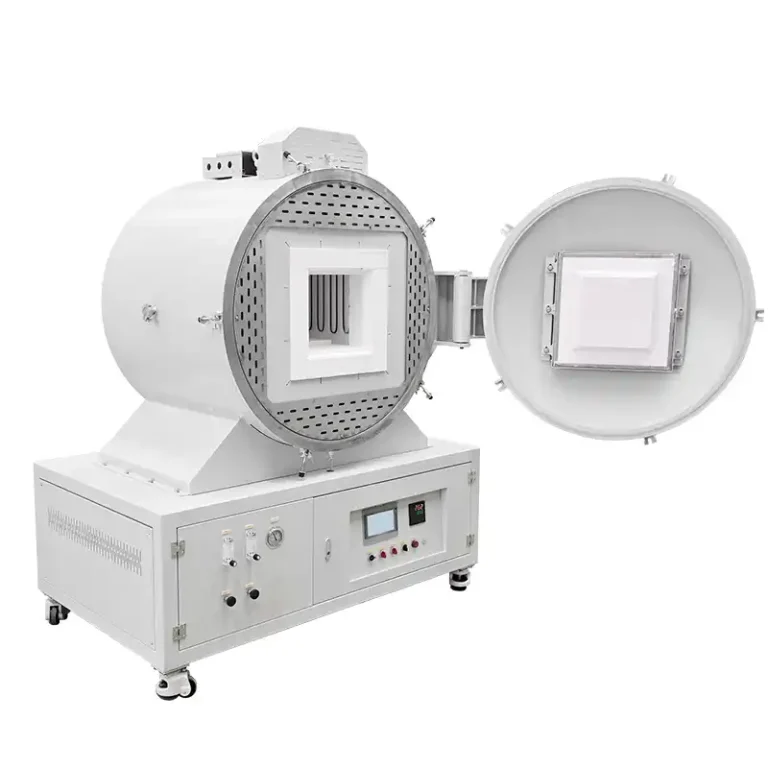
- Batch vacuum furnaces
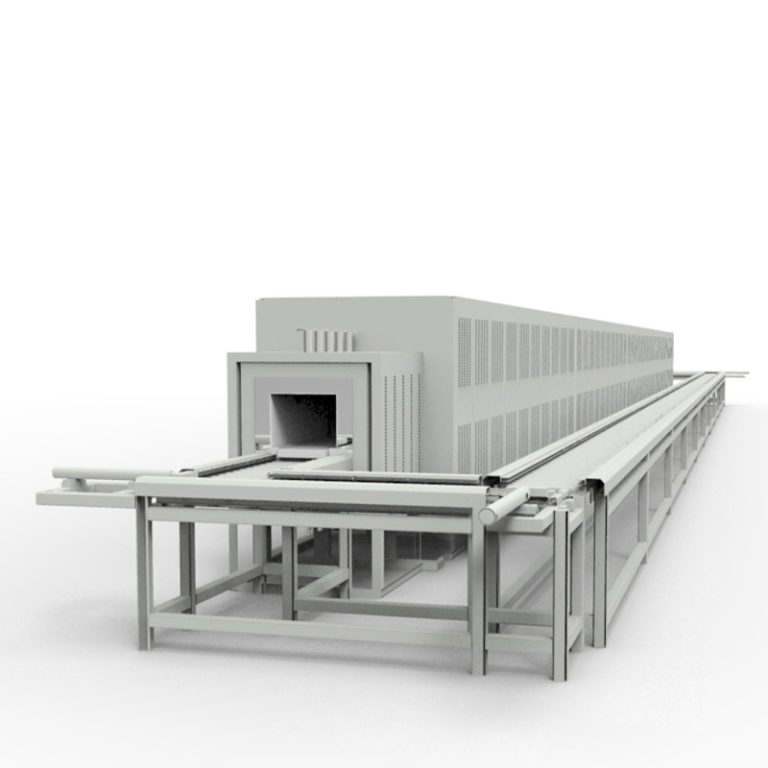
A continuous furnace works differently. Products continuously enter one end of the furnace, travel through several controlled zones, and leave from the other end after completing the required thermal cycle.
Typical continuous furnaces include:
- Roller hearth kilns
- Tunnel kilns
- Mesh belt furnaces
- Pusher furnaces
- Rotary kilns
- Conveyor furnaces
The main selection question is therefore not simply which furnace reaches the required temperature.
It is:Do you need production flexibility or continuous throughput?
1. Batch Furnace vs Continuous Furnace: Quick Comparison
| Factor | Batch Furnace | Continuous Furnace |
|---|---|---|
| Production method | One batch per cycle | Continuous material flow |
| Production volume | Low to medium | Medium to very high |
| Product variety | Excellent | Best for standardized products |
| Process flexibility | High | Lower after line configuration |
| Recipe changes | Easy | More difficult |
| Throughput | Limited by batch cycle | High |
| Temperature profile | Programmable for each batch | Controlled by furnace zones and conveyor speed |
| Automation | Low to high | Usually high |
| Loading | Batch loading | Continuous feeding |
| Labor requirement | More loading/unloading involvement | Lower per unit with automation |
| Energy use | Depends strongly on cycle and loading | Can be efficient at steady high utilization |
| Initial investment | Generally lower | Generally higher |
| Floor space | Usually smaller | Often larger |
| Maintenance | Relatively straightforward | More conveying and automation components |
| Best application | Multi-product / flexible production | High-volume standardized production |
The exact performance depends on furnace design, temperature, atmosphere, loading density, insulation, heating method, and production schedule.
2. How Does a Batch Furnace Work?
A batch furnace treats a specific quantity of material during each production cycle.
A typical cycle may include:Loading → Heating → Soaking → Controlled Cooling → Unloading
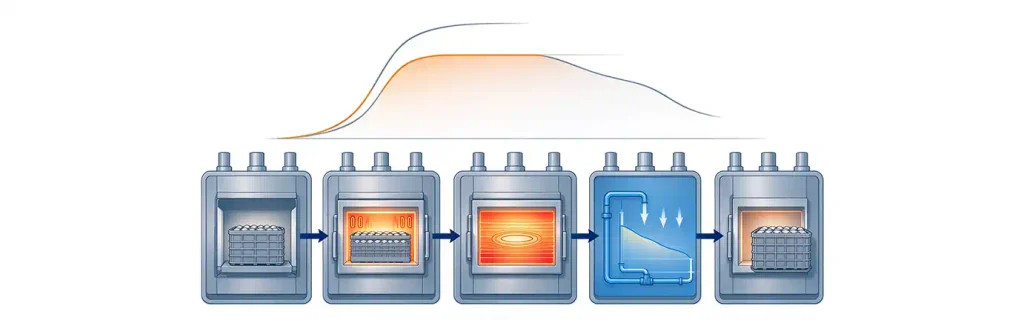
Once that batch is completed, another batch can be loaded.
The major advantage is that the thermal recipe can be changed between batches.
For example, one production batch may require:
- 850°C
- 60-minute holding time
- Controlled cooling
The next batch may require:
- 1050°C
- 120-minute holding time
- A different heating rate
A programmable batch furnace can accommodate these changes without requiring a completely different production line.
This flexibility makes batch furnaces particularly useful for manufacturers producing different materials, different part sizes, or different heat-treatment recipes.
3. How Does a Continuous Furnace Work?
A continuous furnace operates as a production line.
Instead of loading one complete batch and waiting for the cycle to finish, products continuously travel through the furnace.
The furnace is normally divided into different thermal zones, such as:Preheating → Heating → Soaking → Cooling.
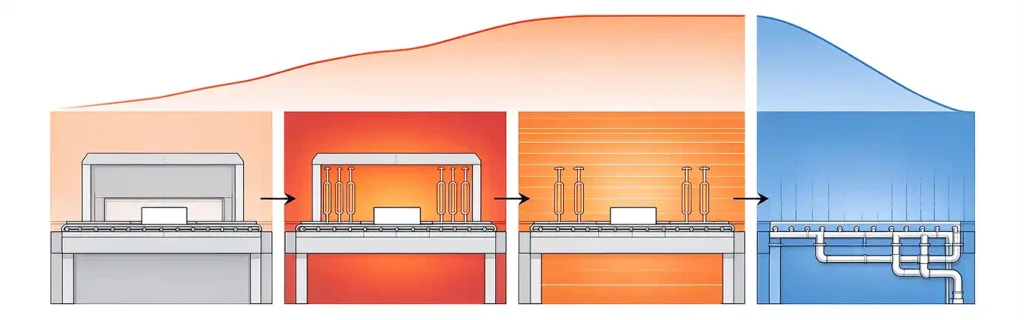
Each zone maintains a specific temperature or thermal condition.
The required process time is determined partly by:
- Furnace length
- Number of zones
- Conveyor speed
- Heating rate
- Product loading density
- Required soaking time
For example, a roller hearth furnace uses rotating rollers to move products continuously through the heating chamber.
A tunnel kiln may use kiln cars or another transport mechanism to move larger loads through different thermal zones.
Once the process has reached steady-state operation, products can continuously enter and exit the furnace.
This makes continuous furnaces highly attractive for large-volume, repetitive production.
4. Production Volume: The Biggest Difference
Production volume is usually the first factor to evaluate.
Batch Furnace
A batch furnace makes sense when production is:
- Low volume
- Medium volume
- Irregular
- Seasonal
- Divided among many product types
- Frequently changed between recipes
Suppose a factory heat treats five different components, each requiring a different temperature and holding time.
Running each product as an independent batch can be much more practical than building a continuous line around one fixed thermal profile.
Best fit:Lower volume + higher product variety
Continuous Furnace
A continuous furnace becomes attractive when production is:
- High volume
- Stable
- Repetitive
- Standardized
- Required around the clock
If thousands of similar parts require the same thermal cycle every day, repeatedly heating and cooling a batch furnace may create unnecessary production interruptions.
A continuous furnace can maintain its thermal zones while material keeps moving through the system.
Best fit:High volume + standardized production
5. Which Furnace Has Higher Throughput?
For standardized mass production, the continuous furnace generally has the advantage.
Consider a batch furnace with an eight-hour total cycle.
Even if the heating process itself takes six hours, additional time may be required for:
- Loading
- Furnace recovery
- Cooling
- Unloading
- Preparing the next batch
Production therefore occurs in separate cycles.
A continuous furnace removes much of this start-stop behavior.
Once the furnace reaches stable operating conditions, finished products can leave the furnace at regular intervals.
This can significantly increase output per day.
However, high theoretical throughput is only valuable when the factory can continuously supply enough material to keep the line loaded.
A continuous furnace running at 30% capacity may not provide the economic advantage expected from the larger investment.
6. Which Furnace Offers Better Process Flexibility?
This is where the batch furnace has a clear advantage.
A batch furnace can process:
- Different materials
- Different part sizes
- Different batch weights
- Different temperature curves
- Different holding times
The operator can simply select or program a different thermal recipe for the next load.
This makes batch equipment useful for:
- Contract heat treatment
- R&D
- Pilot production
- Specialty manufacturing
- Multiple product lines
- Frequently changing customer orders
Continuous furnaces are less flexible.
Changing the process may require adjustments to:
- Conveyor speed
- Zone temperatures
- Heating power
- Loading density
- Atmosphere flow
- Cooling conditions
Major product changes can also disrupt the steady-state condition of the production line.
Therefore:
High product variety → Batch Furnace
High product consistency → Continuous Furnace
7. Which Furnace Provides Better Product Consistency?
For a stable, repetitive manufacturing process, a properly designed continuous furnace can provide excellent product-to-product consistency.
Every product travels through:
- The same zones
- At the same conveyor speed
- Under similar heating conditions
- With similar holding times
This makes continuous systems attractive for mass-produced products.
However, consistency depends on keeping operating conditions stable.
Changes in:
- Product dimensions
- Loading density
- Material
- Conveyor speed
- Atmosphere
- Furnace temperature
can affect the thermal result.
Batch furnaces can also provide excellent repeatability, especially with programmable controls and consistent loading practices.
The difference is that batch-to-batch conditions must be carefully managed.
8. Energy Efficiency: Batch or Continuous?
It is tempting to say that a continuous furnace is always more energy-efficient.
That is not necessarily true.
Energy efficiency depends heavily on furnace utilization.
Batch Furnace
A batch furnace may consume energy during:
- Heat-up
- Soaking
- Cooling
- Temperature recovery
If the furnace is repeatedly heated from room temperature to a high operating temperature, energy consumption can increase.
However, a batch furnace can be shut down when there is no production.
For intermittent production, this can be a major advantage.
Continuous Furnace
A continuous furnace can operate efficiently when it runs near design capacity for long periods.
Once the furnace reaches steady operating temperature, it does not need to repeat a complete cold-start cycle for every batch.
Heat can also be managed between different zones, and some systems can incorporate heat recovery.
However, maintaining a large continuous furnace at temperature while production is low wastes energy.
Therefore:
Intermittent production → Batch may be more economical
High-utilization 24/7 production → Continuous may be more economical
The correct comparison should be based on:
Energy consumption per kilogram or ton of finished product
rather than furnace rated power alone.
9. Maintenance Requirements
A batch furnace generally has fewer material-transport components.
Maintenance commonly involves:
- Heating elements
- Thermocouples
- Refractory or fiber insulation
- Door seals
- Temperature controls
- Fans
- Trolley systems, where applicable
A continuous furnace adds more mechanical components.
Depending on the design, these may include:
- Rollers
- Bearings
- Conveyor chains
- Mesh belts
- Drive motors
- Gearboxes
- Pusher systems
- Kiln cars
- Automatic loading equipment
Continuous furnaces therefore require careful preventive maintenance because a conveyor-system failure can stop the entire production line.
This does not necessarily make them unreliable—it simply means maintenance planning becomes more important.
10. Floor Space
Batch furnaces are generally more compact.
A box furnace or pit furnace can provide significant batch capacity without requiring an extremely long production line.
Continuous furnaces often require more floor space because different heating and cooling stages are arranged along the product travel direction.
A roller hearth or tunnel furnace can be many meters long.
Additional space may also be required for:
- Loading
- Preheating
- Cooling
- Unloading
- Conveyors
- Buffer storage
Factory layout should therefore be considered early in the selection process.
11. When Should You Choose a Batch Furnace?
Choose a batch furnace when flexibility is more valuable than maximum throughput.
It is usually the better option when:
- Production volumes are low or medium.
- You manufacture several different products.
- Thermal recipes change frequently.
- Batch sizes vary.
- Products are large or irregular.
- Production is intermittent.
- You need R&D or pilot-production capability.
- Capital investment needs to remain controlled.
For large or heavy workpieces, a car bottom furnace can make batch loading easier because the complete hearth moves outside the furnace.
For long shafts and vertically oriented components, a pit furnace may be more suitable.
For general heat treatment and sintering, an industrial box furnace provides a simple and flexible solution.
12. When Should You Choose a Continuous Furnace?
Choose a continuous furnace when production volume and repeatability justify a dedicated thermal-processing line.
It is usually the better choice when:
- You manufacture the same or similar products continuously.
- Production volume is high.
- Thermal recipes rarely change.
- Throughput is a major priority.
- The furnace will operate for long periods.
- Automation is required.
- Product loading can be standardized.
- Production needs to integrate with upstream and downstream equipment.
Depending on the product, possible furnace configurations include:
- Roller hearth furnace
- Tunnel kiln
- Mesh belt furnace
- Pusher furnace
- Rotary kiln
The correct transport mechanism depends on the size, shape, weight, and thermal requirements of the product.
13. Can a Batch Furnace Be Used for High-Volume Production?
Yes.
A common mistake is assuming that high production volume automatically requires a continuous furnace.
Large batch furnaces can process substantial loads.
For example, a large car bottom furnace can process heavy batches in each cycle. Multiple batch furnaces can also operate in parallel.
Another option is a double-car or shuttle configuration.
While one car is inside the furnace, another can be loaded or unloaded. This reduces waiting time between cycles and increases equipment utilization.
This arrangement can provide a useful middle ground between a conventional single-batch furnace and a fully continuous production line.
The best solution depends on cycle time and required output.
III. Batch vs Continuous: A Simple Decision Rule
The decision can be simplified to two production models.
Choose Batch When:
High product variety + variable process + low/medium volume
A batch furnace gives you the freedom to change products, temperatures, holding times, and production schedules.
Choose Continuous When:
Low product variety + stable process + high volume
A continuous furnace gives you throughput, automation, and repeatability when production conditions remain stable.
If your production falls somewhere between these two models, compare a large automated batch furnace, double-car furnace, or multiple batch furnaces against a continuous line before making the final decision.
IV. Conclusion
The choice between a batch furnace and a continuous furnace depends primarily on production volume, product variety, thermal process, and required flexibility.
A batch furnace is generally better for low-to-medium production volumes, multiple product types, changing heat-treatment recipes, and large or irregular workpieces. A continuous furnace is better suited to high-volume standardized manufacturing where stable throughput, automation, and process repeatability are priorities.
If you are planning a new furnace line, provide Luoyang Anjing Intelligence Equipment with your material, workpiece dimensions, process temperature, thermal cycle, atmosphere, and required production capacity. We can evaluate whether a batch furnace, continuous furnace, or customized production system is the better fit.
Click “Request a Quote” to get a customized solution.
V.FAQ
1. What is the difference between a batch furnace and a continuous furnace?
A batch furnace processes a fixed quantity of material through a complete thermal cycle before unloading. A continuous furnace continuously moves products through different heating, soaking, and cooling zones. Batch furnaces prioritize flexibility, while continuous furnaces prioritize throughput.
2. Is a continuous furnace more energy-efficient than a batch furnace?
Not necessarily. Continuous furnaces can be highly efficient when operating steadily under a heavy load; however, for intermittent production, batch furnaces are often more economical, as they can simply be shut down when not in use. Energy consumption should be compared based on the amount of energy used per kilogram, per ton, or per finished unit.
3. Which furnace is better for high-volume production?
If both the products and the thermal processing regimes are standardized—and the production volume is high—a continuous furnace is generally the better choice. However, large-scale automated batch furnaces or multi-car furnace systems can also achieve high throughput, especially when the workpieces are particularly heavy or large.
4. What are examples of batch and continuous furnaces?
Common batch furnaces include box furnaces, car bottom furnaces, pit furnaces, and lifting furnaces. Common continuous furnaces include roller hearth kilns, tunnel kilns, mesh belt furnaces, pusher furnaces, and rotary kilns.
5. When should I switch from a batch furnace to a continuous furnace?
There is no uniform production volume threshold. A continuous furnace is worth considering when the product design and thermal processing regime are stable, annual production volume is high, high production line utilization can be maintained, and the savings in labor and unit processing costs outweigh the higher investment required for the equipment.
Supplier
Luoyang Anjing Intelligent Equipment Co., Ltd. is an enterprise dedicated to the research, development, production, sales, and technical services of heat treatment equipment such as high-temperature electric furnaces. We produce laboratory, vacuum, industrial, and medium frequency furnace, covering a temperature range from -100℃ to 2600℃, serving industries such as new energy, semiconductors, and advanced materials. We can provide customized solutions based on specific atmosphere, ultra-high temperature, and intelligent control system requirements. Please feel free to contact us if you are interested.