Luoyang Anjing Intelligence Equipment are a global leader in high-temperature electric furnaces



Vacuum Furnace vs. Atmosphere Furnace: Key Differences Explained
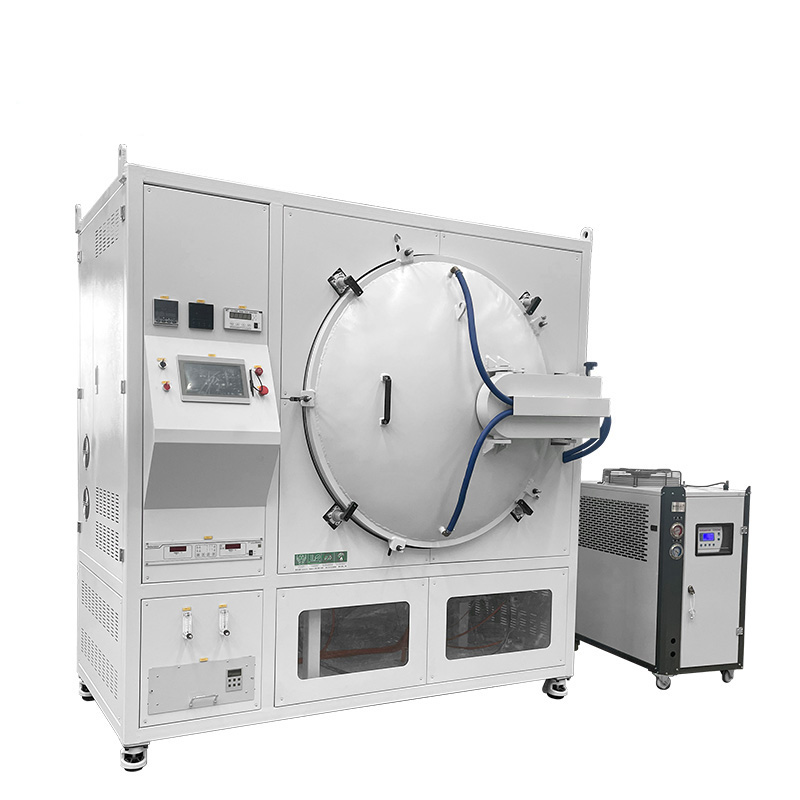
In the field of high-temperature heat treatment, vacuum furnaces and atmosphere furnaces are both common heat treatment equipment, both capable of completing material heating, sintering, and heat treatment processes under controlled conditions.
However, the biggest difference lies in their methods of controlling the furnace environment. Vacuum furnaces establish a low-pressure environment by evacuating air, while atmosphere furnaces alter the furnace atmosphere by introducing specific gases. The choice between these two types of equipment does not depend on their equipment level, but rather on the material properties, process requirements, and the performance goals of the final product.
Understanding the Vacuum Furnace Working Principle helps users more accurately determine the applicable scenarios for vacuum furnaces and atmosphere furnaces.
I. General Introduction to Vacuum Furnaces and Atmosphere Furnaces
Both vacuum furnaces and atmosphere furnaces aim to prevent materials from oxidizing or deteriorating when heated at high temperatures, achieving the same goal, but in completely different ways.
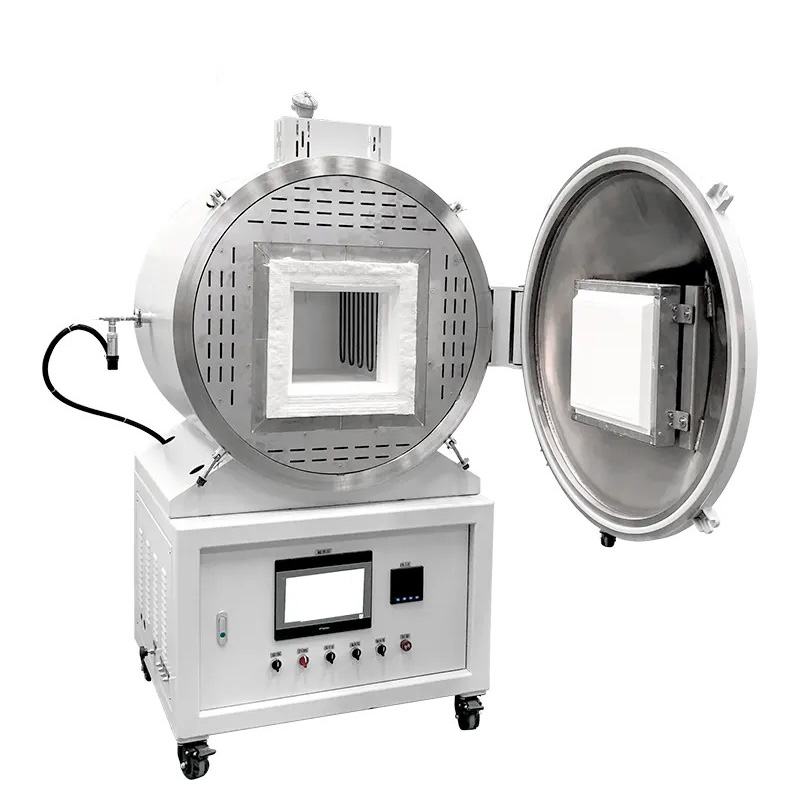
A vacuum furnace completes heating in a negative pressure (below atmospheric pressure) environment by evacuating the air from the furnace chamber. Atmosphere furnaces, on the other hand, heat the furnace by introducing a specific gas (nitrogen, argon, hydrogen, etc.) into the furnace chamber, achieving heating under normal or slightly positive pressure.
One involves “removing” gas, while the other involves “filling” it—this is the most fundamental difference between the two. This difference determines their respective applicable scenarios, equipment costs, operating methods, and processing effects.
II. Product Features and Advantages
- Working Medium: Evacuation vs. Replacement
The vacuum furnace removes air, with the vacuum pump drawing it to 10⁻¹Pa or even 10⁻⁵Pa, leaving very little residual gas. The atmosphere furnace replaces the air, purging the furnace with protective gas to expel the original air, filling the furnace with a specific atmosphere.
The result is: In a vacuum furnace, the oxygen content is determined by the vacuum level and can reach extremely low levels (below ppm); in an atmosphere furnace, the oxygen content depends on the gas replacement efficiency, typically ranging from tens to hundreds of ppm. If an extremely high oxygen-free environment is required, a vacuum furnace is a more reliable choice.
- Pressure State: Negative Pressure vs. Atmospheric Pressure/Slight Positive Pressure
Vacuum furnaces operate under negative pressure internally, with a limit of 10⁻⁵ Pa. The furnace body withstands external pressure, requiring a thick-walled welded structure and a strongly sealed door. Atmosphere furnaces operate at atmospheric or slightly positive pressure, with a small internal and external pressure difference, and have lower sealing requirements.
- Heating Method: Radiation-Primary vs. Radiation + Convection
Vacuum furnaces contain very few gas molecules, resulting in almost no convection or heat conduction; heating relies primarily on radiation. Heat is directly transferred from the heating element to the workpiece via electromagnetic waves. The heating rate is significantly affected by the workpiece’s surface absorptivity; highly reflective metals heat up more slowly. Atmosphere furnaces contain gas molecules, and in addition to radiative heat transfer, gas convection also participates in heat transfer. At the same power, atmosphere furnaces typically heat up faster, and temperature uniformity is easier to ensure.
- Cooling Method: Gas-Induced Cooling vs. Multiple Methods
Vacuum furnaces cool extremely slowly in a vacuum (due to the adiabatic effect). Rapid cooling requires the introduction of inert gas for forced circulation. Different cooling rates can be achieved by adjusting the gas pressure and fan speed. Atmosphere furnaces can cool naturally after heating is stopped, or the furnace door can be opened to accelerate cooling, or atmosphere cooling can be maintained while gas is introduced.
- Equipment Structure and Cost
Vacuum furnaces require thick-walled furnace bodies, high-performance vacuum pumps, precision vacuum gauges, and high-temperature resistant seals, typically costing 3-5 times more than comparable atmosphere furnaces. Atmosphere furnaces have a relatively simple structure, requiring only sealing flanges and gas pipelines, resulting in significantly lower equipment costs.
- Operational Complexity
Vacuum furnaces are more complex to operate: evacuation takes time, vacuum levels need monitoring, venting must be prevented during heating, and parts must be removed after the furnace door is backfilled. Atmosphere furnaces are relatively simple to operate: gas is introduced, heating begins, heating is complete, and parts are removed—a more direct process.
| omparison Dimension | Vacuum Furnace | Atmosphere Furnace |
|---|---|---|
| Oxygen removal method | Vacuum pumping, removes air | Gas purging, displaces air |
| Working pressure | Negative pressure (below atmospheric) | Atmospheric or slight positive pressure |
| Furnace structure | Thick-walled sealed chamber | Light-duty sealed structure |
| Oxygen residue | Extremely low (<10ppm, depending on vacuum level) | Tens to hundreds of ppm |
| Heating method | Primarily radiation | Radiation + convection |
| Heating rate | Slower | Faster |
| Cooling rate | Requires forced gas cooling | Natural or forced cooling available |
| Equipment cost | High (3~5x atmosphere furnace) | Lower |
| Operation complexity | More complex | Simpler |
| Workpiece surface quality | Metallic color, no oxidation | Near original color, possible slight discoloration |
| Suitable processes | High-end heat treatment, brazing, sintering | Conventional heat treatment, annealing, tempering |
IV. Two Key Selection Issues
- Is a vacuum furnace always better than an atmosphere furnace?
This is a common misconception among users.In reality, there is no absolute superiority or inferiority between the two.
Advantages of a vacuum furnace: Higher cleanliness; lower oxidation risk; more suitable for high-end materials.
Advantages of an atmosphere furnace: Lower cost; simpler operation; can achieve special gas reactions.
For example: A vacuum furnace is more suitable for manufacturing aero-engine parts; while an atmosphere furnace is more appropriate for metal oxidation experiments. Equipment selection should revolve around process objectives, rather than simply pursuing more advanced equipment.
- How to select equipment based on materials?
You can determine this based on the following:
Choosing a vacuum furnace:
If the material has the following characteristics: easy to oxidize; high purity requirements; high value; requires a clean surface.
For example: aerospace alloys, titanium alloys, cemented carbides.
Choosing an atmosphere furnace:
If the process requires: specific gases participating in the reaction; mass production; control of material surface chemical properties.
For example: metal oxidation, reduction experiments, carbonization treatment.
V.Supplier
Luoyang Anjing Intelligent Equipment Co., Ltd. is an enterprise dedicated to the research, development, production, sales, and technical services of heat treatment equipment such as high-temperature electric furnaces. We produce laboratory, vacuum, industrial, and medium frequency furnace, covering a temperature range from -100℃ to 2600℃, serving industries such as new energy, semiconductors, and advanced materials. We can provide customized solutions based on specific atmosphere, ultra-high temperature, and intelligent control system requirements. Please feel free to contact us if you are interested.