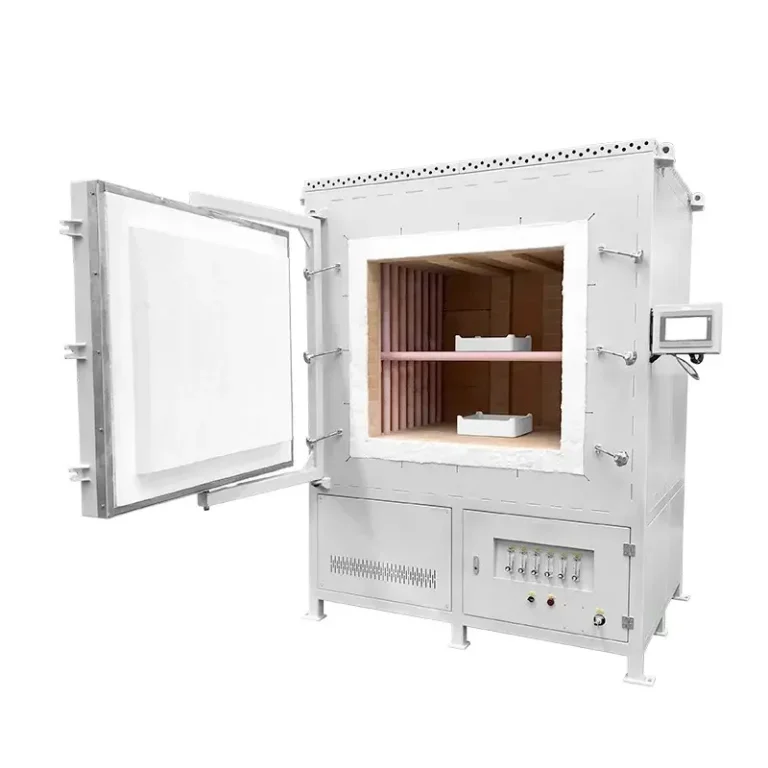
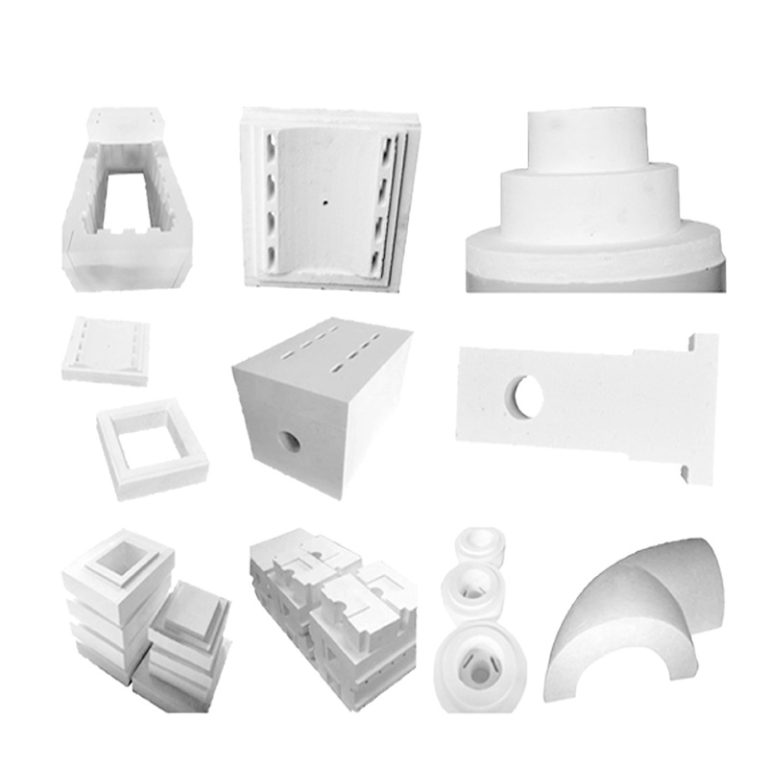
Luoyang Anjing Intelligence Equipment are a global leader in high-temperature electric furnaces



Which Thermocouple Is Best for High Temperatures?
For high temperature applications, Type S, Type R, and Type B thermocouples are among the best choices, while Type B is preferred for the highest continuous temperatures and Type S or R is often selected for accurate high-temperature furnace measurement.Choosing the best thermocouple for high temperatures depends on the furnace temperature, atmosphere, required accuracy, service life, and budget. A thermocouple is not simply a temperature sensor; it is a critical component of the furnace control and safety system.
I.What Is the Best Thermocouple for High Temperatures?
There is no single thermocouple that is best for every high-temperature application.
For general high-temperature furnace measurement, Type S and Type R thermocouples are widely used because they provide good stability and accuracy at elevated temperatures. For applications requiring operation at especially high temperatures, Type B thermocouples can offer a wider usable high-temperature range.
The selection should be based on the actual operating conditions rather than maximum temperature alone.
A practical guide is:
| Thermocouple Type | Approximate Temperature Range* | Typical High-Temperature Applications |
|---|---|---|
| Type K | -200 to 1260°C | General industrial and laboratory furnaces |
| Type N | -200 to 1300°C | High-temperature industrial applications |
| Type S | 0 to 1600°C | High-temperature furnaces, ceramics, laboratories |
| Type R | 0 to 1600°C | Furnaces, glass, ceramics, high-temperature processing |
| Type B | 600 to 1700°C | Very high-temperature furnaces and kilns |
*Actual usable temperature depends on sensor construction, wire diameter, sheath, atmosphere, installation, and applicable standards.
For many furnace applications above 1200°C, Type S, Type R, or Type B becomes a more appropriate choice than standard base-metal thermocouples.

II.What is a thermocouple?
1. Type S Thermocouple: A Strong Choice for High-Temperature Furnaces
Type S thermocouples are made from platinum-rhodium and platinum and are widely used for high-temperature measurement.
One of their main advantages is good long-term stability at elevated temperatures.
Typical applications include:
- High-temperature electric furnaces
- Ceramic sintering
- Glass processing
- Heat treatment
- Laboratory furnaces
- Kilns and refractory testing
Type S is particularly attractive when measurement stability and repeatability are more important than the lowest possible sensor cost.
This illustrates an important point: the thermocouple should be selected as part of the complete furnace control system, rather than considered as an independent accessory.
2. Type R Thermocouple: High Accuracy and Stability
Type R thermocouples are also platinum-based and are commonly used in high-temperature applications where accuracy, stability, and resistance to contamination are important.
Type R is suitable for applications such as:
- Ceramic firing
- Glass furnaces
- High-temperature laboratory equipment
- Heat treatment
- Industrial kilns
- Materials research
Like Type S, Type R has a high-temperature capability and good long-term stability.
The choice between Type S and Type R often depends on the specific furnace design, required measurement performance, sensor construction, and procurement considerations.
For most standard furnace applications, either can provide reliable high-temperature measurement when properly selected and installed.
3. Type B Thermocouple: Best for the Highest Furnace Temperatures
When the operating temperature becomes extremely high, Type B is often one of the strongest thermocouple choices.
Type B uses platinum-rhodium alloys and is designed for very high-temperature environments. It has a nominal temperature range extending to approximately 1700°C, depending on construction and application conditions.
Type B is particularly useful for:
- Ultra-high-temperature furnaces
- Advanced ceramic processing
- High-temperature research
- Refractory testing
- Specialized kilns
- High-temperature materials processing
An additional advantage is that Type B has relatively low output at lower temperatures, which makes it less suitable for low-temperature measurement but can be advantageous within its intended high-temperature operating range.
When a furnace regularly operates close to the upper end of the temperature range, Type B should be considered alongside Type S and Type R.
4. Is Type K Good for High-Temperature Furnaces?
Type K is one of the most widely used thermocouple types because it is economical, versatile, and suitable for many industrial and laboratory applications.
However, it is not always the best choice when furnace temperatures become very high.
Type K is commonly used up to approximately 1260°C, although the actual maximum depends heavily on wire size, environment, insulation, and construction.
For furnaces operating around 600–1200°C, Type K can be an excellent practical choice.
For sustained operation significantly above this range, platinum-rhodium thermocouples such as Type S, R, or B may provide better long-term stability and high-temperature performance.
Therefore, the question is not whether Type K is “good,” but whether its temperature capability and expected service life match the furnace process.
5. Type N: An Alternative for High-Temperature Applications
Type N is another base-metal thermocouple designed to offer good stability at elevated temperatures.
Its temperature capability is broadly comparable to Type K, with a nominal upper limit around 1300°C, depending on construction.
Type N can be considered when the application requires:
- Better high-temperature stability than some Type K installations
- Industrial furnace temperature monitoring
- Oxidizing furnace atmospheres
- Long-term temperature measurement
6.Why Does the Thermocouple Construction Matter?
The thermocouple type is only one part of the specification.
Two sensors using the same thermocouple type can have very different service lives depending on their construction.
Important factors include:
Protective sheath: Ceramic, alumina, metal, or other protective structures can be selected according to temperature and atmosphere.
Wire diameter: Larger conductors can generally provide greater durability but may have different response characteristics.
Insulation: Electrical insulation must remain stable at the intended operating temperature.
Sensor position: Placement affects how accurately the sensor represents the actual process temperature.
Atmosphere: Oxidizing, reducing, inert, vacuum, or chemically aggressive environments can significantly affect thermocouple life.
In a high-temperature electric furnace, incorrect sensor positioning can produce a temperature reading that differs from the actual sample temperature even when the thermocouple itself is functioning correctly.
7.Why Is Thermocouple Accuracy Important in an Electric Furnace?
The thermocouple provides the temperature feedback used by the furnace controller.
A typical closed-loop system operates as:
Temperature Setpoint → Controller → Power Regulation → Heating Elements → Furnace Chamber → Thermocouple → Controller
If the thermocouple reading is inaccurate, the controller may apply too much or too little heating power.
For example, if the furnace controller reads 1400°C while the actual sample environment is significantly cooler, the system may reduce heating prematurely. Conversely, an artificially low reading can cause excessive heating.
This can affect:
- Product quality
- Sintering behavior
- Material microstructure
- Heat-treatment results
- Energy consumption
- Furnace safety
- Process repeatability
For this reason, thermocouple selection should be coordinated with the furnace’s temperature-control system and process requirements.
III.Does Furnace Atmosphere Affect Thermocouple Selection?
The furnace atmosphere can strongly affect thermocouple performance and service life.
Air / Oxidizing Atmosphere
Many standard high-temperature thermocouples can operate effectively in air, provided the sensor construction is appropriate.
Inert Atmosphere
Argon and nitrogen may require consideration of sheath material, insulation, and sensor protection.
Reducing or Hydrogen Atmosphere
Special attention must be paid to material compatibility, sensor protection, sealing, and furnace safety.
Vacuum
Vacuum furnace applications may require specialized thermocouple assemblies designed for low-pressure environments.
Therefore, the best thermocouple is determined by more than the temperature number printed on the furnace specification sheet.
IV.Conclusion
So, which type of thermocouple is best for high-temperature furnaces? For routine high-temperature measurements, S-type and R-type thermocouples are relatively stable; for ultra-high-temperature special applications, B-type is more suitable. Below 1200–1300℃, K-type and N-type thermocouples offer high cost-effectiveness and can be used in many scenarios.
The specific choice depends on the actual temperature, furnace atmosphere, accuracy requirements, sensor structure, and process conditions. Luoyang Anjing Intelligent Equipment manufactures high-temperature electric furnaces and furnace accessories, and can configure them according to your needs.
Need help selecting a thermocouple for your furnace? Contact Anjing with your furnace temperature, atmosphere, and application requirements to identify a suitable temperature-sensing solution.
Click “Request a Quote” to get a customized solution.
V. FAQ Section
1. How do I choose a thermocouple for an electric furnace?
Select the thermocouple based on the normal operating temperature, maximum temperature, atmosphere, required accuracy, sensor position, service life, and controller compatibility. Do not select the sensor based solely on its nominal maximum temperature.
2. Which thermocouple can measure 1700°C?
Type B thermocouples are designed for ultra-high temperature measurements, and can measure temperatures up to approximately 1700°C, provided the structure and operating conditions permit.
3. Is Type K suitable for a 1400°C furnace?
Type K thermocouples have limited performance when used continuously at 1400℃. If the furnace is to operate near this temperature for an extended period, Type S or Type R thermocouples are generally more suitable, depending on the application.
4. What is the difference between Type S, Type R, and Type B thermocouples?
All three are platinum-rhodium thermocouples intended for high-temperature applications. Type S and R are commonly used for high-temperature accuracy and stability, while Type B is designed for especially high-temperature operation and can be used at higher temperatures.
5. Does thermocouple type affect furnace temperature accuracy?
Yes, it will have an impact. The characteristics of the thermocouple itself, the sensor structure, whether it is calibrated, its installation location, and the furnace environment will all affect the temperature measurement accuracy and control stability.
Supplier
Luoyang Anjing Intelligent Equipment Co., Ltd. is an enterprise dedicated to the research, development, production, sales, and technical services of heat treatment equipment such as high-temperature electric furnaces. We produce laboratory, vacuum, industrial, and medium frequency furnace, covering a temperature range from -100℃ to 2600℃, serving industries such as new energy, semiconductors, and advanced materials. We can provide customized solutions based on specific atmosphere, ultra-high temperature, and intelligent control system requirements. Please feel free to contact us if you are interested.