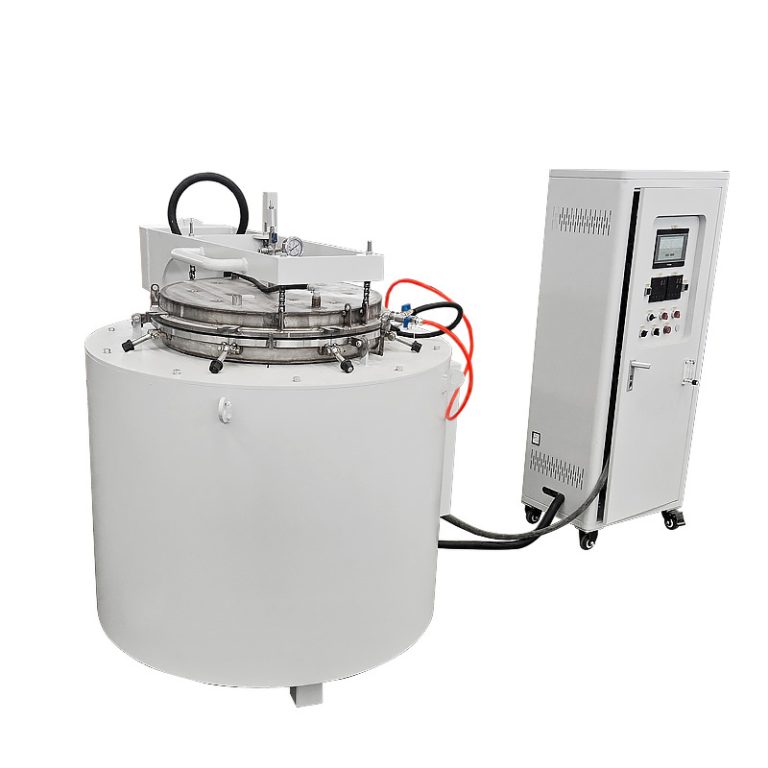
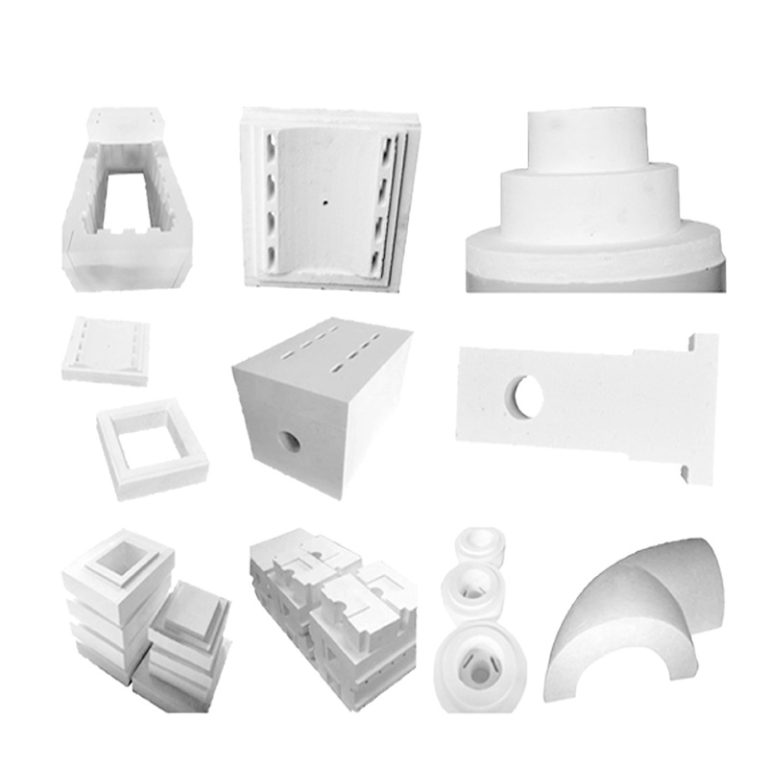
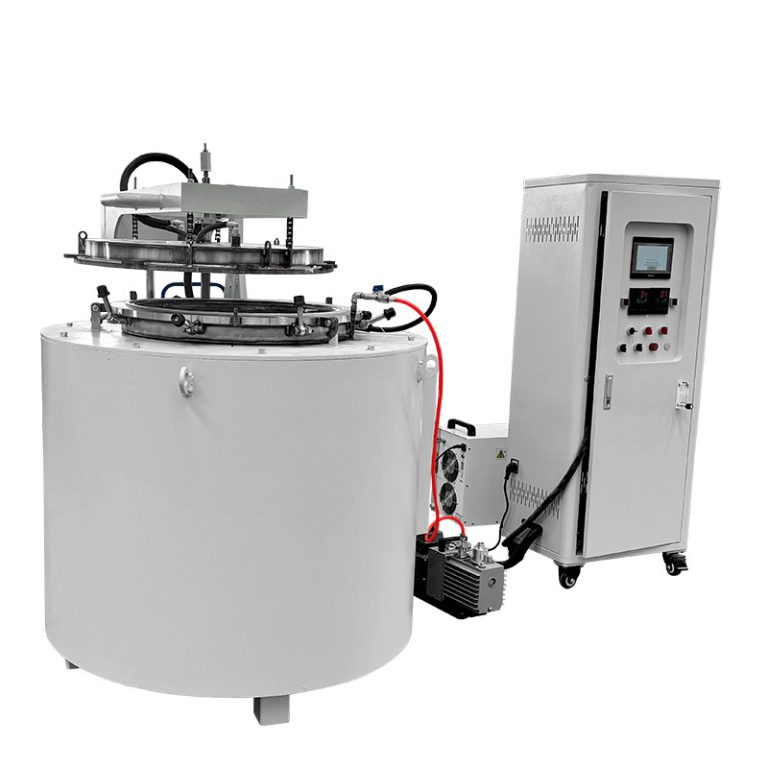
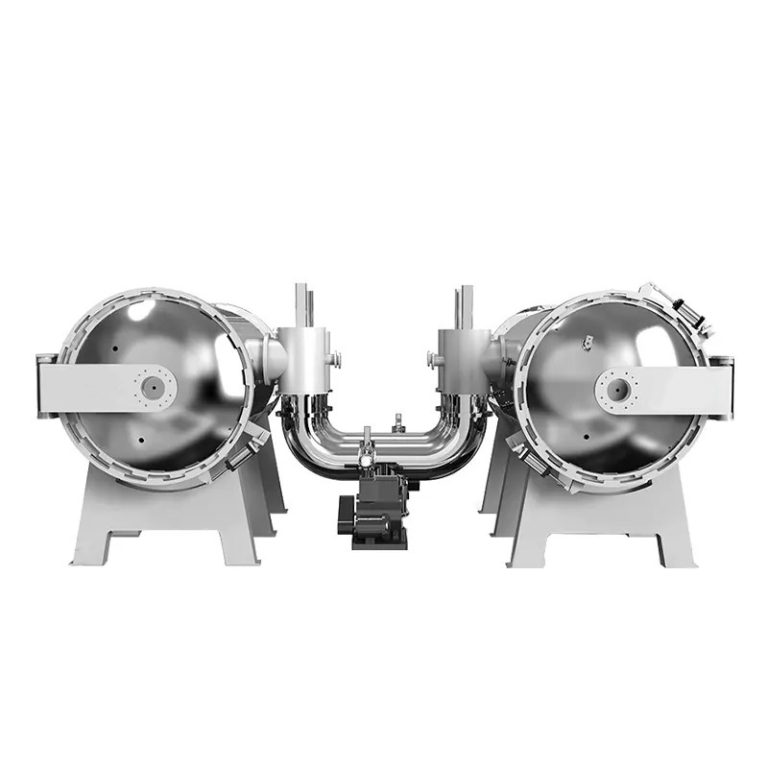
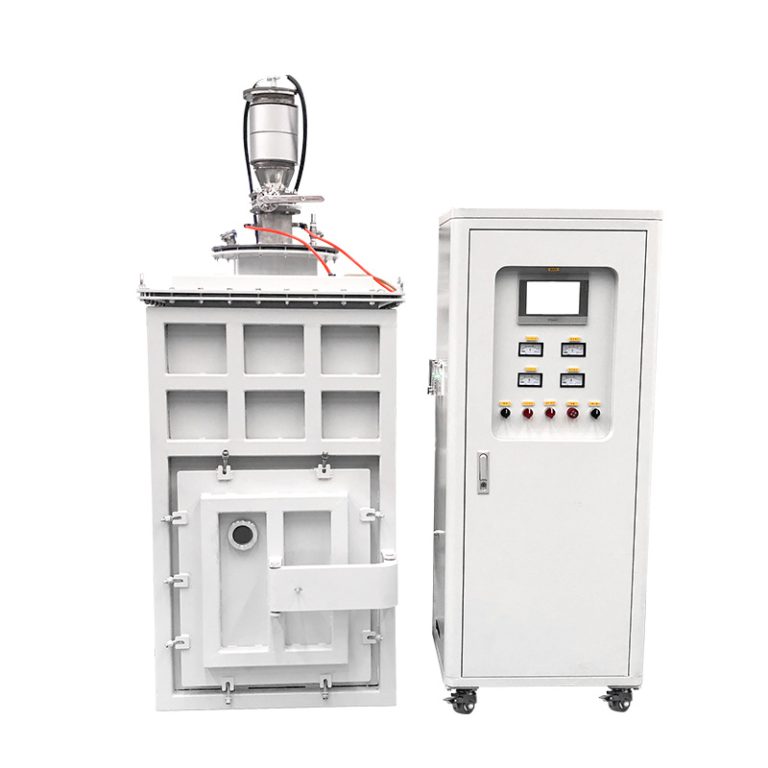
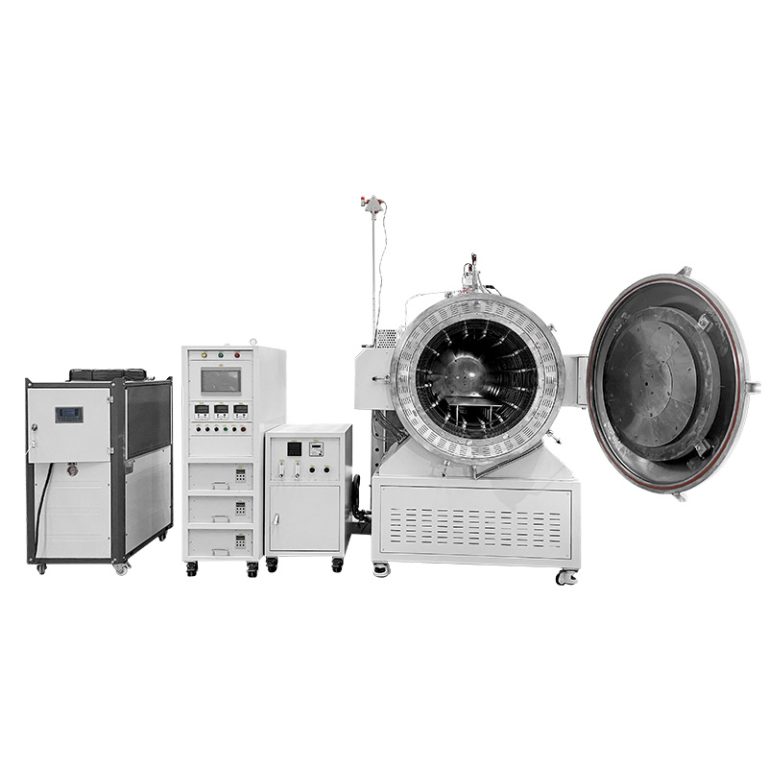
Luoyang Anjing Intelligence Equipment are a global leader in high-temperature electric furnaces



Car Bottom Furnace vs Box Furnace for Large Workpieces
For large and heavy workpieces, a car bottom furnace is usually the better choice because its movable hearth simplifies loading and unloading, while a box furnace is better suited to smaller parts, lighter loads, and applications requiring a compact and flexible chamber.
I.Introduction
When choosing between a car-bottom furnace and a box-type furnace for large workpieces, furnace temperature is only one of many factors to consider. You must also weigh the weight and dimensions of the workpieces, loading methods, batch sizes, requirements for temperature uniformity, production frequency, and available floor space in the workshop.
A box furnace can handle many industrial heat-treatment processes, but loading a large or heavy component through a conventional furnace door can become difficult. A car bottom furnace solves this problem by using a movable hearth that can be pulled or driven outside the furnace for loading.
This guide compares car bottom furnace vs box furnace and explains when each design is the better solution for large workpieces.
II.Car Bottom Furnace vs Box Furnace: What Is the Difference?
The main structural difference is the loading and unloading system.
A conventional box furnace has a fixed furnace chamber. The workpiece is loaded through the front, side, or top opening depending on the furnace design.
A car bottom furnace has a movable hearth or trolley at the bottom of the furnace. The trolley can be moved outside the furnace, allowing cranes, forklifts, or other lifting equipment to load large workpieces directly onto the hearth before the entire load is moved into the furnace.
This difference becomes increasingly important as workpiece size and weight increase.
For small samples, a fixed box chamber is often simpler.
For large castings, forgings, molds, welded structures, refractory products, and heavy mechanical components, the movable hearth of a car bottom furnace can provide a major operational advantage. Your current car bottom furnace product line specifically uses this trolley structure for large and heavy workpieces, with customizable loading capacity and chamber dimensions.
1. Car Bottom Furnace vs Box Furnace: Quick Comparison
| Factor | Car Bottom Furnace | Box Furnace |
|---|---|---|
| Furnace structure | Fixed chamber + movable hearth | Fixed chamber |
| Loading method | Pull-out or motor-driven trolley | Front, side, or top loading |
| Large workpieces | Excellent | Limited by door/chamber access |
| Heavy loads | Excellent | Suitable within furnace loading limits |
| Loading equipment | Crane/forklift can load onto hearth | Usually requires direct chamber access |
| Chamber size | Can be very large | Small to medium; larger custom designs available |
| Load capacity | High and customizable | Depends on furnace structure |
| Batch processing | Excellent | Excellent |
| Small parts | Suitable | Excellent |
| Laboratory use | Less common | Excellent |
| Production heat treatment | Excellent | Suitable |
| Loading/unloading efficiency | Excellent for large parts | Better for smaller loads |
| Floor space | Larger | More compact |
| Initial investment | Generally higher | Generally lower |
| Maintenance | Trolley + furnace system | Simpler fixed structure |
| Product flexibility | High | High |
| Best application | Large/heavy industrial workpieces | Small/medium parts and general heat treatment |
The car-bottom furnace product series is specifically designed for large and heavy workpieces, weight, process temperature, batch size, and loading method rather than furnace type alone.
2. What Is a Car Bottom Furnace?
A car bottom furnace, also called a bogie hearth furnace, is an industrial furnace designed around a movable loading hearth.
The furnace chamber remains stationary while the hearth moves on rails.
The typical operating procedure is as follows: the furnace hearth is moved out, the workpieces are loaded onto it, and it is then pushed back into the furnace; the door is closed and sealed, and the heat treatment process is carried out. Once complete, the furnace is opened, the hearth is moved out, and the workpieces are unloaded. This configuration is particularly useful when workpieces are too large, too heavy, or otherwise difficult to load through a conventional furnace door.
The car bottom furnace product range on your website is specifically positioned for large and heavy workpieces, including large castings, forgings, molds, refractory products, gears, shafts, flanges, welded structures, and other industrial components.
3. What Is a Box Furnace?
A box furnace is a fixed-chamber furnace with heating elements arranged around the furnace chamber.
Depending on the design, heating can be provided from:
- The sides
- Top and bottom
- Multiple sides
- Other customized heating zones
Box furnaces are widely used for:
- Heat treatment
- Annealing
- Sintering
- Calcination
- Ashing
- Material testing
- Ceramic processing
- Laboratory research
- Small-batch production
The box-type furnace series includes various chamber sizes., temperature classes, heating-element configurations, and optional automation systems. Some models are designed for bulk samples and irregularly shaped parts, while specialized models provide atmosphere control or other process functions.
The main limitation for large workpieces is not necessarily temperature.
It is how the workpiece gets into the furnace.
4. Why Loading Method Matters for Large Workpieces
For a small component weighing 10 kg, loading through a furnace door is normally straightforward.
For a 500 kg casting, large mold, pressure vessel component, or structural assembly, the situation is very different.
The operator may need to:
- Position the component accurately
- Use a crane or forklift
- Avoid damaging the refractory lining
- Keep the load centered
- Prevent excessive impact on the furnace bottom
- Maintain sufficient clearance around the workpiece
A conventional box furnace requires this loading operation to take place relative to a fixed furnace chamber.
A car bottom furnace allows the entire hearth to come outside the furnace.
The workpiece can then be loaded onto an accessible platform before the hearth is moved into the chamber.
This is one of the strongest reasons to select a car bottom furnace for large workpieces.
5. Car Bottom Furnace: Advantages for Large Workpieces
The movable hearth provides several practical advantages.
Easier Loading
The hearth can be positioned outside the furnace.
A crane can lower a large component directly onto the loading platform.
A forklift or other material-handling equipment can also be used when the application permits.
This reduces the need to reach deep inside a fixed furnace chamber.

Higher Load Capacity
Car bottom furnaces can be engineered for substantial loads.
The loading capacity can be designed according to:
- Workpiece weight
- Hearth dimensions
- Wheel and rail design
- Furnace bottom structure
- Refractory construction
- Drive system
Your standard car bottom furnace product information states that loading capacity can be customized from several hundred kilograms to tens of tons, depending on the design.

Better Access
The complete workpiece loading surface is accessible when the hearth is outside the furnace.
This is particularly useful for bulky components that are difficult to manipulate through a relatively narrow furnace door.

6. Box Furnace: Advantages for Large Workpieces
A box furnace should not be dismissed simply because the workpiece is large.
A sufficiently large and properly designed box furnace can process substantial workpieces.
Its advantages include:
- Simple fixed structure
- Compact installation
- Straightforward temperature control
- Multiple heating configurations
- Easier integration for smaller batches
- Lower mechanical complexity
- Wide range of temperature options
For example, some box furnace designs use multi-sided heating to improve the temperature field, while other specialized models use top-and-bottom heating for flat materials.
If the workpiece can be safely loaded through the furnace opening and the required loading capacity is within the furnace design, a box furnace may still be an economical solution.
7. Workpiece Size: Which Furnace Is Better?
For large workpieces, the car bottom furnace generally has the advantage.
The movable hearth can be designed around the required loading dimensions.
This is particularly useful for:
- Large castings
- Large forgings
- Welded structures
- Large molds
- Pressure vessel components
- Heavy machine parts
- Large ceramic products
- Refractory products
A box furnace becomes more attractive when the workpiece is large enough to require a spacious chamber but still practical to load through the available opening.
The key question is therefore:
Can the workpiece be safely loaded into the fixed chamber without creating excessive handling difficulty or damaging the furnace?
If the answer is no, a car bottom design is usually worth considering.
8. Workpiece Weight: Car Bottom vs Box Furnace
Weight is just as important as physical dimensions.
A furnace may have enough chamber volume for a workpiece but still lack the required floor load capacity.
The furnace bottom must support:
Workpiece + fixtures + trays + refractory hearth structure
A car bottom furnace is designed around this loading condition.
Its trolley, wheels, rails, hearth plate, refractory structure, and drive system can all be engineered for the specified load.
For example, one current 1200°C car bottom furnace configuration on your website has a 2000 × 1000 × 1000 mm chamber and 500 kg loading capacity, with a motor-driven loading platform.
For larger loads, the furnace can be customized rather than forcing a standard furnace to handle an unsuitable load.
9. Loading and Unloading Efficiency
For large workpieces, loading and unloading can become a significant part of the production cycle.
A conventional box furnace may require the operator to:
- Open the furnace.
- Position the lifting equipment.
- Move the workpiece through the furnace opening.
- Position the workpiece on the hearth.
- Verify clearances.
- Remove the lifting equipment.
- Close the furnace.
A car bottom furnace changes this process.
The hearth can first be moved outside.
The workpiece is then loaded onto an open platform.
After positioning is completed, the hearth moves into the furnace.
This can simplify material handling and reduce manual work around the furnace opening.
For production environments processing heavy components, this can be more important than the furnace’s rated temperature.
10. Floor Space: The Hidden Difference
Car bottom furnaces require additional floor space because the hearth needs room to move.
The layout may need space for:
Furnace + rail system + hearth travel + loading area + crane/forklift access
This can be significant for very large systems.
A fixed box furnace generally requires less floor space for loading because the furnace itself does not need a long trolley travel path.
Therefore:
Limited factory space
A box furnace may be preferable if the workpiece can still be loaded safely.
Large factory with crane access
A car bottom furnace can be more practical for large and heavy workpieces.
Factory layout should be considered before finalizing the furnace dimensions.
11. Maintenance Differences
The fixed structure of a box furnace is mechanically simpler.
Typical maintenance includes:
- Heating elements
- Thermocouples
- Insulation
- Door seals
- Electrical connections
- Temperature controller
A car bottom furnace has all of these components plus a mechanical loading system.
Additional maintenance can include:
- Trolley wheels
- Rails
- Drive motor
- Gearbox
- Couplings
- Hearth structure
- Sealing mechanism
- Trolley alignment
This means a car bottom furnace has more mechanical components.
However, the additional mechanical system directly solves the loading problem associated with large workpieces.
The right comparison is therefore not simply “which furnace needs less maintenance?”
It is:Does the improved loading and handling justify the additional mechanical system?
For large industrial workpieces, the answer is often yes.
12. Is a Car Bottom Furnace Always Better for Large Workpieces?
No.
“Large” does not automatically mean “car bottom.”
A large workpiece may still be suitable for a box furnace if:
- The chamber is sufficiently large.
- The furnace bottom has adequate load capacity.
- The door opening is large enough.
- A crane can safely load the workpiece.
- The loading process does not create excessive downtime.
- The furnace floor can withstand the required load.
A car bottom furnace becomes particularly attractive when loading and unloading are the main operational difficulty.
The trolley solves that problem by turning the furnace hearth into a movable loading platform.
13. How Heavy Can a Car Bottom Furnace Handle?
There is no universal maximum load.
The capacity must be engineered according to:
- Furnace dimensions
- Hearth size
- Workpiece weight
- Load distribution
- Wheel and rail design
- Drive system
- Refractory construction
- Operating temperature
- Number of loading cycles
Your current product information indicates that car bottom furnace capacity can be customized from several hundred kilograms to tens of tons.
This is why a furnace quotation should always include the total batch weight, not only the dimensions of the workpiece.
III. Which Furnace Is Better for Large Workpieces?
The simplest selection guide is:
Choose a Car Bottom Furnace If:
- The workpiece is large or heavy.
- Crane or forklift loading is required.
- The workpiece is difficult to load through a fixed door.
- The batch weight is high.
- Large horizontal loading space is required.
- Production involves repeated heavy loading and unloading.
- Furnace chamber dimensions need to be customized.
- You need a heavy-duty industrial furnace.
Best fit: Large + heavy + bulky workpieces
Choose a Box Furnace If:
- The workpiece is relatively small or medium-sized.
- The load can be safely inserted through the furnace opening.
- Factory floor space is limited.
- A compact furnace is preferred.
- Production volumes are moderate.
- Frequent process changes are expected.
- Laboratory or R&D flexibility is important.
- A simpler mechanical structure is preferred.
Best fit: Small/medium + flexible + compact processing
IV. Conclusion
For large and heavy workpieces, a car bottom furnace is usually the more practical choice because its movable hearth allows the entire loading platform to move outside the furnace. This makes crane and forklift loading easier and allows the furnace to be designed for substantial loads and large chamber dimensions.
A box furnace remains an excellent option when the workpiece can be safely loaded through a fixed chamber opening. It generally offers a simpler structure, compact installation, and strong flexibility for general heat treatment, R&D, and small-to-medium batch processing.
Click “Request a Quote” to get a customized solution.
V. FAQ
1. Is a car bottom furnace better than a box furnace for large workpieces?
Usually, yes, when the workpiece is large, heavy, or difficult to load through a fixed furnace door. The movable hearth allows the workpiece to be loaded outside the furnace and then moved into the heating chamber.
2. What is the main advantage of a car bottom furnace?
The main advantage is easy loading and unloading of large and heavy workpieces. The trolley can be pulled or driven outside the furnace, allowing cranes or forklifts to place the workpiece directly on the hearth.
3. Can a box furnace process large workpieces?
Yes. A custom large box furnace can process large workpieces when the chamber dimensions, door opening, furnace bottom load capacity, and loading method are suitable. However, a car bottom furnace may be easier to operate when the workpiece is very heavy or bulky.
4. How much can a car bottom furnace hold?
There is no single standard capacity. Car bottom furnaces can be engineered for loads ranging from hundreds of kilograms to many tons, depending on the hearth, rail, drive, furnace dimensions, and load distribution.
5. Which furnace should I choose for large metal castings?
A car bottom furnace is generally a strong choice for large castings because it provides a large horizontal loading platform and allows the casting to be loaded with a crane or forklift. It is commonly used for annealing, normalizing, tempering, and stress-relief heat treatment of large metal components.
Supplier
Luoyang Anjing Intelligent Equipment Co., Ltd. is an enterprise dedicated to the research, development, production, sales, and technical services of heat treatment equipment such as high-temperature electric furnaces. We produce laboratory, vacuum, industrial, and medium frequency furnace, covering a temperature range from -100℃ to 2600℃, serving industries such as new energy, semiconductors, and advanced materials. We can provide customized solutions based on specific atmosphere, ultra-high temperature, and intelligent control system requirements. Please feel free to contact us if you are interested.