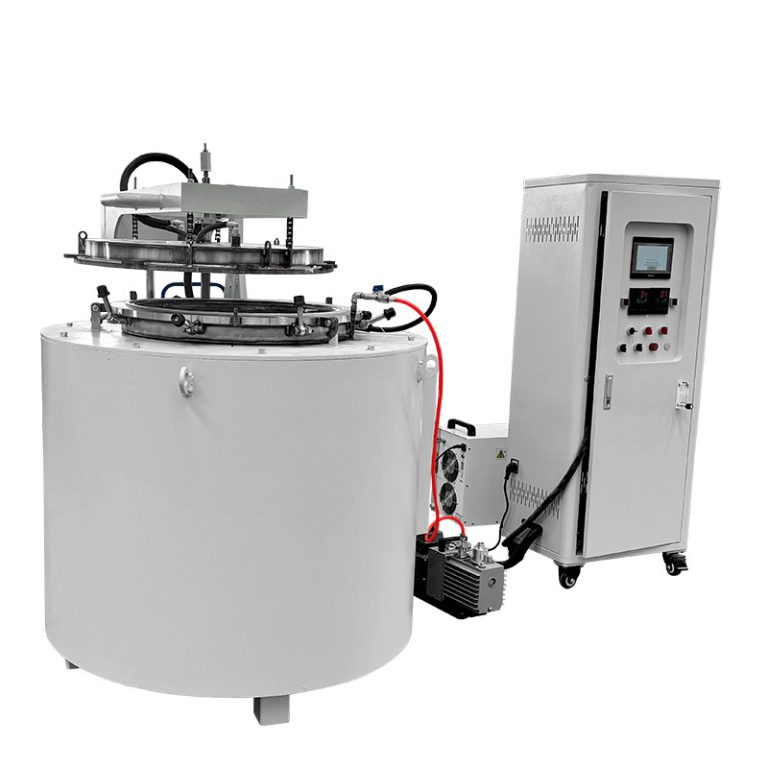
Luoyang Anjing Intelligence Equipment are a global leader in high-temperature electric furnaces



What Is a Continuous Furnace? Types, Applications, and Advantages
A continuous furnace is an industrial heating system that processes materials by continuously or sequentially moving them through controlled temperature zones. It enables consistent heating, holding, and cooling, making it suitable for high-volume production in industries such as metal processing, powder metallurgy, advanced ceramics, electronics, and battery materials.
I. Introduction
A continuous furnace is a type of furnace where materials are heated and processed while moving through the system at a set production pace. Unlike batch furnaces—which require loading a batch, heating it, and then unloading it—continuous furnaces operate without interruption, with material entering and exiting simultaneously.
If you are aiming for high output and consistent quality while looking to implement automation, choosing the right continuous furnace is critical. The following guide covers the working principles, main types, applicable industries, and key advantages of continuous furnaces, as well as important factors to consider during selection.
II. Body Content
1.What Is a Continuous Furnace?
A continuous furnace is an industrial thermal-processing system in which materials move through a heating chamber or furnace tube while undergoing a controlled heating cycle.
Depending on the equipment design, transportation may be achieved using rollers, pusher plates, conveyor belts, rotating cylinders, or a continuous wire-feeding mechanism.
A typical continuous furnace includes:
- Material feeding and discharge mechanisms
- Heating chamber or furnace tube
- Heating elements or another heat source
- Temperature-control system
- Multiple heating zones, depending on the design
- Conveying or material-transfer mechanism
- Cooling section or controlled cooling arrangement, where required
- Atmosphere-control and exhaust systems, where applicable
The basic operating sequence is:
Material Feeding → Preheating → Heating → Holding or Processing → Cooling → Continuous Discharge
Not every furnace uses all these stages. The actual configuration depends on the material, processing temperature, required residence time, and production objective.
For example, continuous roller hearth kilns move materials on rollers through a heated tunnel, while pusher plate kilns transport loaded plates through successive temperature zones. Continuous tubular furnaces move wire or other suitable feedstock through a heated tube.
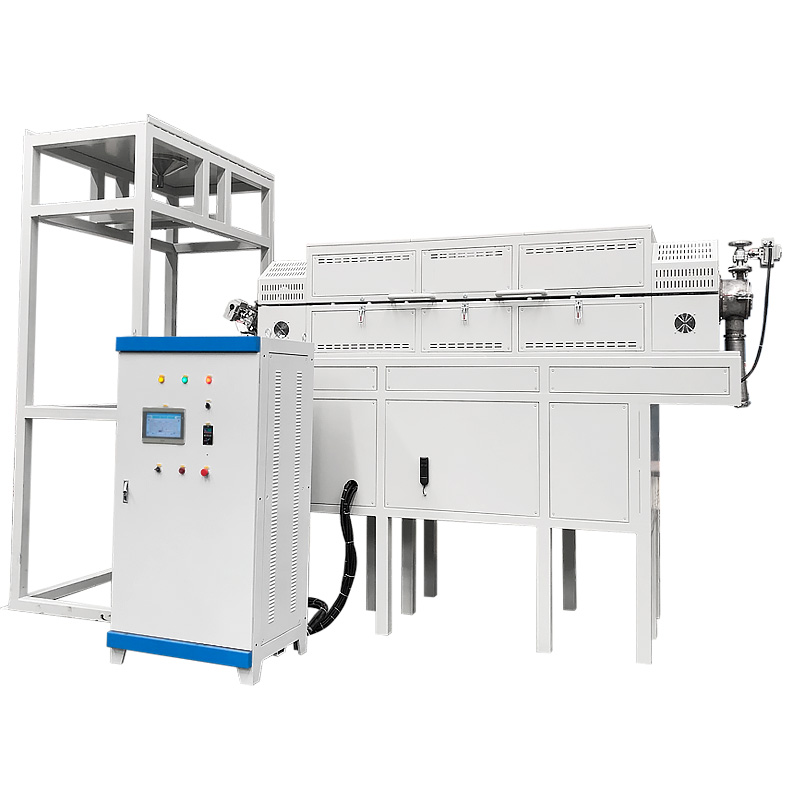
2.How Does a Continuous Furnace Work?
The working principle of a continuous furnace is based on coordinated material movement, controlled heating, and a defined residence time.
(1)Continuous Material Feeding
Raw materials or workpieces enter the furnace through a feeding mechanism. Depending on the application, the feed may consist of metal wire, ceramic components, powder-containing crucibles, molded parts, or other suitable materials.
A stable feeding rate helps maintain consistent production and thermal processing conditions.
(2)Controlled Heating
As the material enters the furnace, heating elements raise its temperature according to the required process profile.
Electrical resistance heating is common in industrial electric continuous furnaces. Other heating methods may be selected for specific applications.
The heating rate should match the material’s thermal characteristics and process requirements.
(3)Multi-Zone Temperature Control
Many continuous furnaces use independently controlled temperature zones.
For example, a furnace may have a preheating zone, a high-temperature processing zone, and a cooling zone. Each zone can operate at a different temperature to establish the required thermal profile.
Multi-zone control is particularly important for processes such as annealing, sintering, calcination, and ceramic firing, where the heating and cooling history affects the final product.
(4) Controlled Residence Time
Residence time is the period a material spends inside the furnace.
It is influenced by the furnace’s heated length, conveying speed, loading arrangement, and zone configuration.
In a continuous wire annealing furnace, the wire-feed speed determines how long the wire remains in the heated section. In a pusher plate kiln, the pusher speed determines the time required for the loaded plates to travel through the furnace.
(5)Continuous Discharge
After completing the required thermal process, the material exits the furnace for inspection, storage, forming, or the next manufacturing operation.
The feeding, heating, conveying, and discharge mechanisms must work together to maintain stable production.
3.What Are the Main Types of Continuous Furnaces?
Different continuous furnace designs are suitable for different materials, workpiece shapes, temperatures, and production volumes.
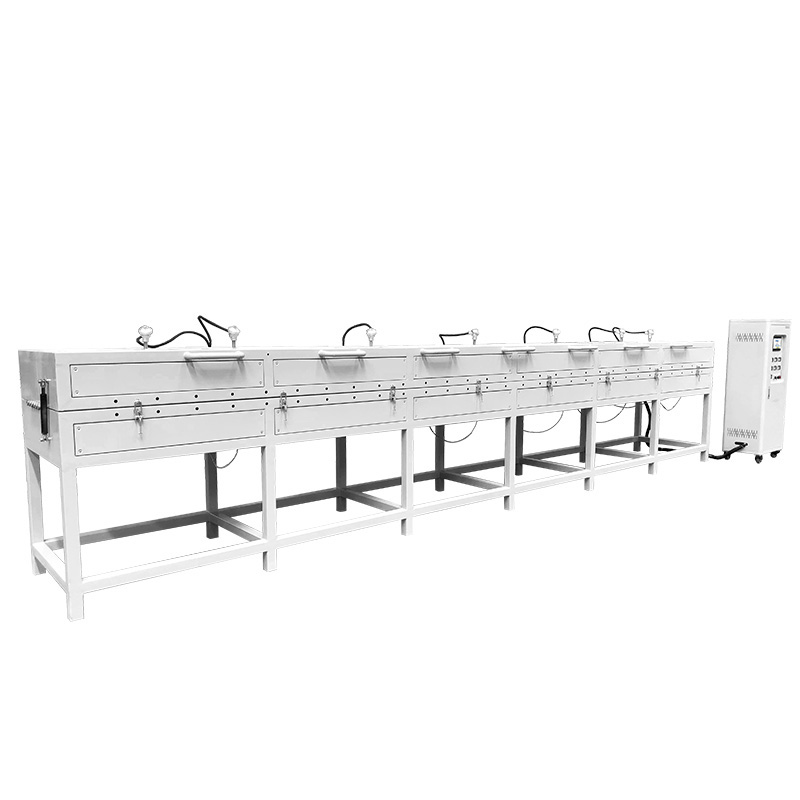
(1)Pusher Plate Furnace
A pusher plate furnace, also called a pusher kiln, moves material-loaded plates through the furnace using a mechanical or hydraulic pushing mechanism.
The furnace generally contains multiple temperature zones for preheating, processing, and cooling.
Common applications include:
- Advanced ceramic sintering
- Electronic ceramic processing
- Powder metallurgy
- Magnetic material production
- Catalyst calcination
- Battery material processing
- Hard-alloy sintering
Pusher plate kilns are particularly suitable for repeatable, high-volume production where materials can be loaded onto compatible plates.
offers pusher plate kiln configurations with independently controlled temperature zones and adjustable pusher speeds. Depending on the design, atmosphere options can include air, nitrogen, argon, hydrogen, and other process-specific gases. (Pusher Plate Kiln)
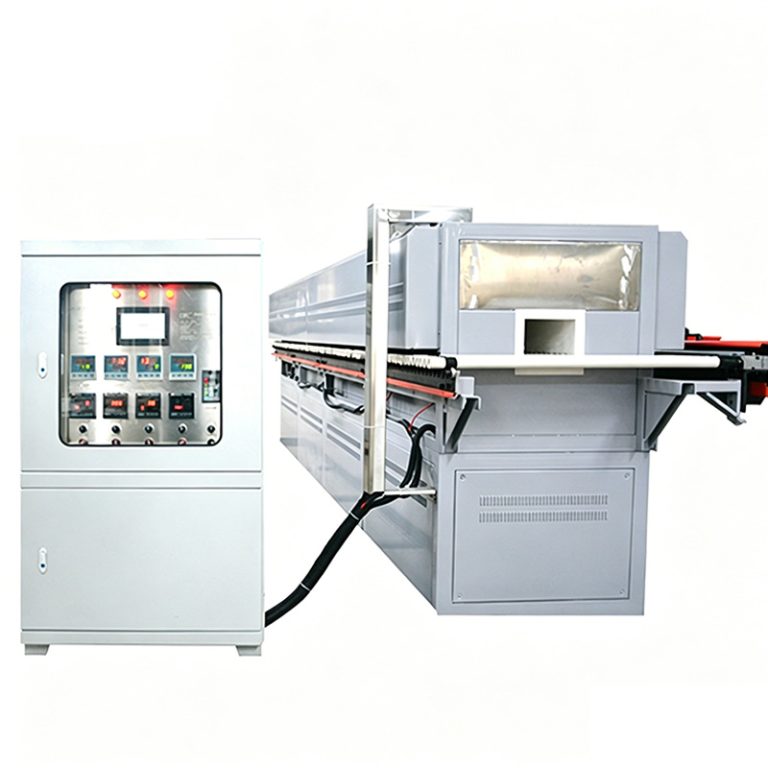
(2)Roller Hearth Furnace
A roller hearth furnace transports workpieces through a heated chamber using a series of rotating rollers.
It is suitable for products that can be supported and conveyed safely on rollers, including selected ceramic products, plates, and other industrial components.
Typical applications include:
- Ceramic firing and sintering
- High-temperature treatment of metal products
- Industrial material processing
- Continuous production of compatible workpieces
For example, 1000°C continuous roller hearth kiln has a published total length of 22 meters, five temperature zones, and 20 temperature-control points. Its design uses roller conveying to support continuous material feeding and discharge. (1000°C Continuous Roller Hearth Kiln)
(3) Continuous Tube Furnace
A continuous tube furnace processes material as it travels through a heated furnace tube.
This configuration is particularly suitable for continuous treatment of wires, rods, filaments, and other feedstocks compatible with tubular conveying.
Applications include:
- Metal wire annealing
- Copper and aluminum conductor processing
- Stainless steel wire treatment
- Welding wire production
- Selected continuous material heat treatments
800°C continuous annealing tube furnace features a published 6000 mm heating zone and seven independently controlled temperature zones. The system is designed for continuous annealing of metal wires and filaments. (800°C Continuous Annealing Tube Furnace for Wire)
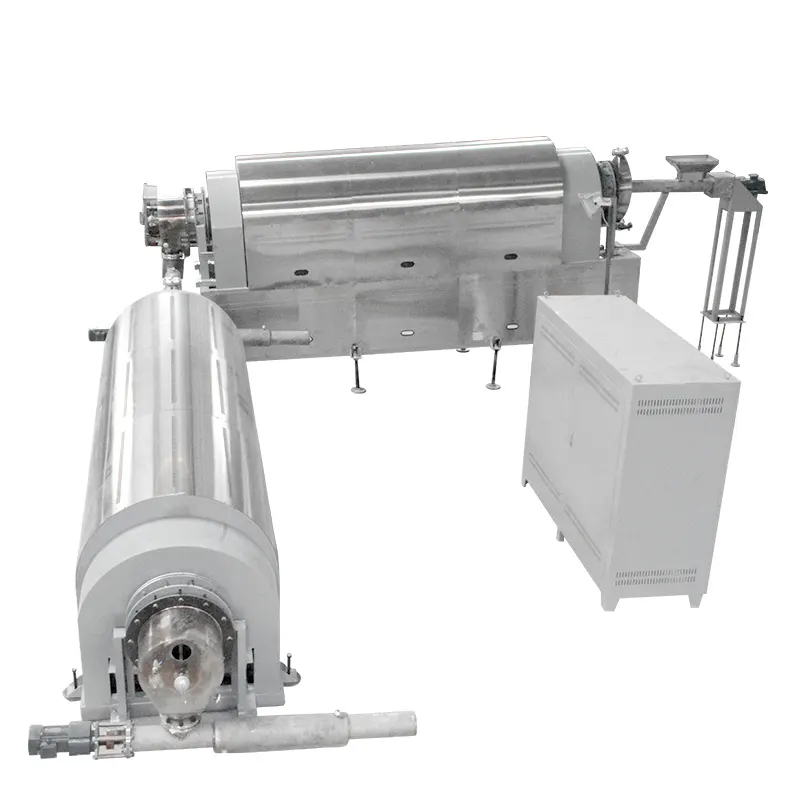
(3)Continuous Rotary Kiln
A continuous rotary kiln uses a rotating cylindrical chamber to move and mix powder or granular materials during heating.
As the cylinder rotates, materials tumble and gradually advance through the processing zone.
Typical applications include:
- Powder calcination
- Catalyst processing
- Mineral treatment
- Thermal decomposition
- Drying and reduction
- Selected battery and advanced-material processes
Rotary kilns are particularly useful when material movement and mixing are important to the thermal process.
industrial rotary kiln range supports continuous feeding and discharge, with temperature-zone and atmosphere configurations selected according to the material and processing requirements. (Industrial Rotary Kiln)
4.What Are the Advantages of a Continuous Furnace?
(1)Higher Production Throughput
Continuous furnaces reduce the interruptions associated with loading, heating, unloading, and restarting separate batches.
Once the production line reaches stable operation, materials can continue moving through the furnace at a controlled rate.
This makes continuous systems attractive for manufacturers processing large quantities of similar products.
(2) Consistent Processing Conditions
A well-designed continuous furnace establishes repeatable temperature profiles and residence times.
Independent temperature zones help maintain the thermal conditions required at different stages of production.
This can improve product-to-product consistency, provided that material loading, conveying speed, and process conditions are also controlled.
(3) Automation and Reduced Manual Handling
Continuous furnaces can be integrated with automatic feeding, conveying, temperature control, discharge, and production monitoring.
Automation reduces the need for repeated manual transfer and makes it easier to coordinate the furnace with upstream and downstream manufacturing equipment.
(4) Improved Production Planning
Because materials move through the furnace according to a defined process, manufacturers can plan throughput around conveying speed, furnace capacity, and required residence time.
This is particularly useful in production lines with stable demand and standardized products.
(5) Potential Energy Efficiency Benefits
Continuous operation can reduce repeated heating and cooling of furnace structures that occurs in some batch processes.
However, actual energy consumption depends on furnace insulation, production utilization, exhaust losses, loading conditions, operating temperature, and process design. A continuous furnace is not automatically more energy-efficient in every application.
5.Continuous Furnace vs. Batch Furnace: What Is the Difference?
| Feature | Continuous Furnace | Batch Furnace |
|---|---|---|
| Material handling | Ongoing material movement | Fixed loads processed by cycle |
| Production mode | Continuous or sequential | Batch-based |
| Throughput | Well suited to high-volume production | Depends on batch size and cycle time |
| Product flexibility | Best for established process routes | Often better for varied products |
| Automation | Can be integrated into production lines | Can also be automated |
| Process changeover | May require line or recipe adjustments | Often easier for small mixed batches |
| Typical equipment | Roller hearth, pusher plate, rotary kiln, continuous tube furnace | Box, pit, car-bottom, and laboratory furnaces |
The most suitable choice depends on production volume, material characteristics, process stability, product variety, and investment requirements.
A continuous furnace is often the better fit for a stable, high-throughput production line. A batch furnace may be more suitable when the manufacturer frequently changes product types or thermal recipes.
6.What Industries Use Continuous Furnaces?
Continuous furnaces are used across several manufacturing sectors.
Metal Processing: Continuous annealing of wire, rods, and other compatible metal products can improve ductility, reduce work hardening, and relieve internal stress.
Ceramics and Electronic Materials: Pusher kilns and roller hearth kilns support ceramic firing, electronic ceramic sintering, and other controlled high-temperature processes.
Powder Metallurgy: Continuous furnaces can process metal-powder components through debinding or sintering stages, depending on the furnace configuration and atmosphere requirements.
Battery Materials: Selected continuous kilns and tubular systems are used for thermal treatment of cathode materials and other battery-related materials. Oxygen-sensitive processes may require a suitable protective atmosphere.
Catalysts and Chemical Materials: Continuous rotary kilns and other furnace configurations can support calcination, activation, and regeneration of suitable materials.
The equipment configuration must match the actual process. A furnace designed for wire annealing, for example, is not automatically suitable for ceramic sintering or powder calcination.
III.Continuous Furnace Solutions
MeltingFurnace.net offers several continuous furnace configurations for industrial thermal processing.
The product range includes:
- Pusher Plate Kilns for continuous sintering of advanced ceramics, electronic ceramics, magnetic materials, powder metallurgy products, and selected battery materials.
- Roller Hearth Kilns for continuous firing and high-temperature treatment of compatible ceramic, metal, and powder products.
- Continuous Annealing Tube Furnaces for wire and filament processing.
- Industrial Rotary Kilns for continuous thermal treatment of powders and granular materials.
These systems offer different conveying mechanisms, temperature-zone arrangements, and process configurations. The appropriate model depends on the material, desired throughput, temperature profile, atmosphere, and handling requirements.
Explore the relevant product categories:
For a customized project, equipment selection should consider material type, temperature, throughput, residence time, conveying method, atmosphere, and automation requirements together.
IV. Conclusion
A continuous furnace is an industrial heating system that moves materials through controlled thermal-processing zones during continuous or sequential production. Its main advantages include high throughput, repeatable thermal conditions, automated material handling, and integration with manufacturing lines.
The main types include pusher plate furnaces, roller hearth furnaces, continuous tube furnaces, and rotary kilns. Each design serves different materials and processes, from wire annealing and metal heat treatment to ceramic sintering, powder calcination, and advanced-material processing.
The right furnace depends on the product, required temperature, production volume, residence time, conveying method, and atmosphere requirements.
Contact MeltingFurnace.net to discuss your production requirements and identify a continuous furnace configuration matched to your material, throughput, temperature profile, and manufacturing process.
Click “Request a Quote” to get a customized solution.
V.FAQ
1.What is a continuous furnace used for?
A continuous furnace is used for thermal processes in which material moves through a controlled heating system during ongoing production. Common applications include metal annealing, ceramic sintering, powder calcination, catalyst processing, and selected battery-material treatments.
2.How does a continuous furnace work?
A continuous furnace feeds material into a heating chamber or tube, transports it through one or more controlled temperature zones, maintains the required processing time, and discharges the material after treatment. Conveying speed and zone temperatures help determine the thermal cycle.
3.What are the main types of continuous furnaces?
The main types include pusher plate furnaces, roller hearth furnaces, continuous tube furnaces, and rotary kilns. They use different mechanisms to transport materials and are selected according to workpiece geometry, material properties, processing temperature, and production requirements.
4.What is the difference between a continuous furnace and a batch furnace?
A continuous furnace moves materials through the thermal process during ongoing production, whereas a batch furnace processes a fixed load for each cycle.
5.How do I choose a continuous furnace?
Consider the material, processing temperature, hourly throughput, residence time, conveying method, temperature-zone requirements, atmosphere, exhaust treatment, and automation. The furnace should be matched to the complete production process rather than selected on maximum temperature alone.
Supplier
Luoyang Anjing Intelligent Equipment Co., Ltd. is an enterprise dedicated to the research, development, production, sales, and technical services of heat treatment equipment such as high-temperature electric furnaces. We produce laboratory, vacuum, industrial, and medium frequency furnace, covering a temperature range from -100℃ to 2600℃, serving industries such as new energy, semiconductors, and advanced materials. We can provide customized solutions based on specific atmosphere, ultra-high temperature, and intelligent control system requirements. Please feel free to contact us if you are interested.