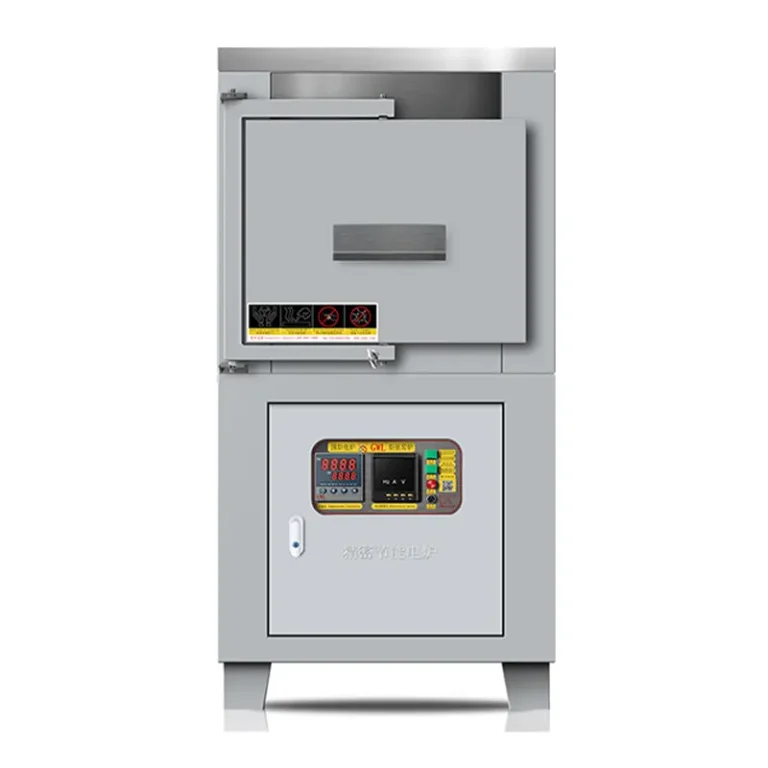
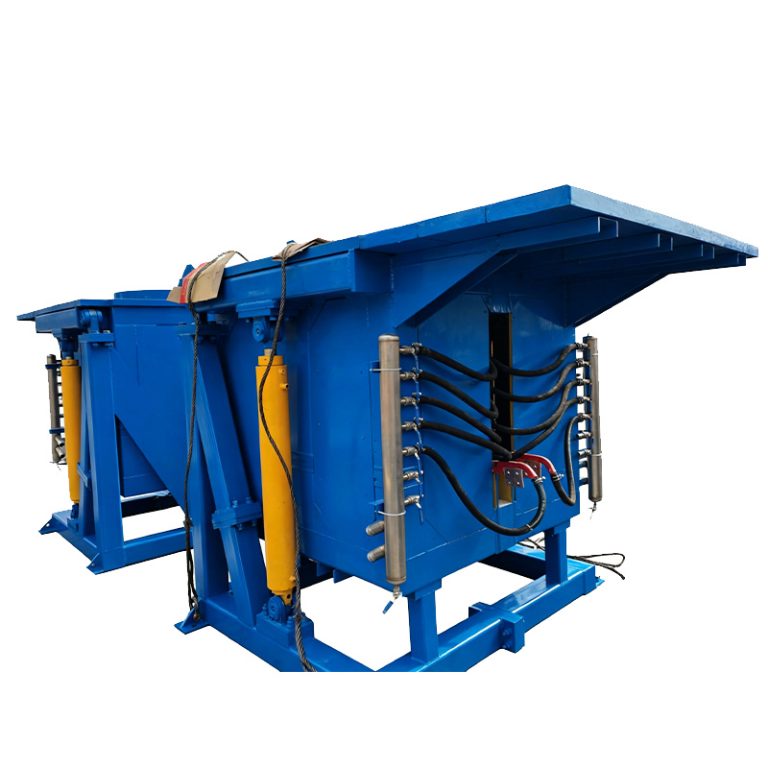
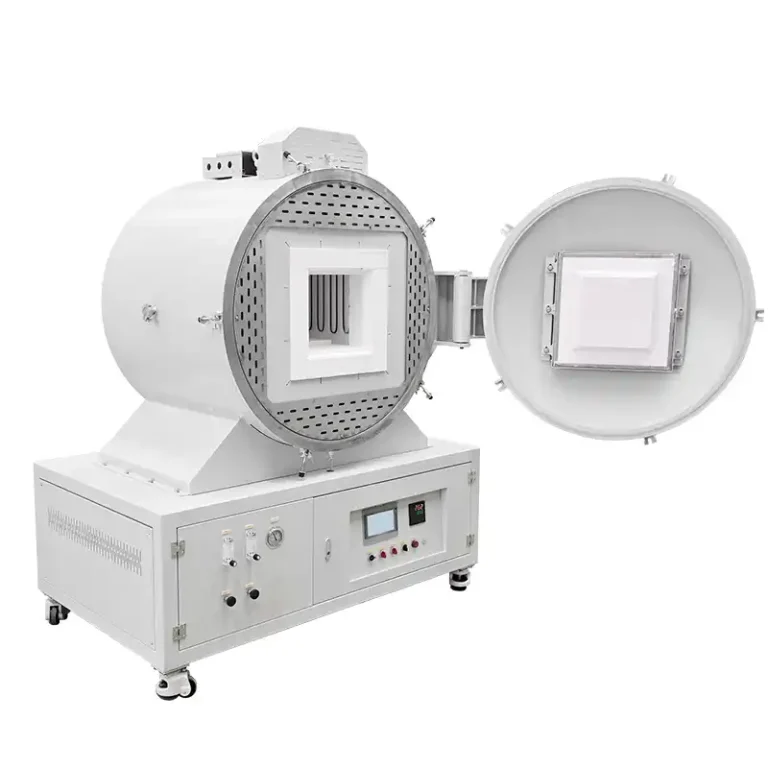
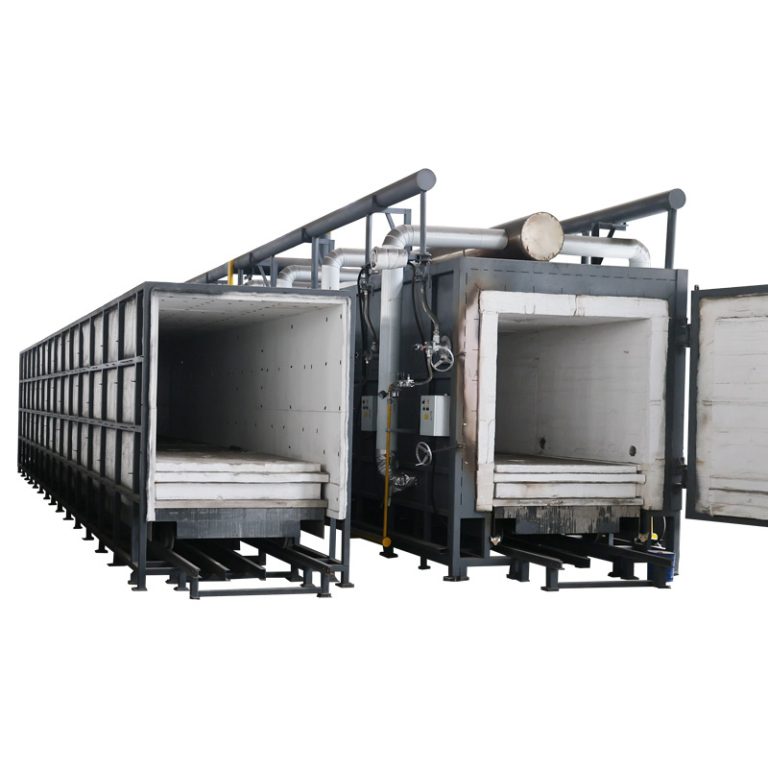
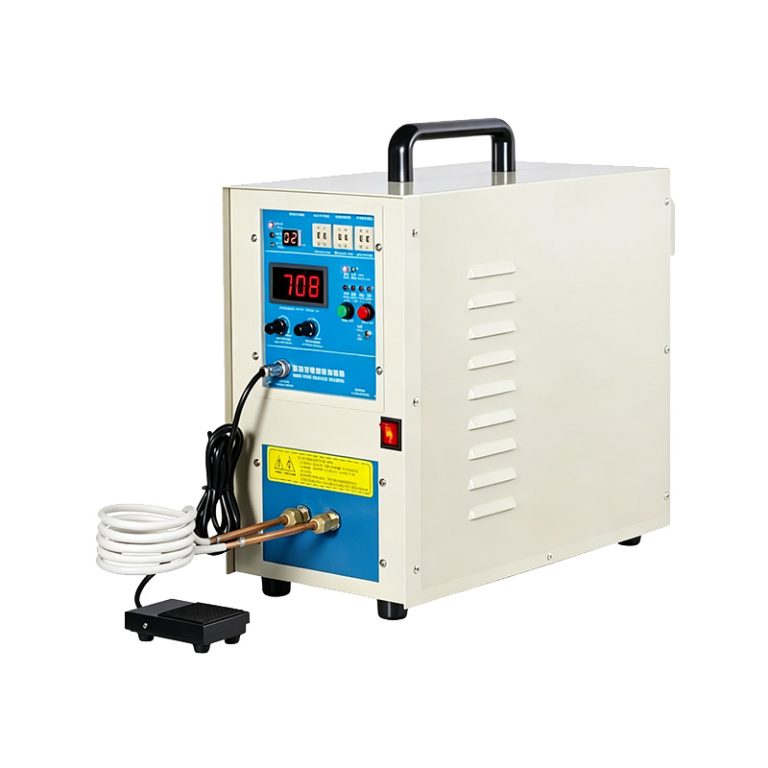
Luoyang Anjing Intelligence Equipment are a global leader in high-temperature electric furnaces



How Hot Does a Furnace Need to Be to Melt Glass?
A furnace typically needs to reach about 1,400–1,600°C to fully melt many common glass compositions, but the required temperature depends on the glass formulation and process. Soda-lime and borosilicate glass have different melting behavior, while specialty and high-silica glasses may require significantly higher temperatures.
I. Introduction
How hot does a furnace need to be to melt glass? The answer depends on the type and composition of the glass, as well as whether the process requires softening, fusing, frit production, or a fully homogeneous molten state.
For glass, enamel, ceramic, and specialty-material manufacturers, simply choosing a furnace with a high maximum temperature is not enough. Temperature accuracy, heating uniformity, crucible compatibility, melting time, and discharge method can all affect the final melt.
This guide explains typical glass melting temperatures, why different glasses require different furnace temperatures, and how to select the right glass melting furnace for laboratory, pilot-scale, and small-batch production.
II. Body Content
1.How Hot Does a Furnace Need to Be to Melt Glass?
A furnace may need to operate at approximately 1,400–1,600°C for many conventional glass compositions to reach a highly fluid molten state, but there is no single melting temperature that applies to all glass.
Glass is an amorphous material, so its transition from solid to viscous liquid occurs over a temperature range rather than at one sharp melting point like a crystalline metal.
For example, published material data give approximate values for different glass families:
| Glass Type | Approximate Melting/Processing Temperature* |
|---|---|
| Soda-lime glass | ~1,350–1,450°C |
| Borosilicate glass | ~1,450–1,550°C |
| Aluminosilicate glass | ~1,500–1,600°C |
| Fused silica / high-silica glass | >2,000°C |
*Actual processing temperature depends on composition, viscosity requirement, batch condition, and intended application.
This is why a furnace designed for one glass formulation may not be suitable for another.
2.What Temperature Does Different Glass Need to Melt?
Soda-Lime Glass
Soda-lime glass is widely used for bottles, containers, windows, and architectural applications.
Its composition contains silica together with network modifiers such as sodium and calcium oxides. These additions lower the temperature required compared with pure silica.
Technical references commonly report soda-lime glass melting or high-temperature processing in the approximate 1,350–1,450°C range, depending on composition and viscosity criteria.
For this type of glass, a furnace rated around 1,400°C may be appropriate for some laboratory or small-batch processes, but the actual required furnace specification must be determined from the glass formulation and desired melt condition.
Borosilicate Glass
Borosilicate glass contains significant boron oxide and is commonly used for laboratory glassware, cookware, and specialty applications.
It generally requires a higher processing temperature than conventional soda-lime glass. A representative technical reference gives a melting temperature of approximately 1,650°C, while other property data place the temperature associated with a defined melt viscosity around 1,450–1,550°C.
This difference illustrates an important point:
“Melting temperature” is not always the same as the temperature at which the glass is fluid enough for a specific manufacturing process.
For furnace selection, the required working viscosity and process objective are often more useful than a single nominal melting-point number.
Fused Silica and High-Silica Glass
Fused silica is fundamentally different from many commercial glasses.
Because it is composed primarily of SiO₂, it has a substantially higher temperature requirement. Technical references place its melting temperature above 2,000°C, with working temperatures significantly higher than those used for ordinary soda-lime glass.
For high-silica or specialty glass applications, a standard 1,400°C or 1,700°C frit furnace may therefore not be sufficient for complete melting.
The furnace should be selected based on the actual composition and processing target.
3.Is 1000°C Hot Enough to Melt Glass?
For most conventional glass-melting applications, 1,000°C is generally not sufficient to produce a fully fluid molten glass.
At around this temperature, some glass compositions may become significantly softened or workable, but that does not necessarily mean that the entire batch has become homogeneous molten glass.
For example, a technical comparison gives approximate softening temperatures of about 696°C for soda-lime glass and 821°C for borosilicate glass, while their working ranges are substantially higher.
Therefore, buyers should distinguish between:
Softening → Fusing → Melting → Refining → Homogeneous molten glass
These are different process conditions.
4.Why Does Glass Melting Require Higher Furnace Temperatures Than Softening?
A common mistake is to assume that once glass starts becoming soft, the furnace temperature is high enough for melting.
In reality, glass batch processing involves several stages.
- Heating:The raw materials or glass frit absorb heat and their temperature gradually increases.
- Softening and Reaction:Individual components begin to soften and react. Depending on the formulation, gases may also be released during decomposition and reactions between batch components.
- Formation of the Melt:A continuous liquid phase develops as the solid components dissolve into the melt.
- Refining and Homogenization:Additional heating and holding may be necessary to reduce unmelted particles, improve chemical uniformity, and achieve the required viscosity.
- Discharge or Forming:The molten glass must reach a suitable temperature and viscosity for casting, frit production, forming, or another downstream process.
Therefore, the maximum furnace temperature and the actual glass processing temperature are not necessarily the same.
5.Why Is Furnace Temperature Control Important for Glass Melting?
Glass melting is sensitive not only to temperature level but also to temperature stability.
If the furnace temperature fluctuates significantly, the material can experience variations in viscosity and melting behavior.
Important furnace parameters include:
- Temperature accuracy
- Temperature uniformity
- Heating rate
- Soaking time
- Chamber temperature
- Crucible temperature
- Cooling profile
For repeatable glass and frit production, these control capabilities can be more important than simply increasing the furnace’s maximum temperature.
6.What Temperature Does an Enamel Frit Furnace Need?
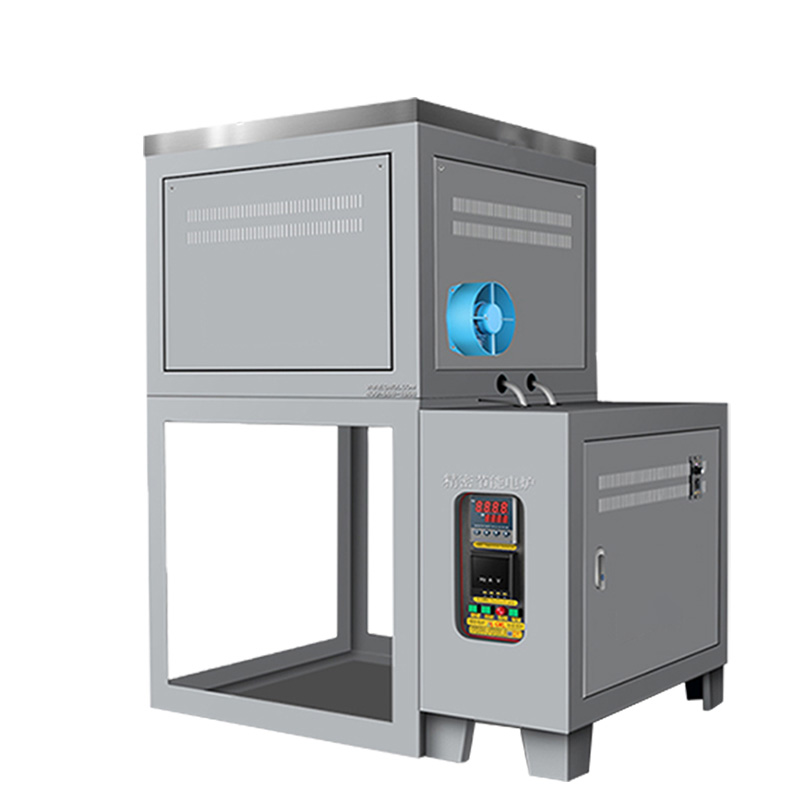
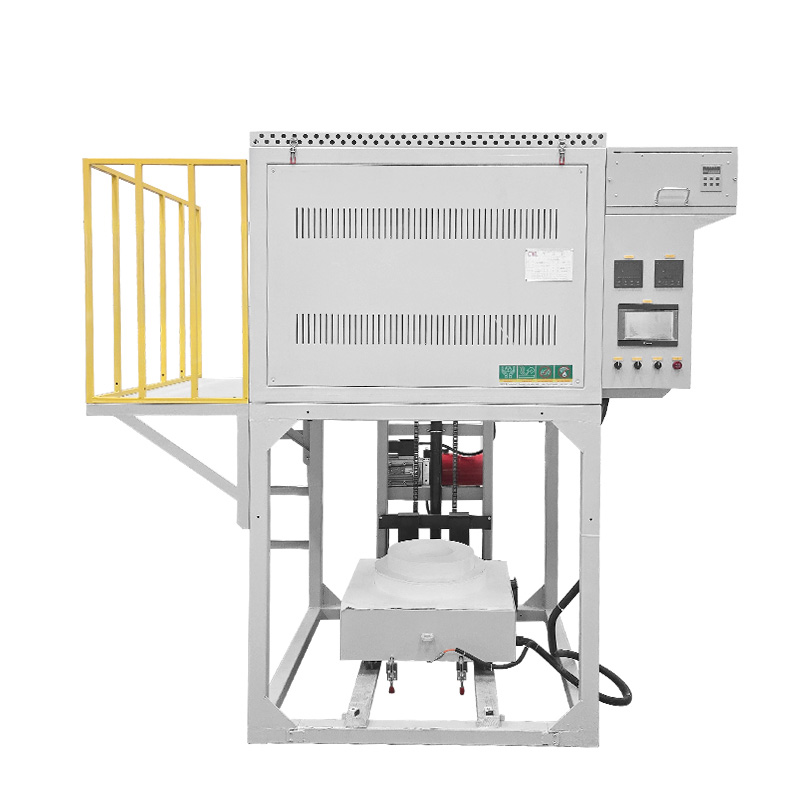
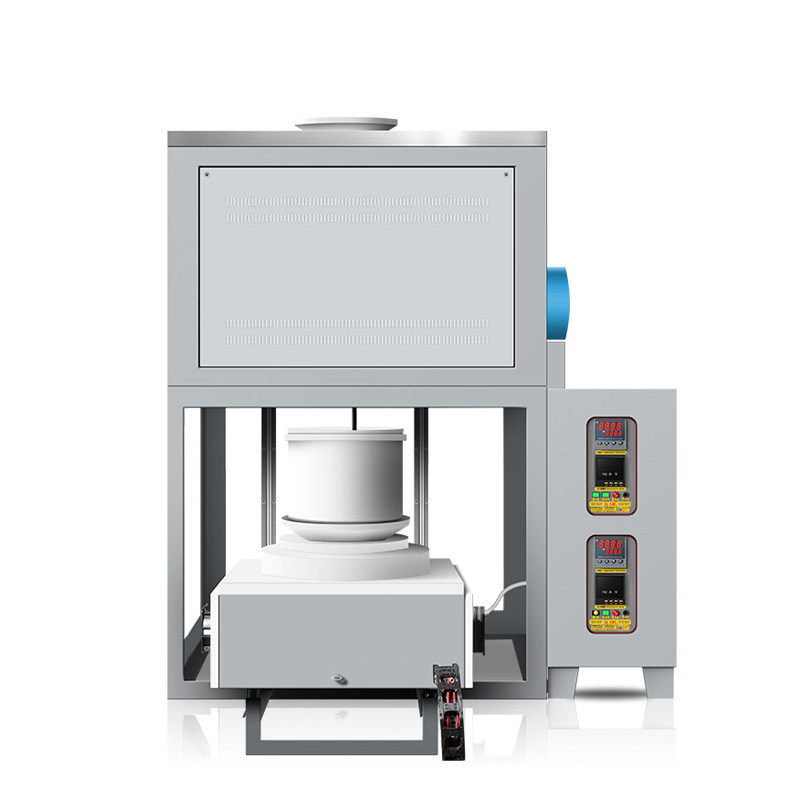
An enamel frit furnace is designed for producing glass frit, enamel glazes, low-temperature glass fluxes, and other molten glass-based materials.
Unlike a conventional heat-treatment furnace, a frit furnace must also consider how the molten material is handled after melting.
The Enamel Frit Furnace on MeltingFurnace.net is available in configurations rated at:
- 1200°C
- 1400°C
- 1600°C
- 1700°C
- 1800°C
The listed crucible capacities range from 1.6 L to 70 L, depending on the model.
This broad temperature range allows the furnace family to cover different glass, frit, enamel, and specialty-material requirements.
7.Why Is the Crucible Important When Melting Glass?
The crucible is in direct contact with the molten material, so its material compatibility is critical.
An unsuitable crucible can introduce impurities into the melt or suffer from corrosion during repeated high-temperature operation.
The Enamel Frit Furnace product line specifies high-purity fused silica ceramic as a standard crucible material and also offers other material configurations for different applications.
For highly pure or chemically aggressive melts, specialized crucible materials may be required. The furnace can also be customized according to the material and process requirements.
8.What Is the Difference Between a Glass Melting Furnace and a Frit Furnace?
Although the two types of equipment overlap, their process objectives can be different.
| Feature | Glass Melting Furnace | Enamel Frit Furnace |
|---|---|---|
| Main objective | Produce molten glass | Produce glass frit or enamel frit |
| Material | Glass batch / glass-forming materials | Glass, enamel, flux and related formulations |
| Process | Melting and homogenization | Melting followed by controlled discharge/quenching or frit formation |
| Discharge | Depends on furnace design | Often designed for direct high-temperature discharge |
| Batch production | Laboratory to industrial | Particularly suitable for small-batch and multi-variety production |
| Customization | Often required | Crucible, temperature, size and discharge can be customized |
The enamel frit melting furnace is specifically designed for high-temperature charging and the immediate discharge of high-temperature molten material, enabling continuous or semi-continuous frit production.
This is an important distinction for customers who are not simply melting glass but need to manufacture glass frit, enamel glaze, or low-temperature glass flux.
III.Enamel Frit Furnace for Glass Melting and Frit Production
MeltingFurnace.net’s Enamel Frit Furnace is designed for laboratories, glass and enamel manufacturers, ceramic-material developers, universities, research institutes, and small-scale production.
According to the product page, the equipment can be used for:
- Glass frit preparation
- Low-temperature glass flux
- Enamel glaze production
- Ceramic bonding agents
- Specialty glass development
- Glass-ceramic research
- Small-batch, multi-variety frit production
The available configurations support different maximum temperatures, crucible capacities, heating powers, and discharge methods. Furnace dimensions, maximum temperature, crucible material, and discharge configuration can also be customized according to customer requirements.
For customers processing specialty glass or highly corrosive materials, customized crucible configurations.
IV. Conclusion
So, how hot does a furnace need to be to melt glass? For many conventional glass compositions, a furnace operating around 1,400–1,600°C may be required for a highly fluid molten state, but the exact requirement depends on the glass chemistry, desired viscosity, batch condition, and process objective. High-silica and specialty glasses may require substantially higher temperatures.
For glass frit and enamel production, furnace selection should consider not only maximum temperature, but also temperature accuracy, heating uniformity, crucible compatibility, melting capacity, heating rate, and molten-material discharge.
Contact MeltingFurnace.net to discuss your glass melting or frit production requirements and select a furnace configuration matched to your material, temperature, capacity, and production process.
Click “Request a Quote” to get a customized solution.
V.FAQ
1.What temperature is needed to melt glass in a furnace?
Many conventional glass compositions require approximately 1,400–1,600°C to reach a highly fluid molten condition, although the exact temperature depends on the glass composition and required viscosity.
2.Can glass melt at 1000°C?
Some glass compositions can soften or become workable around 1,000°C, but 1,000°C is generally not sufficient for fully melting many conventional glass batches into a homogeneous, highly fluid liquid. The required temperature depends on composition and process conditions.
3.What temperature does borosilicate glass require?
Borosilicate glass generally requires higher temperatures than soda-lime glass. Published technical data place its melting or high-temperature processing range roughly around 1,450–1,650°C, depending on the defined melting or viscosity criterion.
4.What temperature does soda-lime glass require?
The processing temperature of soda-lime glass is lower than that of most specialty glasses; melting or high-temperature processing temperatures range from approximately 1350°C to 1450°C, depending on the composition and required viscosity.
5.What furnace is best for glass frit production?
A dedicated enamel frit furnace is well suited to glass frit production because it can combine precise temperature control with suitable crucible materials and direct molten-material discharge. MeltingFurnace.net offers frit furnace configurations from 1200°C to 1800°C with capacities from 1.6 L to 70 L and customizable configurations.
Supplier
Luoyang Anjing Intelligent Equipment Co., Ltd. is an enterprise dedicated to the research, development, production, sales, and technical services of heat treatment equipment such as high-temperature electric furnaces. We produce laboratory, vacuum, industrial, and medium frequency furnace, covering a temperature range from -100℃ to 2600℃, serving industries such as new energy, semiconductors, and advanced materials. We can provide customized solutions based on specific atmosphere, ultra-high temperature, and intelligent control system requirements. Please feel free to contact us if you are interested.