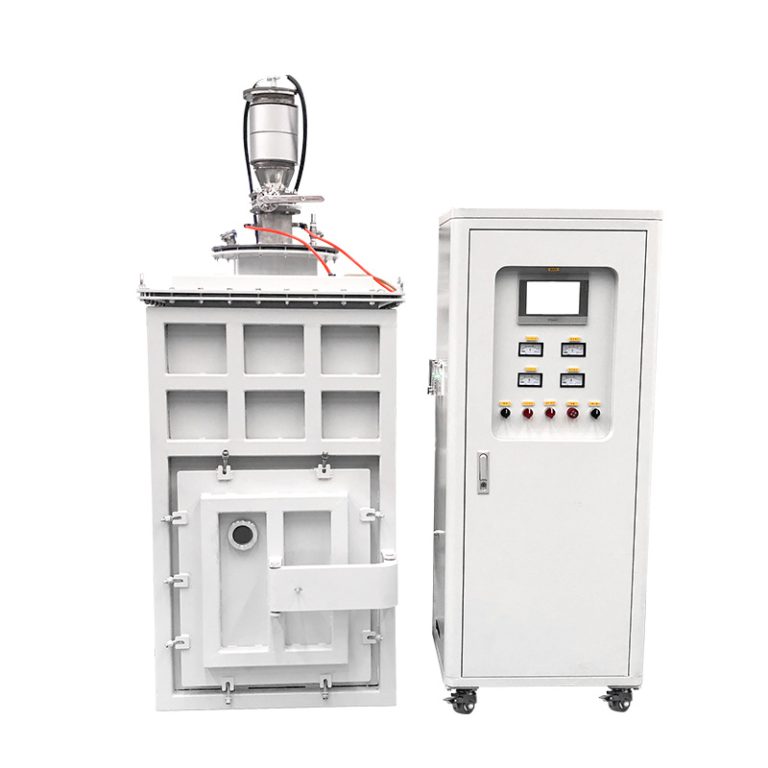
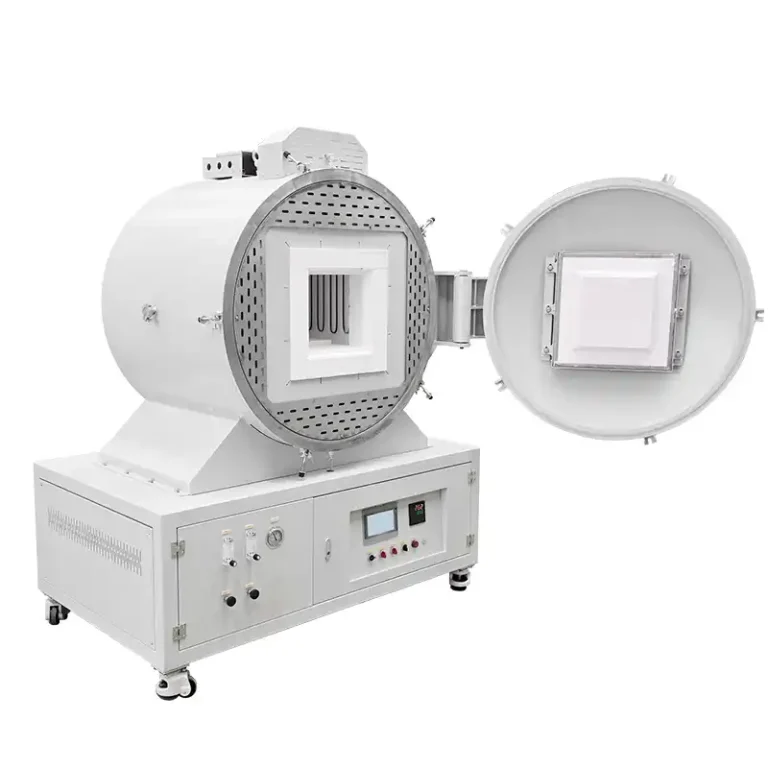
Luoyang Anjing Intelligence Equipment are a global leader in high-temperature electric furnaces



How Does a Pusher Plate Kiln Work? Applications and Advantages
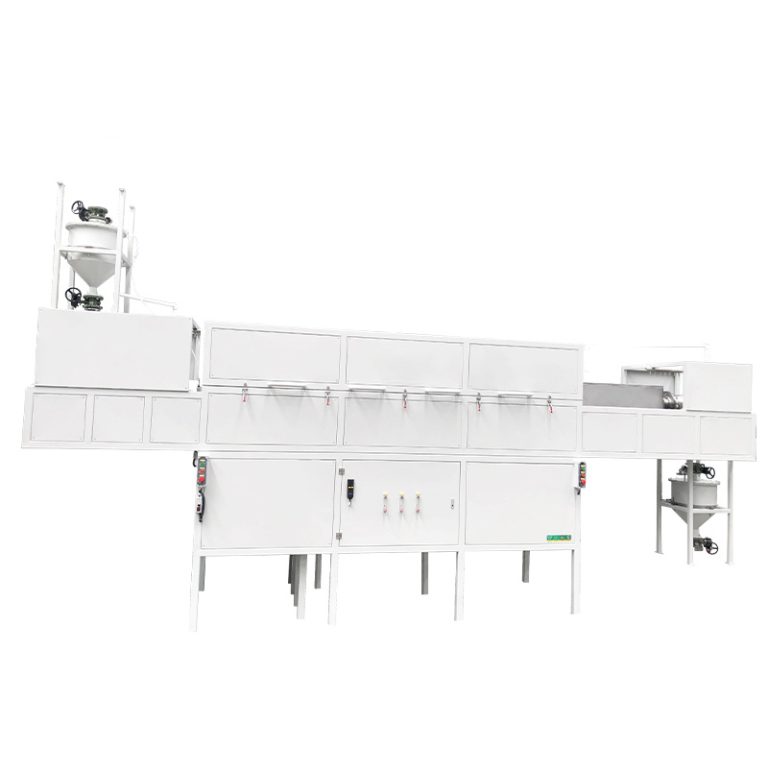
A pusher plate kiln is a continuous industrial furnace that uses a hydraulic or mechanical pusher to move material-loaded refractory plates through controlled temperature zones. It is widely used for sintering, firing, debinding, calcination, and heat treatment of ceramics, electronic materials, powder metallurgy products, battery materials, and other advanced materials.
I. Introduction
A pusher plate kiln is a continuous high-temperature furnace designed for stable, repeatable, and high-volume thermal processing. Materials are placed on refractory pusher plates or setters and moved through the kiln at a controlled speed using a hydraulic or mechanical pushing system.
Unlike a batch furnace, the pusher plate kiln can continuously process materials through preheating, high-temperature firing or sintering, and cooling zones. This makes it particularly suitable for manufacturers that require high throughput, precise temperature profiles, controlled atmospheres, and consistent product quality.
This guide explains what a pusher plate kiln is, how it works, its major applications, key advantages, and the technical factors buyers should consider when selecting a system.
II. What Is a Pusher Plate Kiln?
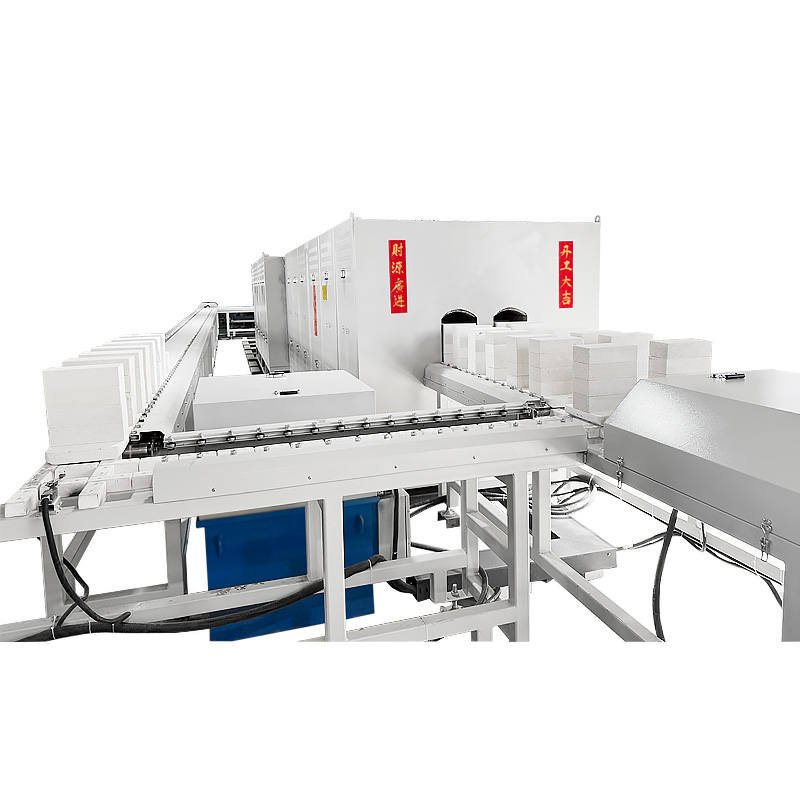
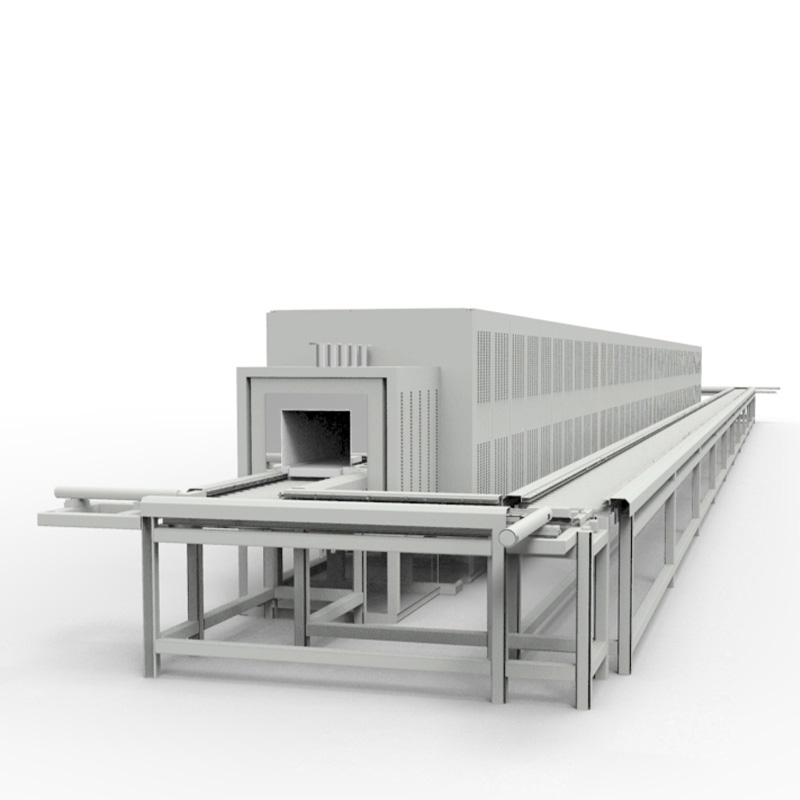
A pusher plate kiln, also called a pusher kiln or pusher plate furnace, is a continuous thermal-processing system that transports products through the furnace on heat-resistant plates.
The material is loaded onto pusher plates, and a hydraulic or mechanical pushing mechanism advances the plates through the kiln in a controlled sequence.
The basic process is:
Loading → Preheating → Debinding or Heating → Sintering/Firing → Cooling → Discharge
The kiln is usually divided into multiple temperature zones, and each zone can be controlled independently.
MeltingFurnace.net describes its pusher plate kiln as a continuous high-temperature furnace in which a pusher mechanism advances material-carrying plates through separate heating sections. The system is designed for stable process conditions and large-scale continuous production.
1.How Does a Pusher Plate Kiln Work?
The working principle is based on four coordinated functions:
Material Loading + Controlled Pushing + Zoned Heating + Controlled Cooling
(1) Materials Are Loaded onto Pusher Plates
Products are first placed on refractory plates, setters, or suitable containers.
Depending on the process, the load may include:
- Ceramic components
- Powder metallurgy parts
- Electronic ceramic products
- Battery materials
- Magnetic materials
- Catalyst carriers
- Hard alloys
The plates must withstand the required process temperature, loading weight, and repeated mechanical movement.
(2) The Pusher Mechanism Moves the Load Forward
The loaded plate is positioned in front of the pusher mechanism.
A hydraulic or mechanical pusher then advances the plate into the kiln.
As the new plate enters, it pushes the preceding plates farther through the furnace.
This creates a controlled chain of movement through the kiln.
The pusher speed can be adjusted to control. MeltingFurnace.net specifies hydraulic or mechanical drive options with steplessly adjustable pushing speed, allowing the process time to be matched to material requirements.
Other industrial pusher-kiln manufacturers use the same basic principle: loads are stacked on base plates and pushed through the furnace by hydraulic or electric pusher systems.
(3) Materials Pass Through Multiple Temperature Zones
The kiln body is typically divided into several functional sections.
A common layout is:
Feeding Section → Preheating Zone → Sintering/Firing Zone → Cooling Zone → Discharge Section
Each zone performs a different role.
Preheating Zone
- The material temperature is gradually increased.
- This helps reduce thermal shock and can also support moisture removal or early-stage binder decomposition.
Debinding or Intermediate Heating Zone
- For products containing organic binders, part of the kiln may be used for controlled binder removal before the high-temperature stage.
Sintering or Firing Zone
- The material reaches the highest process temperature.
- This zone is responsible for processes such as
Cooling Zone
- After high-temperature processing, the product is gradually cooled.
- Controlled cooling can help reduce cracking, deformation, or undesirable phase changes.
- MeltingFurnace.net’s pusher plate kiln specifically uses independently controlled temperature zones so that preheating, sintering, and cooling curves can be adjusted separately.
2.Why Is Residence Time Important?
Residence time determines how long a product remains inside each furnace section.
It depends mainly on:
- Kiln length
- Pusher speed
- Plate spacing
- Loading density
- Number of temperature zones
If the material moves too quickly, it may not reach the required thermal condition.
If it moves too slowly, production efficiency may decrease and some materials may be overprocessed.
This is why pusher speed must be matched to the required heating curve.
A major advantage of a pusher plate kiln is that residence time can be controlled mechanically through the pushing cycle.
3.What Are the Main Advantages of a Pusher Plate Kiln?
(1) Continuous Production
One of the biggest advantages is continuous operation.
Instead of repeatedly loading, heating, cooling, and unloading separate batches, the kiln can keep receiving new material while processed material exits from the other end.
This makes it suitable for:
- Large production volumes
- Three-shift operation
- Stable product lines
- Long production campaigns
specifically positions the pusher plate kiln for large-scale continuous production with high equipment utilization.
(2)Precise Multi-Zone Temperature Control
The kiln can establish different temperature conditions in different sections.
This allows operators to control:
- Heating rate
- Debinding temperature
- Sintering temperature
- Holding conditions
- Cooling rate
This is particularly important for ceramics and advanced materials because product performance can be highly sensitive to the complete thermal history.
(3)Stable and Repeatable Residence Time
The pushing mechanism provides a repeatable material transport cycle.
When pusher speed, loading configuration, and temperature settings remain stable, the thermal history of each plate can also remain relatively consistent.
This helps improve product-to-product repeatability.
(4)Suitable for High-Temperature Processing
Pusher plate kilns can be built for high-temperature industrial applications.
lists pusher plate kiln configurations from approximately 1200°C to 1900°C, with refractory and heating-system selections changing according to the temperature range.
Other industrial pusher-kiln systems also commonly operate above 1600°C depending on design and atmosphere.
The appropriate furnace rating should always be selected according to the actual process temperature and continuous operating condition.
(5) Multiple Atmosphere Options
Many advanced materials require controlled atmospheres.
A pusher plate kiln can be configured for atmospheres such as:
- Air
- Nitrogen
- Argon
- Hydrogen
- Nitrogen/hydrogen mixtures
- Oxygen
- Other process-specific gases
lists atmosphere-control configurations including air, nitrogen, hydrogen, argon, and decomposed ammonia, depending on the process.
Controlled atmosphere is particularly important for processes involving:
- Oxidation-sensitive metals
- Reduction treatment
- Electronic ceramics
- Magnetic materials
- Battery materials
- Powder metallurgy
4.Pusher Plate Kiln vs. Roller Hearth Kiln
Both are continuous furnaces, but the conveying mechanism is different.
| Feature | Pusher Plate Kiln | Roller Hearth Kiln |
|---|---|---|
| Material transport | Refractory plates pushed through kiln | Material moves on rotating rollers |
| Drive system | Hydraulic or mechanical pusher | Roller drive |
| Load support | Pusher plate/setter | Roller surface |
| Typical products | Ceramics, powder metallurgy, batteries, magnetic materials | Flat products, trays, ceramics, compatible components |
| Residence time control | Push rate | Roller speed |
| High-load capability | Strong for suitable plate systems | Depends on roller design |
| Atmosphere control | Highly configurable | Also configurable |
A pusher plate kiln is particularly useful when products can be stacked or arranged on heat-resistant plates and require long, repeatable thermal cycles.
A roller hearth furnace may be preferable when smoother continuous conveying without plate-to-plate pushing is more suitable for the product.
5.Pusher Plate Kiln vs. Batch Furnace
| Feature | Pusher Plate Kiln | Batch Furnace |
|---|---|---|
| Production | Continuous | Batch |
| Throughput | High | Low to medium |
| Residence time | Controlled by push cycle | Controlled by batch program |
| Product changeover | Less flexible | More flexible |
| Automation | High potential | Moderate to high |
| Thermal profile | Along kiln length | Over time in one chamber |
| Best use | Stable mass production | Variable products / smaller lots |
A pusher plate kiln is most suitable when the manufacturer has a stable product and repeatable process.
A batch furnace may be better when:
- Production volume is low
- Product variety is high
- Recipes change frequently
- Experimental flexibility is required
6.Why Is Atmosphere Control Important?
Some materials cannot be processed reliably in ordinary air.
For example:
- Metals may oxidize
- Magnetic materials may require reducing conditions
- Battery materials may require inert gas
- Powder metallurgy may require hydrogen-containing atmospheres
A pusher plate kiln can therefore include:
- Gas inlet systems
- Flow meters
- Oxygen analyzers
- Pressure sensors
- Exhaust systems
- Gas seals
- Entrance and exit airlocks
Atmosphere design should be treated as part of the entire kiln engineering system rather than an accessory.
Other industrial pusher-kiln manufacturers likewise emphasize atmosphere distribution, exhaust design, and gas uniformity as critical features.
7.Why Is Pusher Plate Material Important?
The plate itself operates under demanding conditions.
It must withstand:
- High temperature
- Repeated heating and cooling
- Mechanical pushing forces
- Product load
- Chemical interaction with the atmosphere
- Possible reaction with the product
Depending on the temperature and application, plate materials can include:
- Quartz ceramic
- Corundum-mullite
- Other high-temperature refractory materials
lists different bearing-plate materials according to kiln temperature, including quartz ceramic and corundum-mullite for different operating ranges.
Selecting the correct plate material is important for both kiln reliability and product cleanliness.
III.Pusher Plate Kiln Solutions
provides Pusher Plate Kiln systems for continuous high-temperature processing of ceramics, electronic materials, magnetic materials, powder metallurgy products, battery materials, catalysts, and other advanced materials.
The product platform includes:
- Multi-zone independent temperature control
- Hydraulic or mechanical pushing systems
- Adjustable pusher speed
- Multiple atmosphere options
- Air- or water-cooled cooling configurations
- Automatic feeding and discharging options
- High-temperature designs extending into the 1700°C+ range for appropriate configurations
One example is the 1700°C fully automatic internal-circulation electric pusher plate kiln with opposing dual ports, which is designed for high-volume sintering of alumina and other advanced ceramics. The dual-channel design allows separate process control and is intended to improve production capacity.
The product range also includes long continuous pusher kiln systems designed for high-volume ceramic production.
For a customized project, kiln configuration should be selected according to:
Material + Process + Temperature + Residence Time + Plate Size + Production Capacity + Atmosphere + Cooling Requirements
This gives a much more reliable basis for equipment selection than specifying maximum temperature alone.
IV.Conclusion
A pusher plate kiln is a continuous industrial furnace that uses a hydraulic or mechanical pushing system to move material-loaded refractory plates through controlled temperature zones.
Its main advantages are continuous production, precise multi-zone temperature control, adjustable residence time, controlled atmosphere capability, and suitability for high-temperature mass production.
Pusher plate kilns are widely used for advanced ceramics, electronic ceramics, magnetic materials, powder metallurgy, battery materials, catalysts, hard alloys, and other engineered materials.
The right kiln should be selected according to the material, required process temperature, thermal profile, production capacity, plate size, atmosphere, residence time, and cooling method.
Click “Request a Quote” to get a customized solution.
V. FAQ
1.What is a pusher plate kiln?
A pusher plate kiln is a continuous high-temperature furnace that uses a hydraulic or mechanical pusher to move refractory plates carrying products through preheating, firing or sintering, and cooling zones.
2.How does a pusher plate kiln work?
Products are loaded onto heat-resistant plates. A pusher mechanism advances the plates through multiple independently controlled temperature zones. The pushing speed determines residence time, while temperature and atmosphere controls establish the required thermal process.
3.What is a pusher plate kiln used for?
Pusher plate kilns are commonly used for sintering, debinding, calcination, carbonization, reduction, and other high-temperature processes involving ceramics, electronic materials, powder metallurgy, magnetic materials, catalysts, and battery materials.
4.What is the difference between a pusher kiln and a tunnel kiln?
A pusher kiln is a type of continuous tunnel-style furnace in which material-loaded plates are physically pushed through the heating zones. A tunnel kiln is a broader category and may use kiln cars, rollers, pusher plates, or other conveying systems.
5.What temperature can a pusher plate kiln reach?
The achievable temperature depends on the heating elements, refractory materials, atmosphere, and furnace design. MeltingFurnace.net lists pusher plate kiln configurations from approximately 1200°C to 1900°C, while individual industrial systems are designed according to the customer’s actual process requirements.
Supplier
Luoyang Anjing Intelligent Equipment Co., Ltd. is an enterprise dedicated to the research, development, production, sales, and technical services of heat treatment equipment such as high-temperature electric furnaces. We produce laboratory, vacuum, industrial, and medium frequency furnace, covering a temperature range from -100℃ to 2600℃, serving industries such as new energy, semiconductors, and advanced materials. We can provide customized solutions based on specific atmosphere, ultra-high temperature, and intelligent control system requirements. Please feel free to contact us if you are interested.