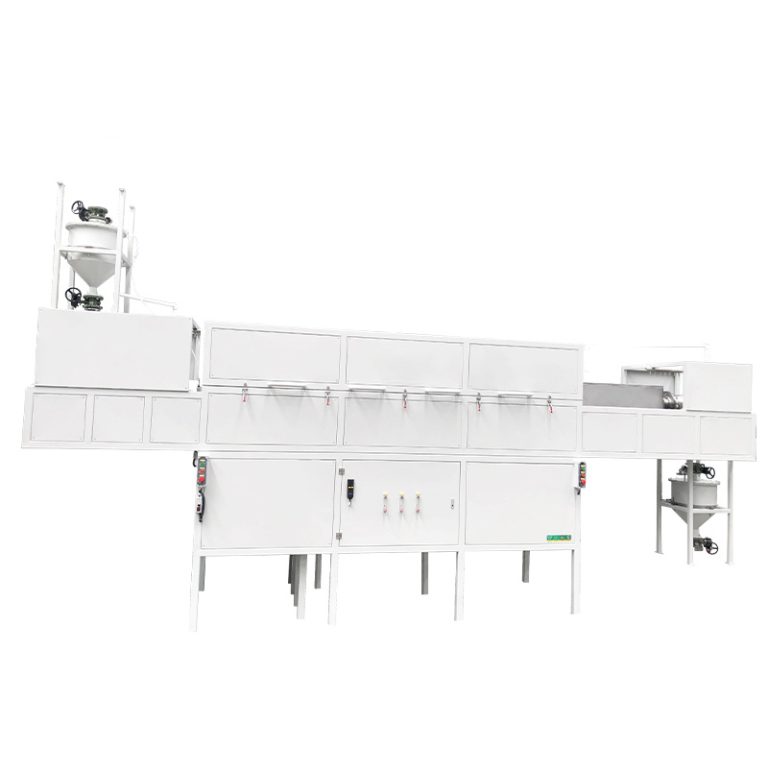
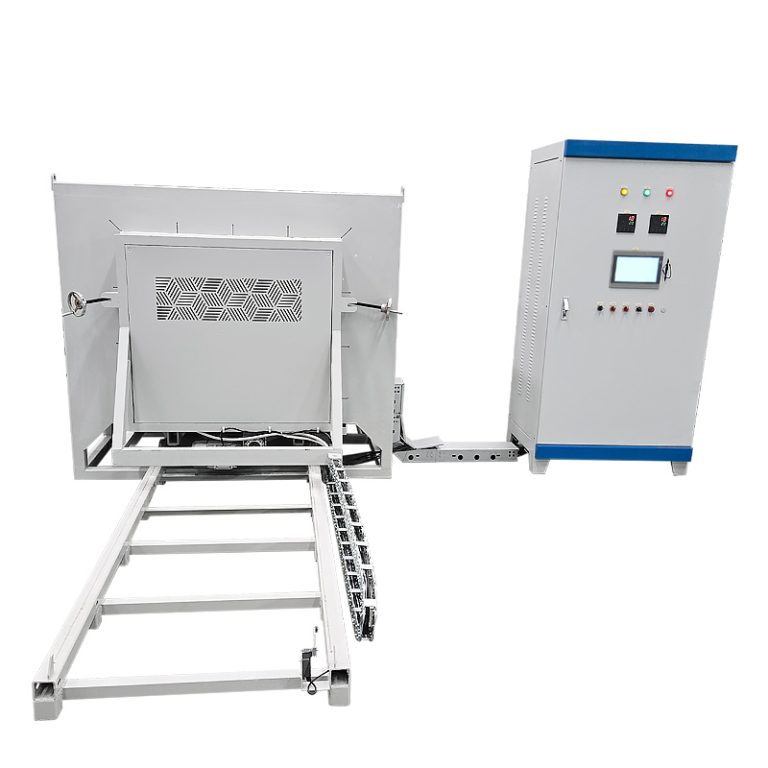
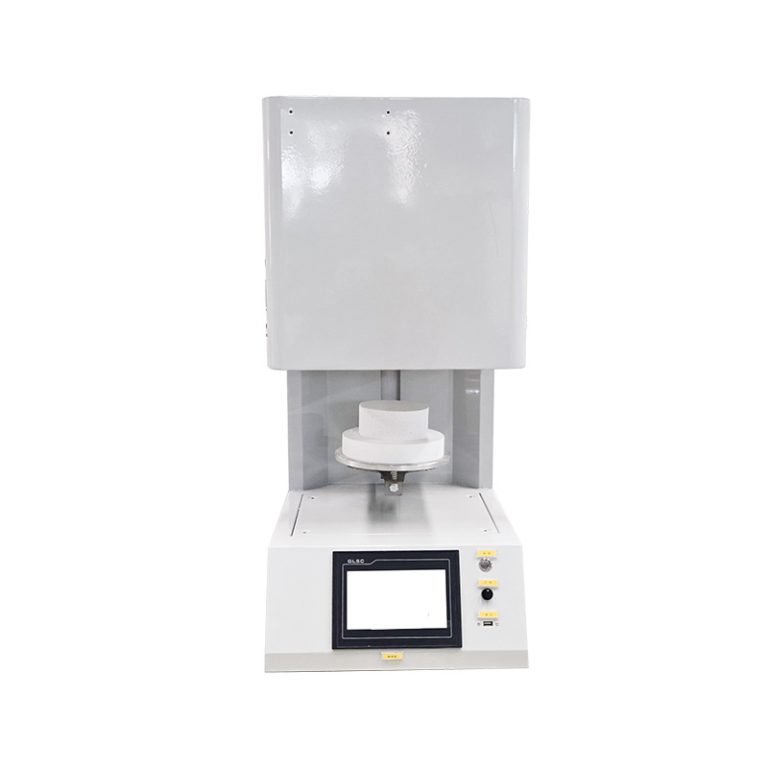
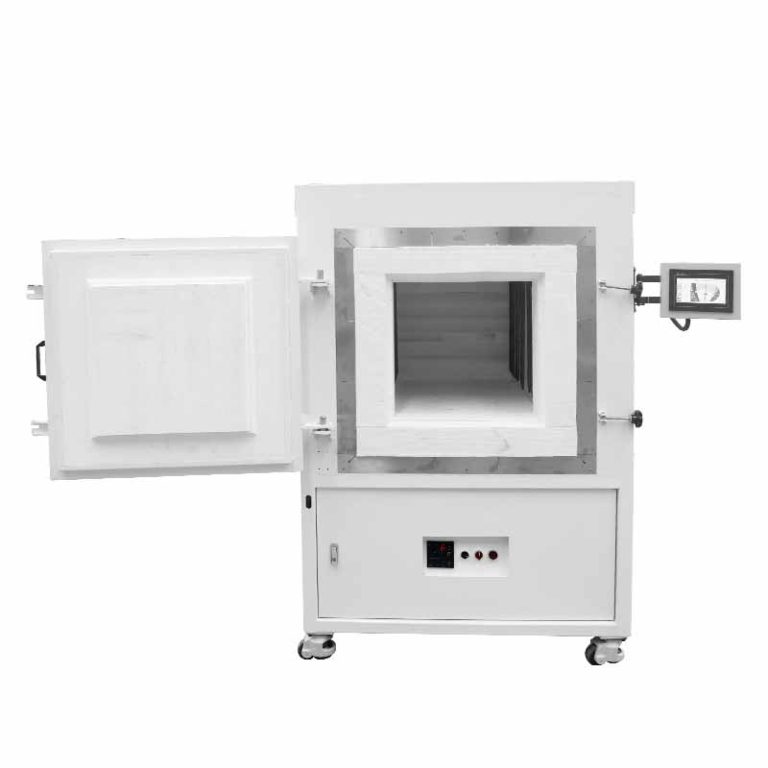
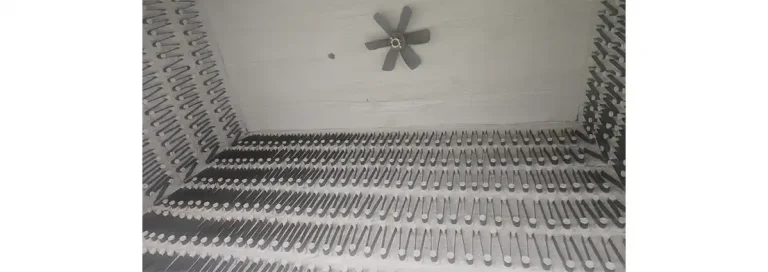
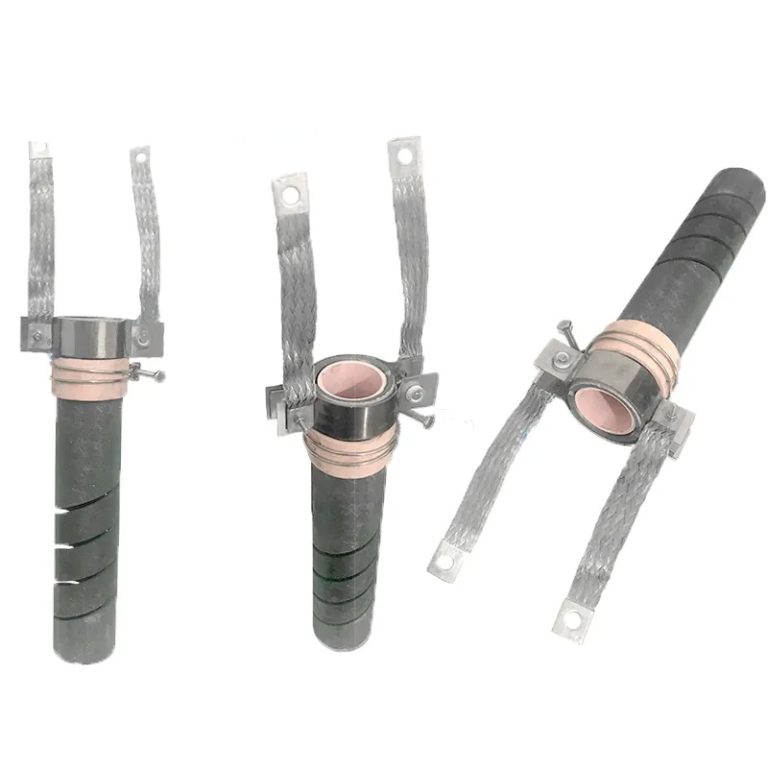
Luoyang Anjing Intelligence Equipment are a global leader in high-temperature electric furnaces



What Is a Bell Furnace Used for in Heat Treatment?
Bell-type furnaces are used for heat treatment processes such as annealing, normalizing, tempering, and solution treatment of metal components. Featuring a bell-shaped heating structure combined with a lifting or mobile loading platform, these furnaces simplify the handling of large or heavy workpieces. The entire process—heating, holding, and cooling—is fully controllable, ensuring consistent heat treatment quality.
I.Introduction
A bell furnace is an industrial heating system designed for batch heat treatment and high-temperature processing. Its bell-type structure and lifting or movable loading arrangement allow workpieces to be loaded and unloaded conveniently, making it suitable for large components, heavy batches, and products that require carefully controlled thermal cycles.
For manufacturers, foundries, metal processing plants, and producers of advanced materials, choosing the right bell-type furnace ensures uniform temperatures, stable processes, and efficient material handling.
II. What Is a Bell Furnace Used for in Heat Treatment?
A bell furnace is used for controlled heating, temperature holding, and cooling of metal components and other industrial materials. In metal heat treatment, its main applications include annealing, normalizing, tempering, and solution treatment, depending on the material and furnace configuration.
Bell-type and bell-jar furnace designs can also be used for high-temperature sintering, debinding, and specialized material processing.
Typical applications include:
- Annealing of metal components and alloys
- Normalizing of suitable steel parts
- Tempering after hardening
- Solution heat treatment of selected alloys
- Heat treatment of large or heavy workpieces
- Sintering of advanced ceramics
- Debinding of ceramic and powder metallurgy products
- Precision annealing of optical and specialty glass
The main advantage is the combination of controlled thermal processing and convenient loading and unloading.
How Does a Bell Furnace Work?
1. Workpiece Loading
The workpieces are placed on the furnace platform or a suitable loading fixture.
Depending on the furnace design, materials may be loaded using an overhead crane, forklift, or other material-handling equipment.
This arrangement is particularly useful for large components and heavy batches that are difficult to position through a conventional furnace door.
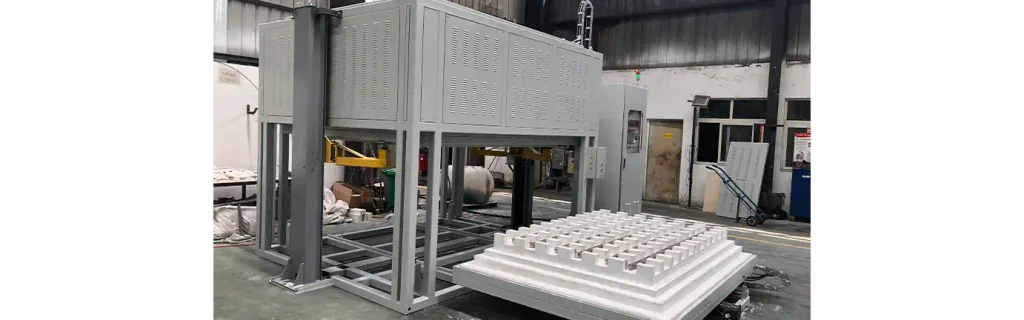
2. Furnace Closure and Positioning
After loading, the platform or heating enclosure moves into its operating position.
The furnace is then configured for the required heating cycle. Any sealing, atmosphere-control, or gas-purging steps depend on the specific furnace design and process requirements.
A conventional bell furnace designed for protective-atmosphere processing may use a sealed enclosure. However, not every bell furnace is vacuum-tight or suitable for reactive gases; these capabilities must be confirmed for the selected model.
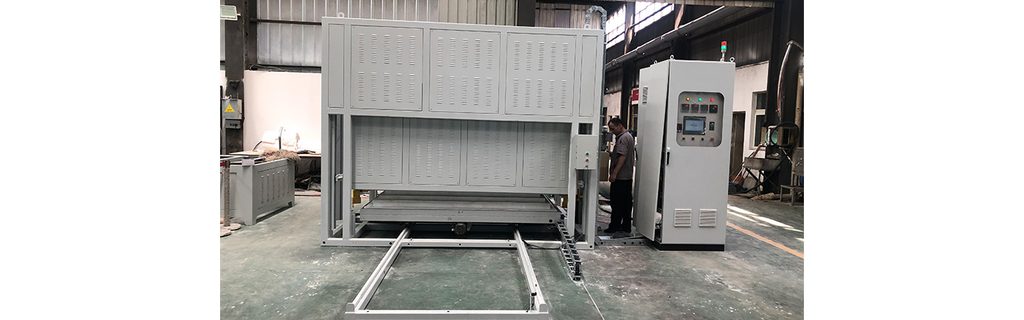
3. Controlled Heating
The furnace raises the workpiece temperature according to the programmed heating profile.
The heating rate depends on the material, component dimensions, load mass, and required thermal process.
For large workpieces, sufficient heating time is important because the surface and core may not reach the target temperature simultaneously.

4. Temperature Holding
When the target temperature is reached, the furnace maintains the specified conditions for a defined period.
This holding stage allows the required metallurgical transformation or material-processing reaction to take place.
The actual holding time depends on the material grade, component geometry, and applicable heat-treatment procedure.
5. Controlled Cooling
After heating and holding, the workpieces are cooled according to the process specification.
Depending on the material, cooling may occur inside the furnace, in a controlled environment, or through another designated cooling method.
Cooling conditions are especially important for heat treatments that aim to balance hardness, toughness, strength, and dimensional stability.
6. Unloading
Once the programmed process has reached the appropriate stage for unloading, the loading platform or furnace enclosure is moved to provide access to the workpieces.
The completed load can then be removed, inspected, and replaced with the next batch.
This arrangement makes bell-type lifting furnaces particularly practical for repetitive batch production.
What Heat Treatment Processes Can a Bell Furnace Perform?
The exact process capability depends on the furnace temperature range, atmosphere, heating system, and cooling arrangement.
1. Annealing
Annealing involves heating a material to a specified temperature, holding it, and cooling it according to the required procedure.
For suitable metals, annealing can help reduce hardness, relieve residual stress, improve ductility, or modify the microstructure.
Typical applications include:
- Steel components
- Alloy parts
- Metal castings
- Forgings
- Selected precision components
Controlled heating and cooling are important when processing large or heavy workpieces because temperature gradients can cause uneven material properties.
2. Normalizing
Normalizing is commonly used for suitable steels to refine their microstructure and obtain specified mechanical properties.
The workpiece is heated into the appropriate transformation range, held as required, and then cooled under the specified conditions, often in air.
A bell furnace can provide the controlled heating and soaking stage. The subsequent cooling procedure must be compatible with the required normalizing process.
3. Tempering
Tempering is generally performed after hardening.
The hardened component is reheated to a specified temperature below the relevant transformation range, held for a defined period, and cooled.
The aim is to adjust the balance between hardness, strength, toughness, and ductility.
A programmable bell furnace can store and repeat tempering cycles, helping manufacturers maintain consistent processing conditions across batches.
4. Solution Heat Treatment
Solution heat treatment is used for certain alloy systems, including selected aluminum alloys, stainless steels, and precipitation-hardening materials.
The material is heated to a specified temperature to dissolve suitable phases into a solid solution and then cooled according to the alloy-specific procedure.
Some alloys require rapid quenching after solution treatment, so a furnace alone may not complete the entire process. The transfer arrangement and separate quenching equipment must be considered where rapid cooling is specified.
Note: The temperatures and cooling conditions required for normalizing, tempering, and solution treatment differ from one another. A bell-type furnace must be configured according to the specific process at hand; one cannot simply assume it is capable of automatically performing any type of heat treatment.
What Other Materials Can Be Processed in a Bell Furnace?
Although metal heat treatment is a major application, bell-type and lifting furnaces can also serve other industrial thermal-processing requirements.
Advanced Ceramics
Applications may include high-temperature sintering of:
- Alumina
- Zirconia
- Silicon nitride
- Silicon carbide
These materials require carefully controlled thermal profiles to obtain the required density, structure, and final properties.
Powder Metallurgy
Selected powder metallurgy components require binder removal, sintering, or other thermal processing.
The furnace must be compatible with the powder composition, binder system, gas generation, and atmosphere requirements.
Optical and Specialty Glass
Certain glass products require precision annealing to reduce internal stresses generated during forming or processing.
The appropriate temperature profile depends on the glass composition, thickness, and intended properties.
Catalysts and Functional Materials
Bell-jar furnaces may also be used for high-temperature activation, material preparation, and research involving selected catalysts and functional materials.
What Are the Advantages of a Bell Furnace?
1. Convenient Loading and Unloading
The lifting or movable-platform arrangement provides easier access to the heating area.
This is especially valuable when handling heavy components, large batches, or products that need to be positioned accurately on a loading platform.
2. Large Effective Working Area
Bell-type lifting furnaces can be designed with large chamber dimensions and substantial platform capacity.
This makes them useful for bulky components and batch processing, provided the total load remains within the rated capacity.
3. Programmable Temperature Control
Modern industrial furnaces can use programmable controllers to define heating rates, holding times, and cooling stages.
This allows operators to store multiple thermal recipes and reproduce established process cycles.
4. Temperature Uniformity
Multi-sided heating arrangements can help distribute thermal energy more evenly throughout the usable hot zone.
For example, the MeltingFurnace.net 1300°C Bell Jar Furnace lists temperature-control accuracy of ±1°C and usable-zone temperature uniformity of ±5°C under its specified conditions.
Actual performance should be evaluated for the intended load and operating arrangement.
5. Flexible Batch Processing
A bell furnace can accommodate a range of suitable workpiece sizes and product configurations within its dimensional and load limits.
This makes it useful for manufacturers processing different batches without requiring a continuous production line.
6. Potential for Automated Operation
In terms of configuration, the furnace can be equipped with a hydraulic lifting system, a motorized platform for positioning, touchscreen controls, programmable temperature profiles, and automated heating and cooling cycles.
These functions can reduce manual handling and improve process repeatability.
Bell Furnace vs. Box Furnace: What Is the Difference?
| Feature | Bell Furnace | Conventional Box Furnace |
|---|---|---|
| Loading structure | Bell-type or lifting arrangement | Fixed chamber with front or top access |
| Loading access | Platform or enclosure can move, depending on design | Workpieces enter through the chamber opening |
| Large or heavy loads | Particularly suitable for appropriate lifting designs | Depends on door dimensions and hearth capacity |
| Batch processing | Yes | Yes |
| Temperature control | Programmable, depending on model | Programmable, depending on model |
| Working atmosphere | Depends on sealing and gas-system design | Depends on furnace construction |
| Typical applications | Large-batch heat treatment, sintering, and material processing | General heat treatment, laboratory processing, and production batches |
The key difference is the loading and chamber arrangement, not simply the maximum temperature.
When loading is difficult, the platform’s load capacity is strained, or workpieces are too large and unwieldy to handle, opt for a bell-type lift furnace. For small-batch, routine tasks, a box-type furnace will suffice.
Bell Furnace vs. Car Bottom Furnace
Bell furnaces and car bottom furnaces are both used for batch thermal processing, but their loading systems differ.
A bell furnace uses a bell-type or lifting arrangement to provide access to the heating chamber. Some configurations use a movable bottom platform that raises into the furnace and lowers for loading.
A car bottom furnace uses a rail-mounted trolley or bogie to carry workpieces into and out of the chamber horizontally.
| Feature | Bell Furnace | Car Bottom Furnace |
|---|---|---|
| Loading arrangement | Lifting platform or bell-type structure | Rail-mounted movable hearth |
| Main movement | Vertical lifting and/or enclosure movement | Horizontal trolley movement |
| Space requirement | Depends on lifting clearance and platform travel | Requires trolley travel space |
| Large workpiece handling | Suitable for loads within platform and chamber limits | Suitable for loads within trolley and chamber limits |
| Best selection factor | Loading access and lifting arrangement | Horizontal handling and trolley access |
Neither design is universally better. The appropriate choice depends on workpiece dimensions, load weight, available floor space, handling equipment, and thermal-process requirements.
III. What Temperature Can a Bell Furnace Reach?
The upper temperature limit of a bell-type furnace is determined by four factors: the heating elements, thermal insulation, refractory structure, and intended application. Low-temperature models are used for processes like stress relief and annealing, while high-temperature models are reserved for tasks such as heat treatment of alloys, ceramic sintering, and the processing of specialized materials.
When comparing models, buyers should distinguish between:
- Maximum rated temperature
- Normal operating temperature
- Continuous operating temperature
- Temperature uniformity
- Heating rate
- Cooling capability
The maximum temperature alone does not determine whether a furnace is suitable for a specific heat-treatment process.
IV. Conclusion
A bell furnace is used for controlled batch heat treatment of metal components and high-temperature processing of other industrial materials. In metalworking, common applications include annealing, normalizing, tempering, and solution treatment. Depending on the design, bell-jar furnaces can also support ceramic sintering, debinding, specialty-glass annealing, and catalyst activation.
Its main advantages include convenient loading and unloading, a large usable working zone, programmable temperature control, and the ability to accommodate heavy or bulky batches.
The right furnace depends on the material, heat-treatment cycle, workpiece dimensions, batch weight, required temperature uniformity, atmosphere, and cooling method.
Click “Request a Quote” to get a customized solution.
V. FAQ
1.What is a bell furnace used for in heat treatment?
A bell furnace is used for batch heat treatment processes such as annealing, normalizing, tempering, and solution treatment. Depending on the configuration, it can also be used for high-temperature sintering, debinding, and specialty-material processing.
2.How does a bell furnace work?
Workpieces are loaded onto a platform or suitable support. The lifting or movable arrangement positions the load inside the heating chamber, where the material follows a programmed heating and holding cycle. After the specified cooling stage, the platform or enclosure moves to allow unloading.
3.What is the difference between a bell furnace and a box furnace?
A bell furnace uses a bell-type or lifting arrangement to facilitate loading and unloading, while a conventional box furnace typically has a fixed chamber accessed through a front or top opening.
4.Can a bell furnace be used for annealing and tempering?
Yes. Bell-type furnaces can be configured for annealing and tempering, provided the model meets the required temperature range, temperature uniformity, load capacity, and process-control requirements. The specific heating and cooling procedures must follow the material’s heat-treatment specification.
5.Can a bell furnace process large and heavy components?
Yes, if the chamber dimensions, platform structure, lifting mechanism, and rated load capacity are designed for the workpieces.
Supplier
Luoyang Anjing Intelligent Equipment Co., Ltd. is an enterprise dedicated to the research, development, production, sales, and technical services of heat treatment equipment such as high-temperature electric furnaces. We produce laboratory, vacuum, industrial, and medium frequency furnace, covering a temperature range from -100℃ to 2600℃, serving industries such as new energy, semiconductors, and advanced materials. We can provide customized solutions based on specific atmosphere, ultra-high temperature, and intelligent control system requirements. Please feel free to contact us if you are interested.