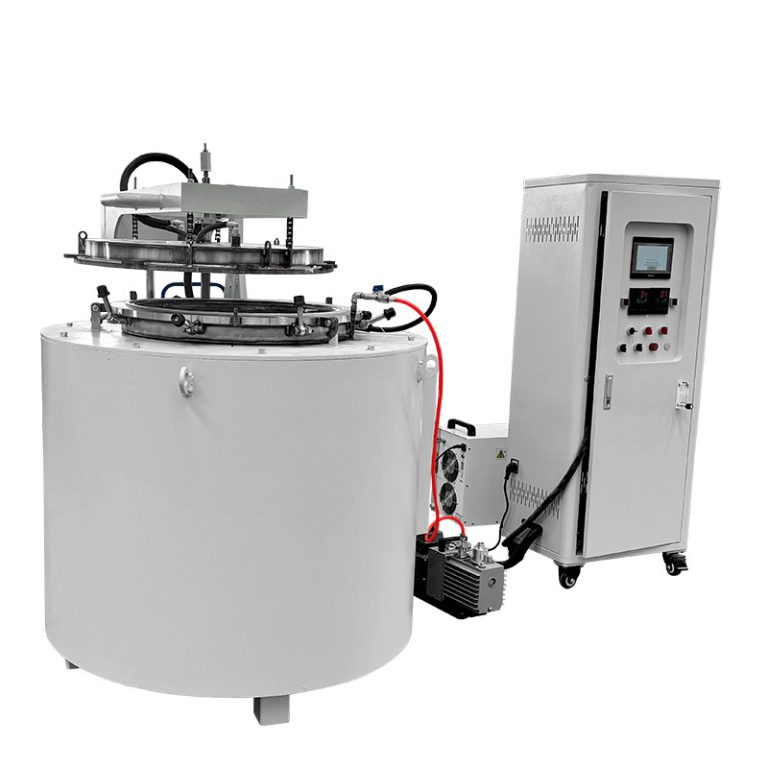
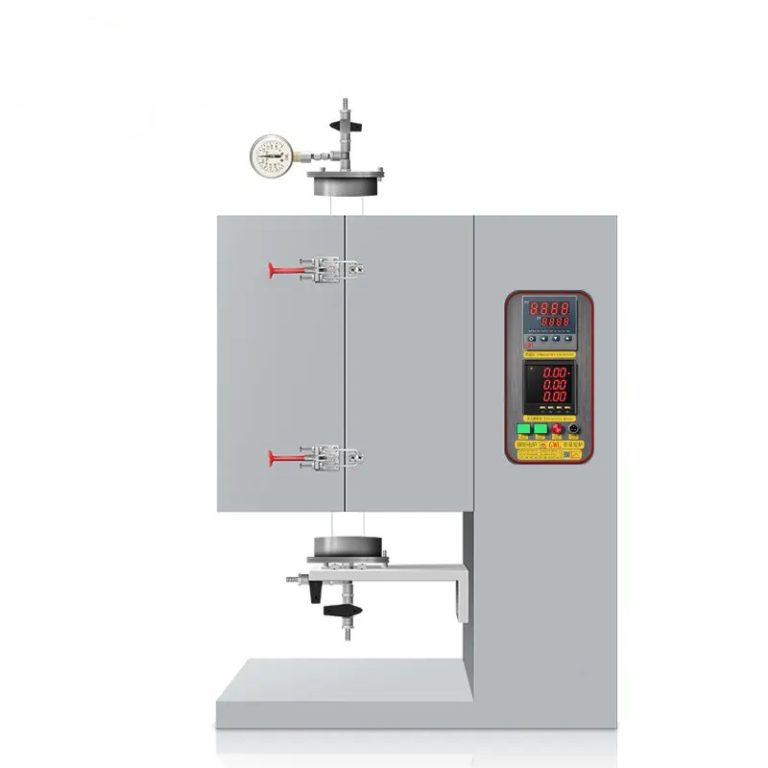
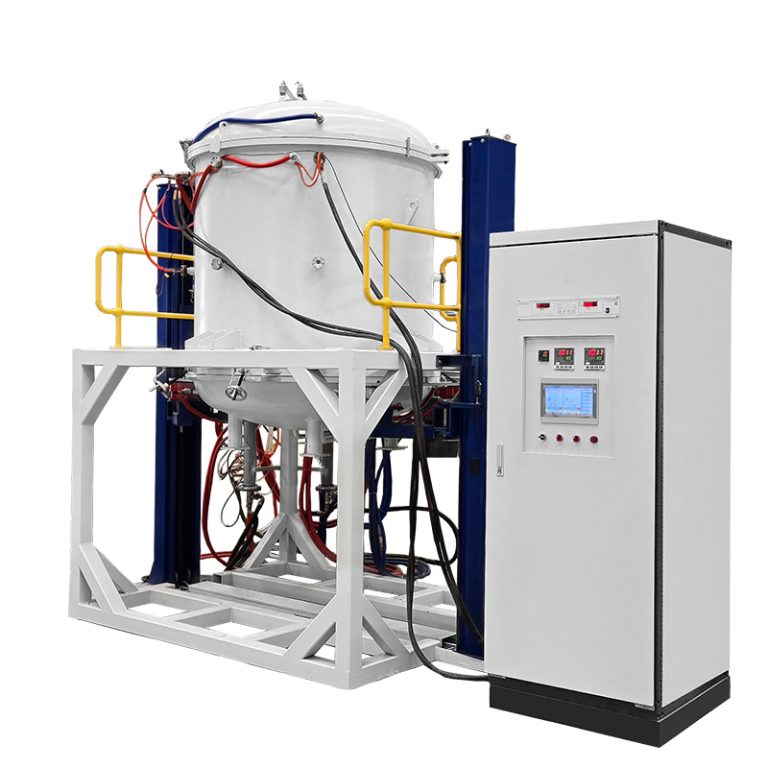
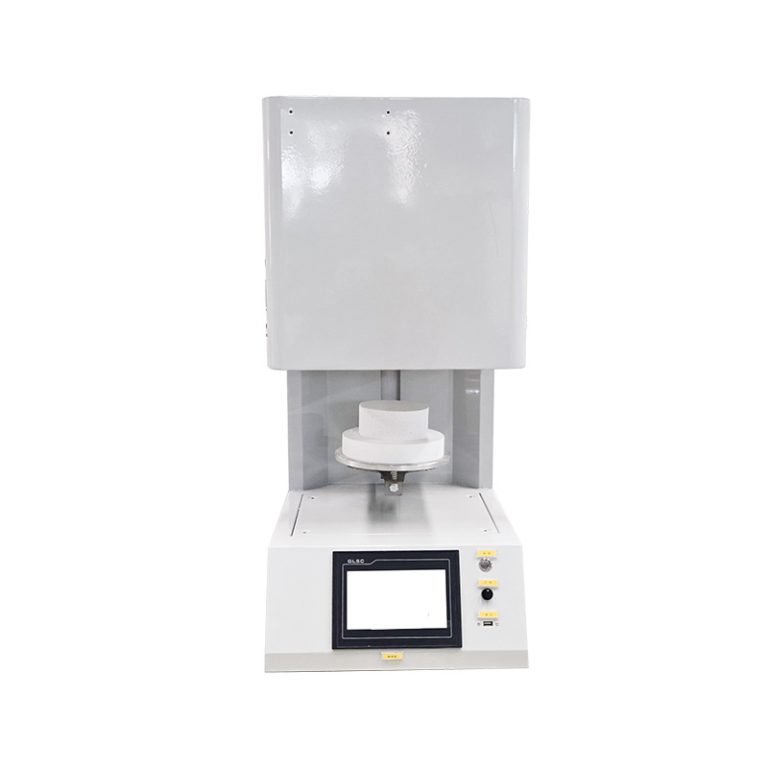
Luoyang Anjing Intelligence Equipment are a global leader in high-temperature electric furnaces



How Does a PID Controller Work in a Furnace?
A PID controller in a furnace continuously compares the actual temperature measured by a thermocouple with the target setpoint, then adjusts heating power through proportional, integral, and derivative control to minimize temperature deviation and maintain stable, precise furnace conditions.
I. What Is a PID Controller in a Furnace?
The PID controller is the core of closed-loop temperature control in a furnace. For manufacturing enterprises, laboratories, and heat treatment workshops, unstable temperature can lead to a series of problems such as overheating, slow heating, uneven processing, high energy consumption, and poor product consistency.
II. Benefits of PID controllers
1. How Do the P, I, and D Functions Work?
The three parts of a PID controller perform different jobs.
- Proportional Control – Responding to Current Error
The P term acts on the present temperature error. When the furnace is far below setpoint, heating output is high; as the temperature approaches target, output decreases. This enables fast response, but P-only control often leaves a steady-state error. - Integral Control – Correcting Long-Term Deviation
The I term accounts for accumulated error over time. If the furnace stays slightly below setpoint for an extended period, integral action gradually increases output until the deviation is eliminated. This is essential for maintaining target temperature during long holds, especially under continuous heat loss. - Derivative Control – Reducing Overshoot
D is the differential term, which responds to how quickly the error changes. If the temperature rises too quickly, the differential action will reduce the output before overshoot occurs, acting as a damping effect to make the system more stable.
In furnace applications, thermal inertia makes PID tuning critical. Poor balance among P, I, and D can lead to overshoot, oscillation, slow response, or instability
2.How Does PID Control Heating Elements?
A PID controller does not normally supply high furnace power directly. Instead, its control signal works with a power regulator or switching device to determine how much electrical power reaches the heating elements.
The basic process is:
Thermocouple → PID Controller → Power Controller → Heating Elements → Furnace
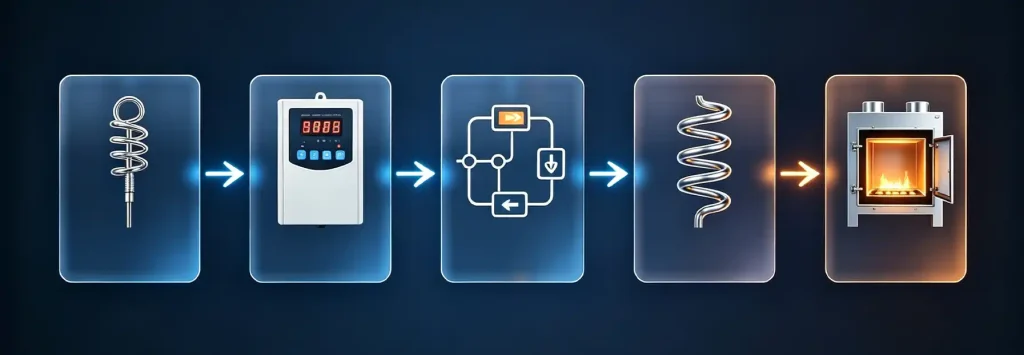
During the initial heating stage, the controller may command a high output because the actual temperature is significantly below the setpoint. As the furnace approaches the target temperature, the controller reduces the heating demand.
This continuous adjustment is fundamentally different from a simple ON/OFF thermostat. Rather than switching the heater fully on and fully off at a fixed temperature threshold, PID control continuously calculates the required correction based on the current and historical temperature error.
For electric furnaces, this type of control is particularly important when the process requires repeatable heating rates and stable holding temperatures.
3.Why Is the Thermocouple Important?
A PID controller can only control the furnace effectively when its temperature feedback is reliable.
The thermocouple measures the actual temperature inside the furnace and sends that measurement to the controller. Sensor type, placement, calibration, response time, and operating range all influence the quality of the control loop.
For high-temperature applications, the sensor must therefore be selected according to the maximum operating temperature, atmosphere, process requirements, and desired control accuracy.
4.PID Control in Modern Industrial Furnaces
Modern furnace control systems are often more advanced than basic PID control alone.
For example, Anjing’s furnace product range includes intelligent temperature controllers supporting standard PID as well as APID and MPT adjustment methods, with self-tuning and self-learning functions on applicable models. Some furnace systems also support programmable multi-segment heating and cooling profiles, allowing operators to define different temperature ramps, holds, and process stages.
This is important for industrial heat-treatment and laboratory processes where simply reaching one temperature is not enough.
A typical programmed cycle may look like:
Room Temperature → Controlled Ramp → Target Temperature → Soak/Hold → Controlled Cooling
Instead of manually changing the setpoint at each stage, the furnace controller can execute the programmed temperature curve automatically.
For example, Anjing’s industrial tubular furnace and rotary kiln configurations specify programmable temperature control with PID, APID, and MPT options, automatic tuning, and multi-segment heating/cooling profiles.
5.How Does PID Improve Furnace Performance?
A properly configured PID system can provide several practical benefits:
| Benefit Category | Description |
|---|---|
| More stable temperature | Continuous feedback minimizes deviation from the target temperature. |
| Reduced overshoot | Proper tuning helps prevent the furnace from substantially exceeding the setpoint. |
| Better repeatability | Programmed temperature profiles can be reproduced from one production cycle to another. |
| Improved process control | Controlled heating and cooling rates are useful for annealing, sintering, heat treatment, laboratory testing, and other thermal processes. |
| Lower operator workload | Automatic tuning and programmable control can reduce the amount of manual adjustment required. |
However, PID is only one part of the overall furnace system. Furnace insulation, heating-element arrangement, chamber size, thermocouple position, power regulation, atmosphere, and load characteristics also affect the final temperature performance.
This is why furnace selection should consider the complete thermal-control system rather than choosing a PID controller as an isolated component.
III.Choosing a Furnace With the Right PID Control System
When purchasing a furnace, buyers should evaluate more than the controller nameplate.
Key factors include the maximum temperature, working temperature, temperature accuracy, temperature uniformity, thermocouple type, heating-element material, heating rate, number of control zones, programmable segments, and available communication interfaces.
For example, Anjing’s product portfolio includes laboratory box furnaces, tube furnaces, rotary furnaces, vacuum furnaces, industrial tubular furnaces, car bottom furnaces, pit furnaces, and other high-temperature systems. The control architecture varies according to the furnace application and model.
For industrial buyers, the better question is therefore not simply “Does this furnace use PID?” but:
“Can the furnace control system provide the temperature stability, ramp rate, uniformity, and programmable process control required for my application?”
That approach leads to a much more reliable equipment selection decision.
IV.Summarize
A PID controller works in a furnace by continuously comparing the measured temperature with the programmed setpoint and adjusting heating power through proportional, integral, and derivative control. When correctly integrated with the thermocouple, power regulator, heating elements, insulation, and furnace design, PID control provides stable and repeatable thermal processing.
For furnaces requiring precise temperature control, programmable heating profiles, and automatic tuning, choosing the right control system is just as important as choosing the right furnace chamber. For more details, please visit Anjing Furnace Solutions page or contact our technical team to discuss your temperature range, furnace type, and temperature control requirements.
Click “Request a Quote” to get a customized solution.
V. FAQ
1. What does PID mean in a furnace controller?
PID means Proportional-Integral-Derivative. It is a closed-loop control algorithm that uses temperature feedback to adjust furnace heating output and reduce the difference between the actual temperature and the target setpoint.
2. Does a furnace PID controller control the heating elements directly?
Usually, the PID controller generates a control signal that works with a power-control device, such as an electronic power regulator, to regulate the electrical power delivered to the furnace heating elements.
3. Why does a furnace need a thermocouple for PID control?
The thermocouple provides the actual furnace temperature used as feedback. Without an accurate temperature measurement, the PID controller cannot reliably determine how much heating correction is required.
4. Can PID control prevent furnace temperature overshoot?
Proper PID tuning can significantly reduce overshoot, although actual performance also depends on furnace thermal mass, heating-element power, sensor location, insulation, load conditions, and control strategy.
5. Do modern industrial furnaces use PID only?
Not necessarily. Modern furnace controllers may combine standard PID with automatic tuning, AI-assisted adjustment methods, programmable temperature curves, multi-zone control, and other process-control functions. Anjing currently lists PID, APID, and MPT control options on applicable furnace models.
Supplier
Luoyang Anjing Intelligent Equipment Co., Ltd. is an enterprise dedicated to the research, development, production, sales, and technical services of heat treatment equipment such as high-temperature electric furnaces. We produce laboratory, vacuum, industrial, and medium frequency furnace, covering a temperature range from -100℃ to 2600℃, serving industries such as new energy, semiconductors, and advanced materials. We can provide customized solutions based on specific atmosphere, ultra-high temperature, and intelligent control system requirements. Please feel free to contact us if you are interested.